住所
304ノース・カーディナル
セント・ドーチェスター・センター(マサチューセッツ州02124
勤務時間
月曜日~金曜日:午前7時~午後7時
週末午前10時~午後5時
住所
304ノース・カーディナル
セント・ドーチェスター・センター(マサチューセッツ州02124
勤務時間
月曜日~金曜日:午前7時~午後7時
週末午前10時~午後5時

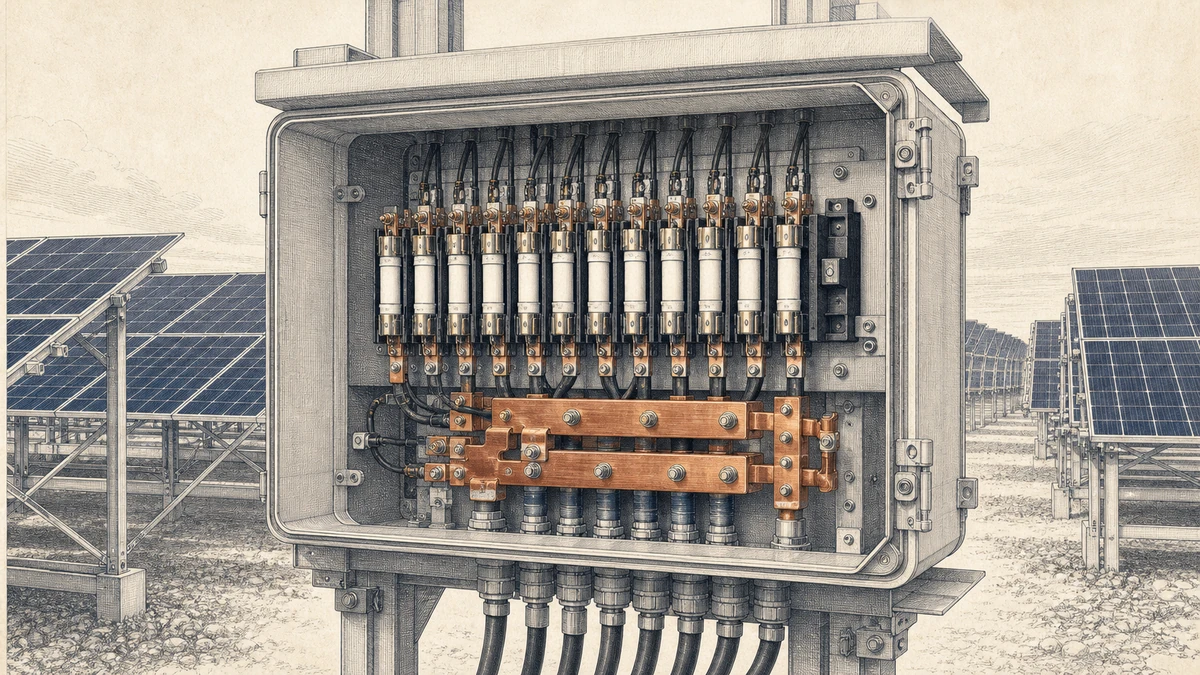
In a photovoltaic array, a PV combiner box does more than collect string outputs. It also helps isolate circuits, simplify maintenance, and support fault protection. One of the most important design questions is whether each PV string needs a fuse for reverse-current protection.
For Sinobreaker PV Combiner Box applications, the answer depends on the module ratings, the number of parallel strings, the expected fault current, and the DC system voltage. String fuses are not added simply because a combiner box has multiple inputs; they are required when the possible reverse current into a faulted string can exceed what the PV module and conductors can safely withstand.
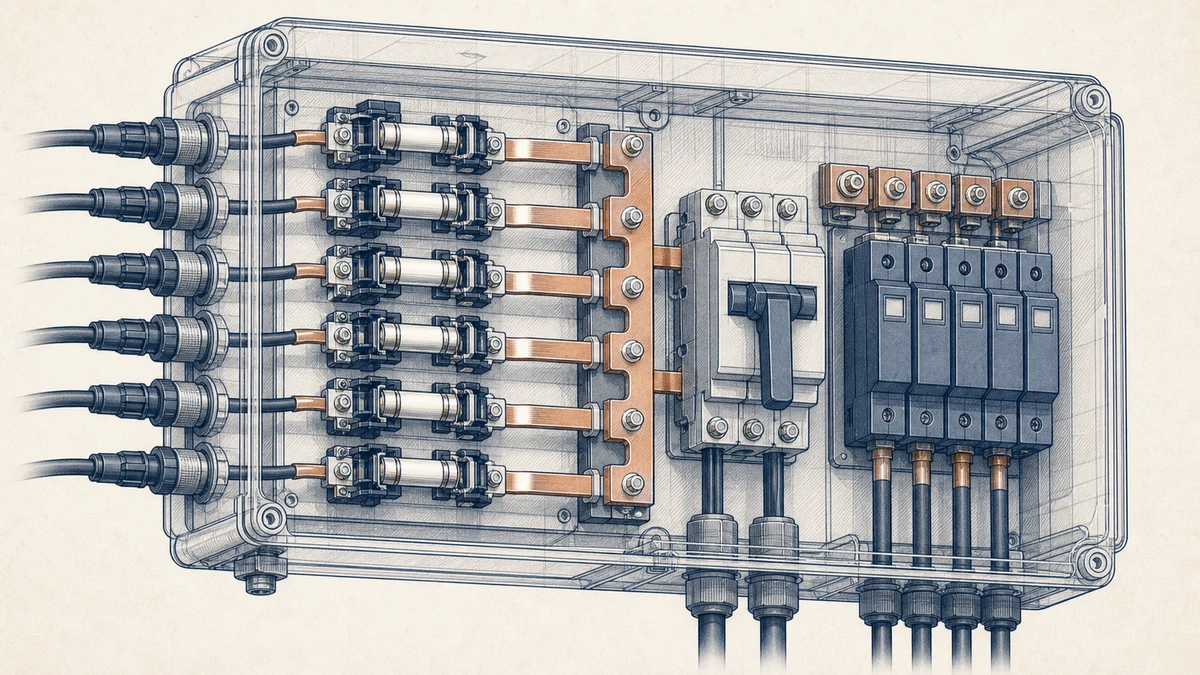
Reverse current occurs when current flows backward into a PV string instead of out of it. This can happen if one string is shaded, damaged, shorted, or otherwise operating at a lower voltage than the other parallel strings.
In a multi-string array, healthy strings can feed current into the faulted string. The more strings connected in parallel, the higher the possible reverse current.
For example:
This is why pv combiner box reverse current protection is closely tied to the array layout, not only to the combiner box hardware.
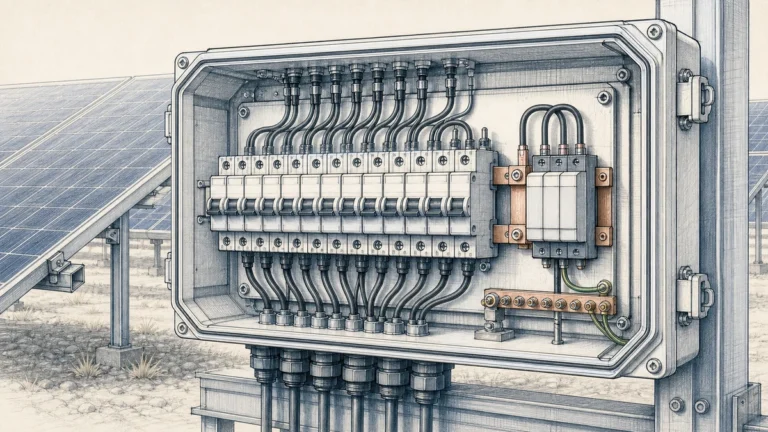
String fuses are installed in the positive or negative string input circuits of the PV combiner box, depending on the system design and local code requirements. Their function is to disconnect a faulted string before damaging reverse current continues to flow.
A properly selected PV fuse helps protect against:
PV fuses used in solar applications should be designed and rated for photovoltaic DC circuits. IEC 60269-6 provides supplementary requirements for fuse-links used to protect photovoltaic energy systems, making it an important reference for fuse selection in PV combiner box design.
String fuses are generally required when the maximum possible reverse current into a string can exceed the module’s allowable reverse-current limit or maximum series-fuse rating.
The number of parallel strings is the first design factor to evaluate. A single string does not have another string feeding reverse current into it. With two strings, one string may feed the other under fault conditions. With three or more strings, the combined current from multiple healthy strings can become significant.
As a practical design rule, string fuses are commonly used in combiner boxes with three or more parallel PV strings. However, the final decision should always be based on module datasheet values and the calculated fault-current duty.
PV module datasheets typically include a maximum series-fuse rating. This value indicates the largest protective fuse that may be used in series with the module.
The selected string fuse must not exceed this module rating. If the module datasheet lists a maximum series-fuse value of 15 A, for example, a 20 A fuse would not be acceptable for that module string even if it fits the combiner box holder.
This rating is critical because it connects the protective device directly to the tested safety limits of the PV module.
PV module data may also include a limiting reverse current. This value indicates how much reverse current the module can tolerate without unsafe heating or damage.
The expected reverse current from the rest of the array must be compared against this limit. If the possible reverse current is higher than the module can safely withstand, string fuses or equivalent protective devices are required.
A safe PV combiner box design checks both values:
Both must be compatible with the selected protection scheme.
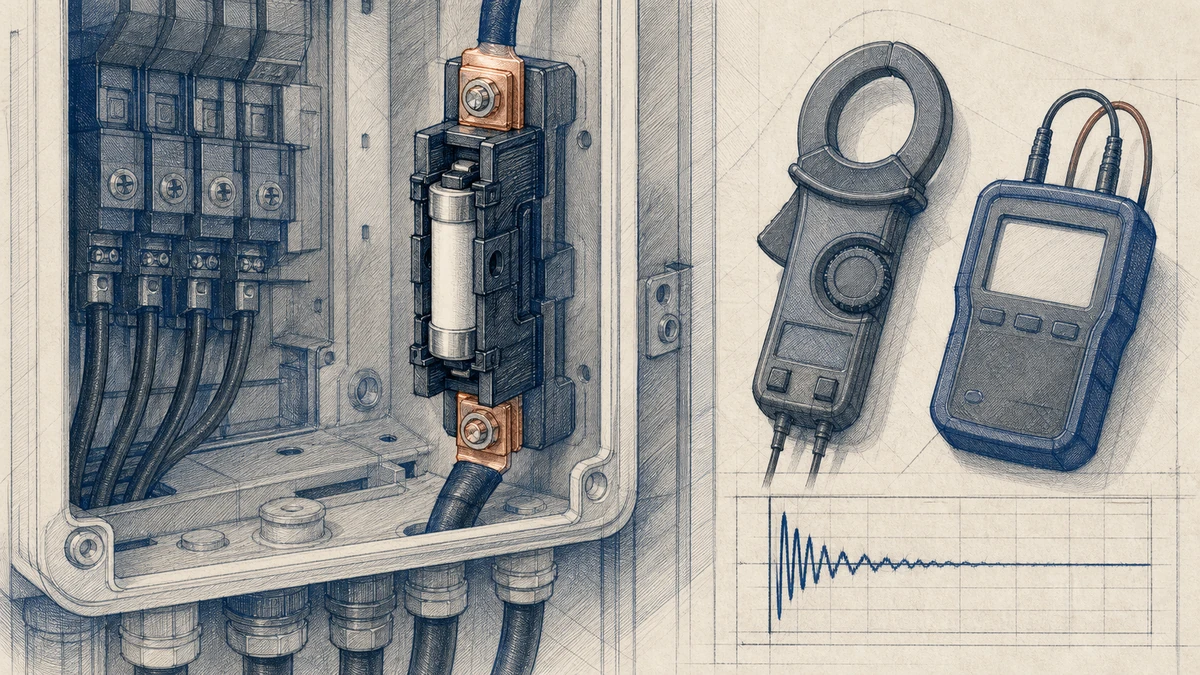
The reverse-current risk depends on how many strings can feed a faulted string and how much current each string can supply.
PV strings can produce current above their rated operating current under high irradiance and low-temperature conditions. Fuse sizing should therefore consider maximum circuit current, not just the module’s nominal current.
Correct PV fuse selection depends on both maximum circuit current and system voltage. A fuse that appears suitable by current rating alone may still be unsuitable if its DC voltage rating or interrupting capability is too low.
A simplified design check is:
Possible reverse current = current from the other parallel strings feeding the faulted string
If this possible current exceeds the module’s limiting reverse current or cannot be safely interrupted within the module’s maximum series-fuse value, string fuses are needed.
For example, in a four-string combiner box, if one string is faulted, the other three strings may contribute current into that fault. The protective device must clear that condition before module wiring, bypass paths, connectors, or conductors are damaged.
PV systems can have different grounding methods and inverter topologies. Reverse-current protection should be reviewed with the actual system architecture, including whether the combiner box uses positive fusing, negative fusing, or both.
For floating or transformerless systems, protection coordination may require additional attention because either pole may become involved in a fault.
Selecting a fuse for a Sinobreaker PV Combiner Box requires more than matching the string current.
The fuse voltage rating must be equal to or greater than the maximum PV system voltage. Common PV system voltages include 600 V DC, 1000 V DC, and 1500 V DC.
A fuse with insufficient DC voltage rating may fail to interrupt the arc safely during a fault. DC arcs are harder to extinguish than AC arcs, so the correct PV-rated fuse is essential.
The fuse current rating must carry normal string current without nuisance operation while still opening under abnormal reverse-current or fault-current conditions.
The selected current rating should account for:
The fuse must have adequate interrupting capacity for the available fault current. In PV combiner boxes, fault current may come from parallel strings, inverter-side contribution, or energy stored in system capacitance depending on the installation.
Use fuse-links intended for photovoltaic service. IEC 60269-6 addresses supplementary requirements for PV fuse-links, including performance expectations for protecting photovoltaic energy systems.
A general-purpose DC fuse is not automatically suitable for PV string protection.
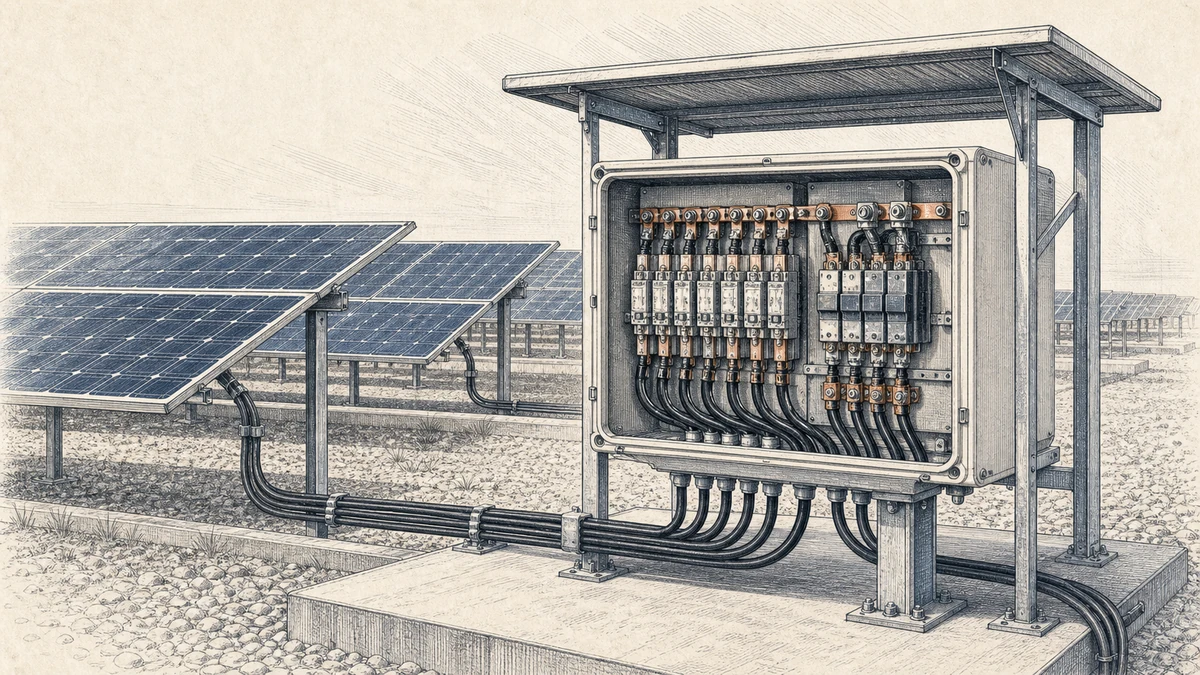
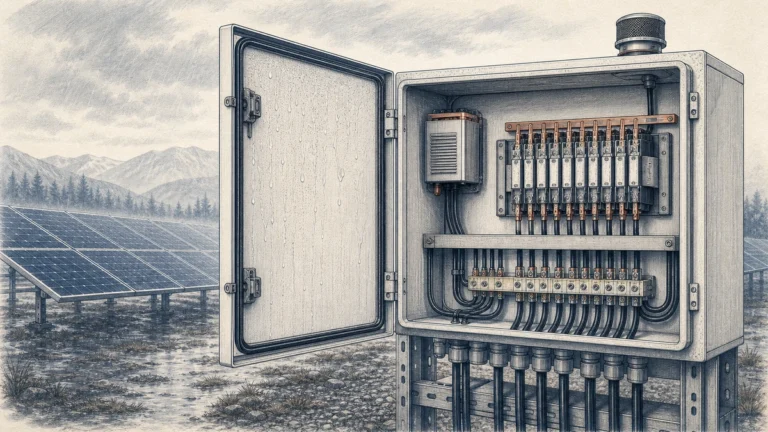
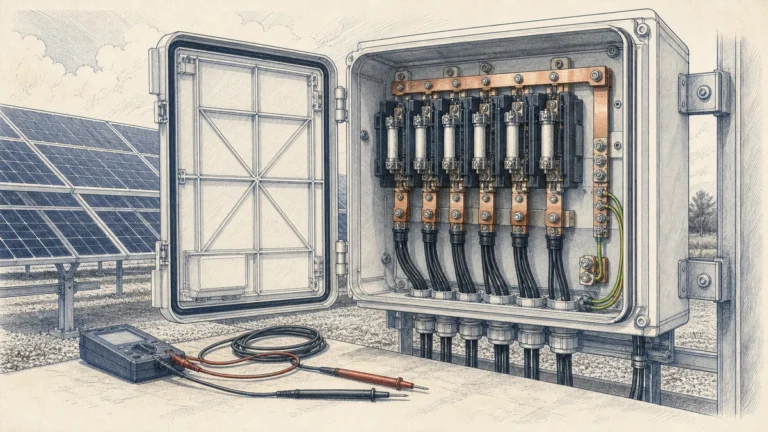
Sinobreaker PV Combiner Box solutions are designed for organized string input, overcurrent protection, isolation, and surge protection in PV arrays. Depending on project requirements, a combiner box may include string fuse holders, DC disconnects, surge protective devices, monitoring modules, and output terminals.
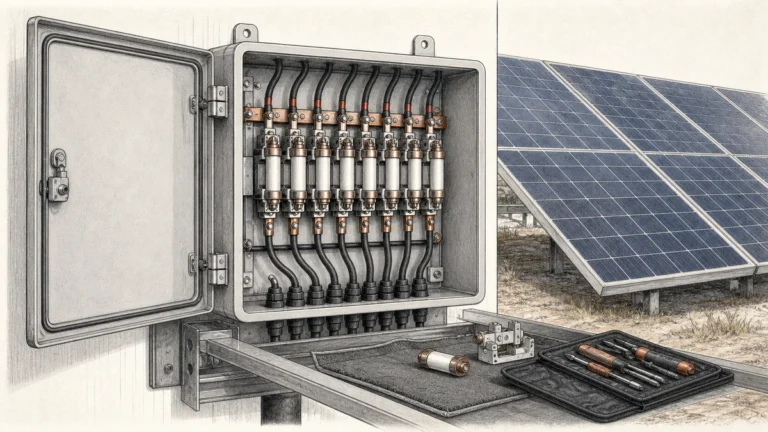
Fuse holders provide a safe location for installing PV-rated fuse-links in each string circuit. They should be selected for the system voltage, current, and environmental conditions.
A good combiner box layout makes fuse inspection and replacement easier during maintenance while keeping live DC parts properly enclosed.
A DC disconnect allows technicians to isolate the combined PV output for maintenance or emergency service. This does not replace string fuses, but it is an important part of the overall protection and isolation strategy.
Surge protective devices help reduce voltage transients caused by lightning-related events or switching surges. Surge protection is different from reverse-current protection, but both functions are often integrated into the same PV combiner box.
String labeling helps technicians identify the affected circuit during troubleshooting. This is especially important when a fuse opens due to a reverse-current event or wiring fault.
PV combiner box reverse current protection can be compromised by several common errors.
A fuse selected only from normal operating current may not coordinate correctly with module limits or expected reverse-current conditions.
The fuse must not be larger than the module’s maximum series-fuse value. Oversizing the fuse can allow damaging current to continue for too long.
A fuse rated for the current but not for the PV system voltage is unsafe. Always check both current and voltage ratings.
Different PV modules, string counts, and system voltages require different protection choices. Fuse selection should be project-specific.
A surge protective device is not a substitute for a string fuse. It limits transient overvoltage, while a fuse interrupts overcurrent.
A reliable workflow for deciding whether string fuses are required includes the following steps:
1. Confirm the number of parallel PV strings.
2. Collect the PV module datasheet.
3. Identify the module short-circuit current.
4. Identify the module limiting reverse current.
5. Identify the module maximum series-fuse rating.
6. Calculate the possible reverse current into one faulted string.
7. Select PV-rated fuses based on current, voltage, and interrupting capacity.
8. Verify compliance with applicable standards and local electrical codes.
9. Match the fuse holder and combiner box rating to the selected fuse.
10. Label all strings clearly for maintenance.
This process ensures that the combiner box protection is coordinated with the module, the array, and the system voltage.
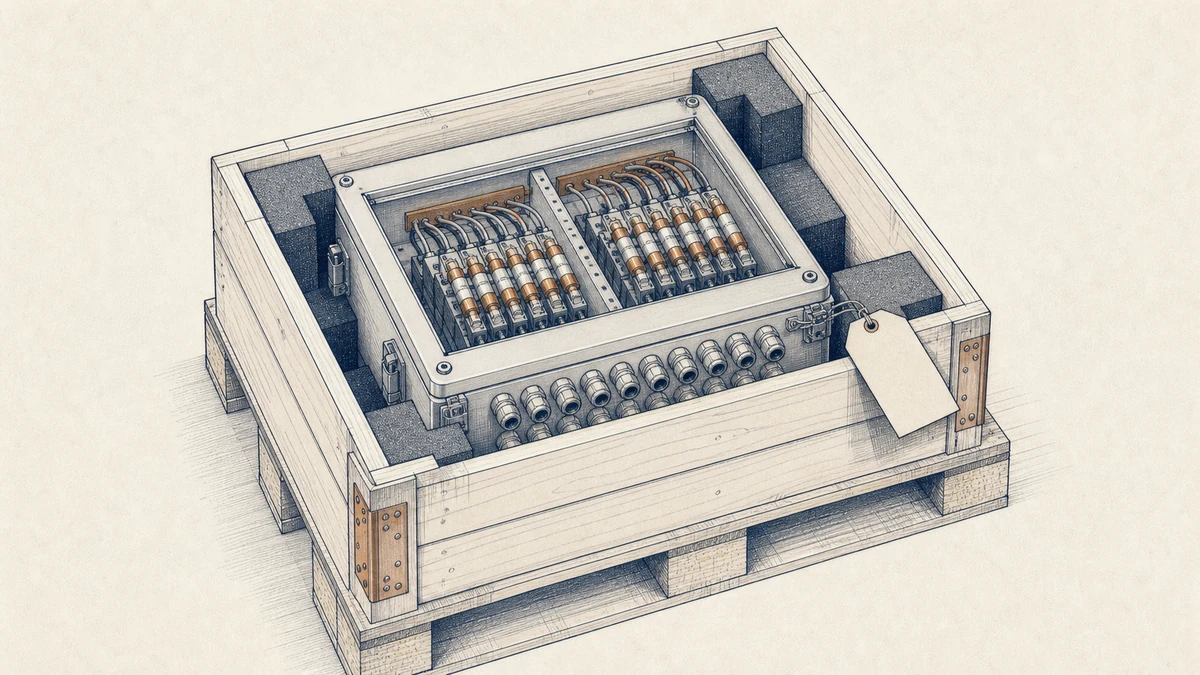
Consider a PV array using multiple identical strings connected in parallel through a Sinobreaker PV Combiner Box. If one string develops a short circuit, the remaining strings may feed current backward into it.
If the calculated reverse current is below the module’s limiting reverse current and the module manufacturer allows the configuration without series fuses, string fuses may not be mandatory. However, if the reverse current can exceed the module’s limit, each string must be protected with a properly rated PV fuse.
The final fuse value must also be lower than or equal to the module’s maximum series-fuse rating and suitable for the full DC system voltage.
Reverse-current protection protects more than the module. It helps preserve the integrity of the entire DC side of the PV installation.
Effective protection supports:
For commercial and utility PV projects, correct combiner box protection also improves serviceability by allowing technicians to identify and isolate affected strings more efficiently.
No. String fuses are not automatically required in every PV combiner box. They are required when the possible reverse current from parallel strings can exceed the PV module’s limiting reverse current or when the module manufacturer requires series-fuse protection. The module datasheet and array configuration must be checked.
No. PV fuse selection must consider maximum circuit current, system DC voltage, interrupting capacity, module maximum series-fuse rating, and applicable PV fuse standards. A fuse that matches current but has the wrong voltage rating may not safely interrupt a DC fault.
Using a fuse above the module’s maximum series-fuse rating can allow excessive current to flow before the fuse operates. This may damage the module, wiring, or connectors and can create a safety risk. The selected string fuse must not exceed the module manufacturer’s maximum series-fuse value.
PV combiner box reverse current protection is required when parallel PV strings can drive unsafe current into a faulted string. The key decision is not the combiner box alone, but the relationship between string count, maximum circuit current, system voltage, module limiting reverse current, and module maximum series-fuse rating.
For Sinobreaker PV Combiner Box applications, string fuses should be selected as PV-rated protective devices with suitable current rating, DC voltage rating, and interrupting capacity. When properly coordinated with the PV module datasheet and system design, they help protect the array from reverse-current damage and improve the safety and reliability of the DC collection system.