Adresse
304 North Cardinal
St. Dorchester Center, MA 02124
Heures de travail
Du lundi au vendredi : de 7h00 à 19h00
Le week-end : 10H00 - 17H00
Adresse
304 North Cardinal
St. Dorchester Center, MA 02124
Heures de travail
Du lundi au vendredi : de 7h00 à 19h00
Le week-end : 10H00 - 17H00

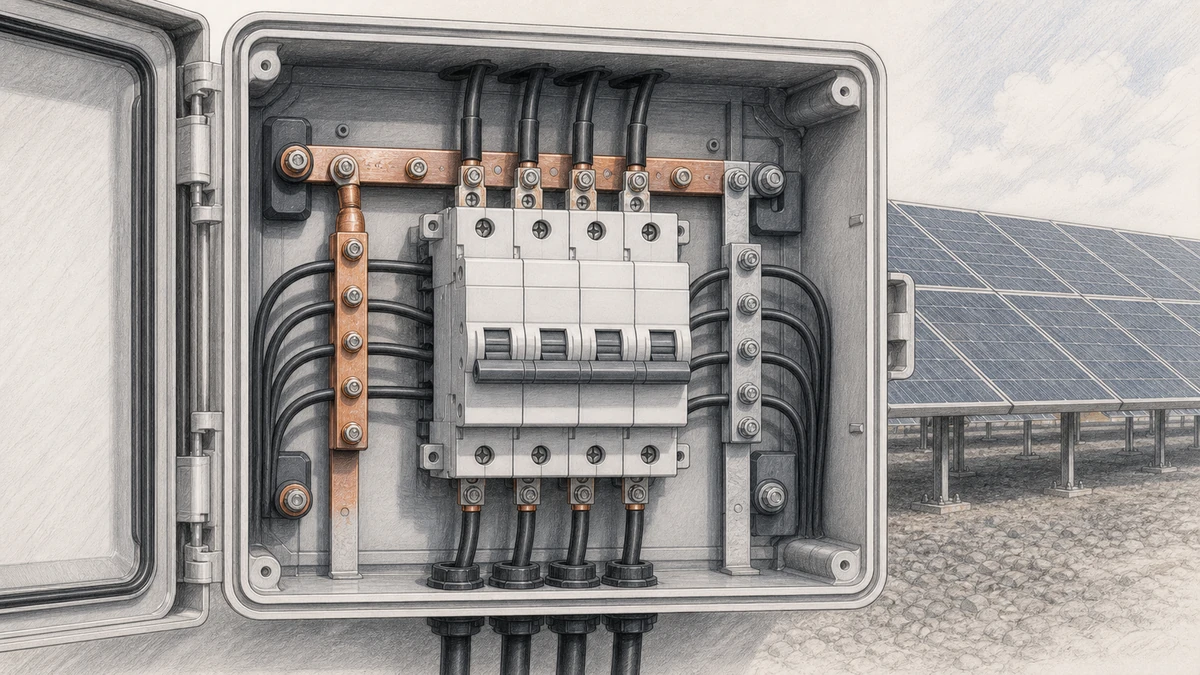
When comparing a **2p vs 4p dc circuit breaker**, the main question is not simply “how many poles fit the panel?” The correct choice depends on DC system voltage, grounding method, fault behavior, isolation requirements, and the manufacturer’s approved wiring arrangement.
For Sinobreaker DC Circuit Breaker applications, pole selection should always be treated as part of the circuit protection design, not as an interchangeable accessory decision. A 2-pole DC breaker and a 4-pole DC breaker may look similar from the outside, but their allowable DC voltage, interrupting performance, and isolation function depend on how the poles are connected and tested.
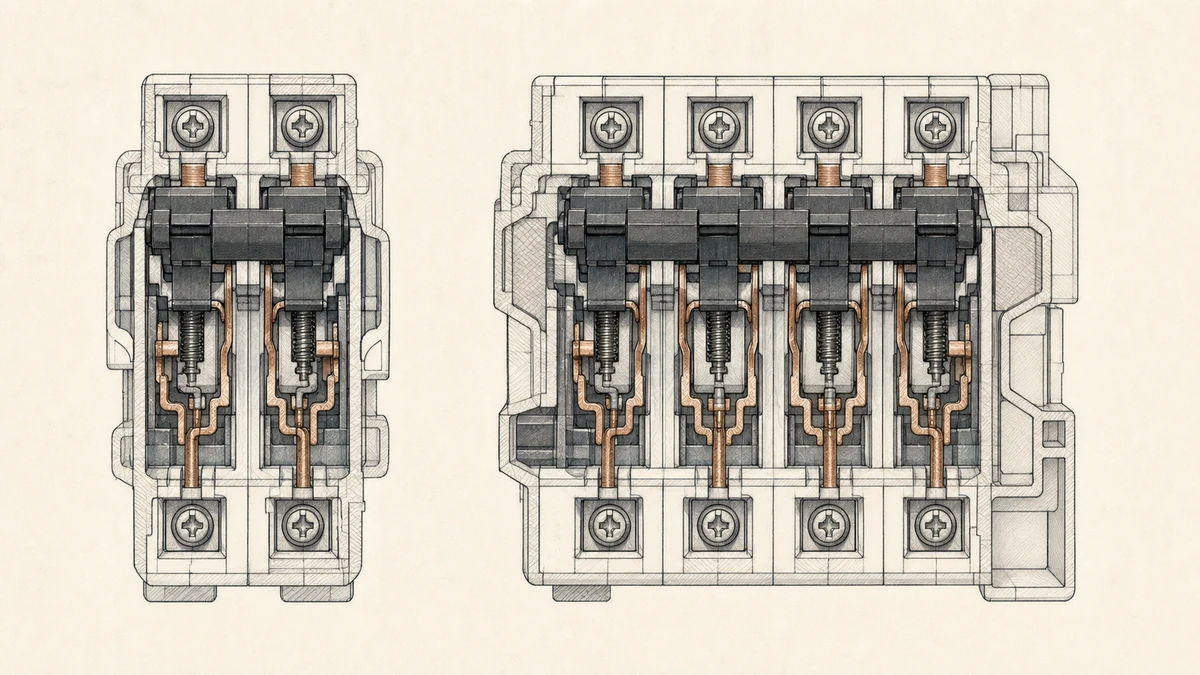
Unlike AC current, DC current does not naturally cross zero every cycle. This makes arc interruption more demanding, especially at higher DC voltages. In many DC circuit breaker designs, multiple poles are connected in series so the breaker can divide arc voltage across several contact gaps.
IEC 60947-2:2024 covers circuit-breakers for circuits up to 1,500 V DC and includes provisions related to circuit-breakers suitable for isolation. This is important because a DC breaker may be expected to provide both overcurrent protection and a visible or declared isolation function, depending on the installation design and product marking.
A 2P DC circuit breaker has two switching poles. In common DC applications, these poles may be used to interrupt both the positive and negative conductors, or they may be connected in series on one polarity if the approved wiring diagram allows it.
A 2P device is often used in lower-voltage DC systems where the voltage and fault conditions remain within the breaker’s declared rating. However, “2P” alone does not define the voltage capability. The actual allowable DC voltage depends on the specific Sinobreaker model, pole wiring method, polarity marking, and test certification.
A 4P DC circuit breaker has four switching poles. In higher-voltage DC systems, the poles may be connected in approved series combinations to increase the breaker’s DC voltage capability.
For example, a 4P breaker may use two poles in series for the positive conductor and two poles in series for the negative conductor, depending on the approved connection diagram. In other arrangements, all four poles may be used in series for one conductor, but only if the breaker is specifically rated and documented for that configuration.
The key point is that a 4P DC breaker is not automatically “twice as good” as a 2P breaker. It is only suitable when its tested pole arrangement matches the system voltage, polarity, and fault conditions.
The practical difference between 2P and 4P DC breakers is how many contact gaps are available to interrupt current and isolate the circuit.
| Comparison Point | 2P DC Circuit Breaker | 4P DC Circuit Breaker |
|—|—|—|
| Number of poles | 2 poles | 4 poles |
| Typical use | Lower DC voltage circuits or approved two-pole arrangements | Higher DC voltage circuits or approved multi-pole series arrangements |
| Isolation points | Fewer contact gaps | More contact gaps |
| Wiring complexity | Simpler | More dependent on exact approved connection |
| Voltage capability | Based on model rating and pole arrangement | Often higher, but only when wired as specified |
| Application sensitivity | Moderate | Higher; incorrect wiring can reduce protection performance |
A common mistake is assuming that any 4P DC circuit breaker can be used for any high-voltage DC circuit. In reality, manufacturer catalog data for PV DC equipment commonly shows different declared DC voltage capabilities for 2-, 3-, and 4-pole configurations. This means the approved connection arrangement is part of the rating.
For Sinobreaker selection, always check:
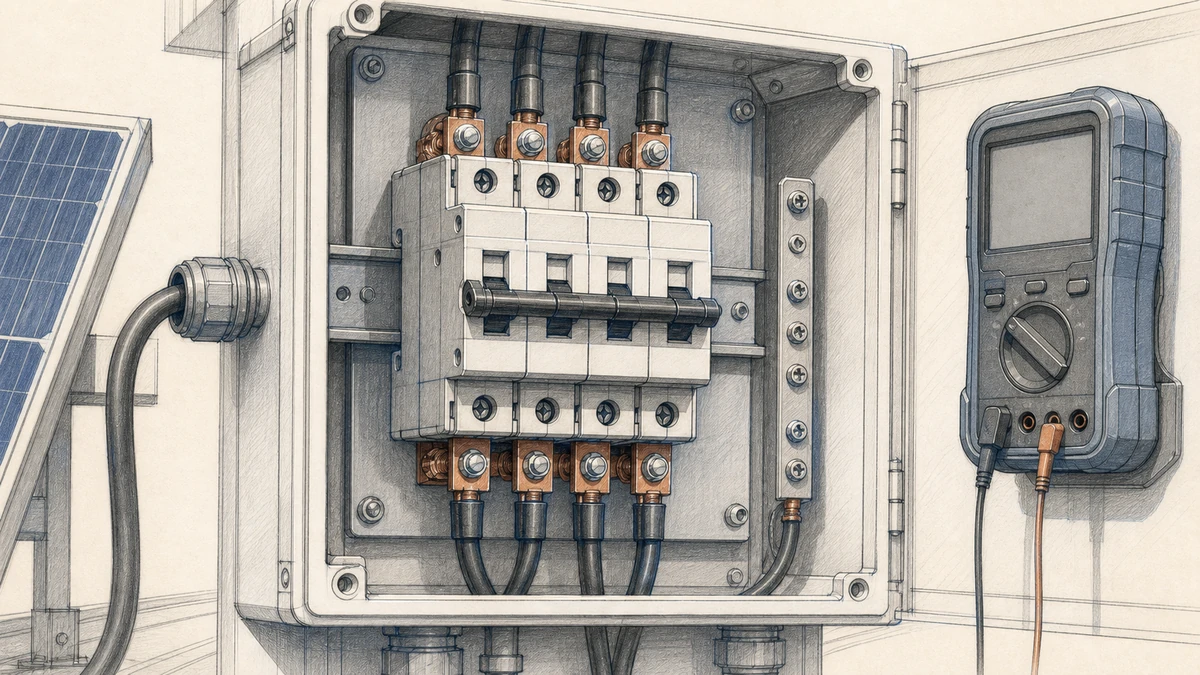
Isolation means the circuit breaker can provide a defined open gap suitable for separating a circuit from its supply under specified conditions. For DC systems, isolation is especially important because stored energy, PV string voltage, and battery voltage may remain present even after equipment is switched off.
A DC circuit breaker used as an isolating device should be selected according to its declared suitability for isolation. IEC 60947-2 includes suitability-for-isolation provisions, but the final decision must still follow the product marking, test rating, and installation standard.
In many DC systems, both positive and negative conductors may need to be disconnected. This is common where neither pole is permanently bonded to earth, or where maintenance safety requires full separation from the DC source.
A 2P breaker may disconnect both positive and negative conductors in lower-voltage applications. A 4P breaker may disconnect both conductors with multiple poles in series per conductor for higher-voltage applications.
The correct arrangement depends on whether the system is:
PV DC systems require particular attention because a ground fault can change which breaker poles actually interrupt the fault current. Technical guidance for PV DC equipment notes that the number of poles in series must match the system voltage and per-pole rating, and that ground-fault conditions can affect how many poles participate in interrupting the fault.
This means a circuit may appear correctly protected during normal operation but become under-protected during a ground fault if the pole arrangement is wrong. For this reason, Sinobreaker DC Circuit Breaker wiring diagrams should be followed exactly.
For lower-voltage DC distribution, such as control power, telecom DC, small battery systems, or auxiliary DC circuits, a 2P DC circuit breaker may be appropriate if the system voltage and fault current are within rating.
In this case, the breaker may be used to disconnect both conductors or may be wired according to the approved series-pole arrangement. Selection should still confirm DC voltage rating, breaking capacity, and isolation marking.
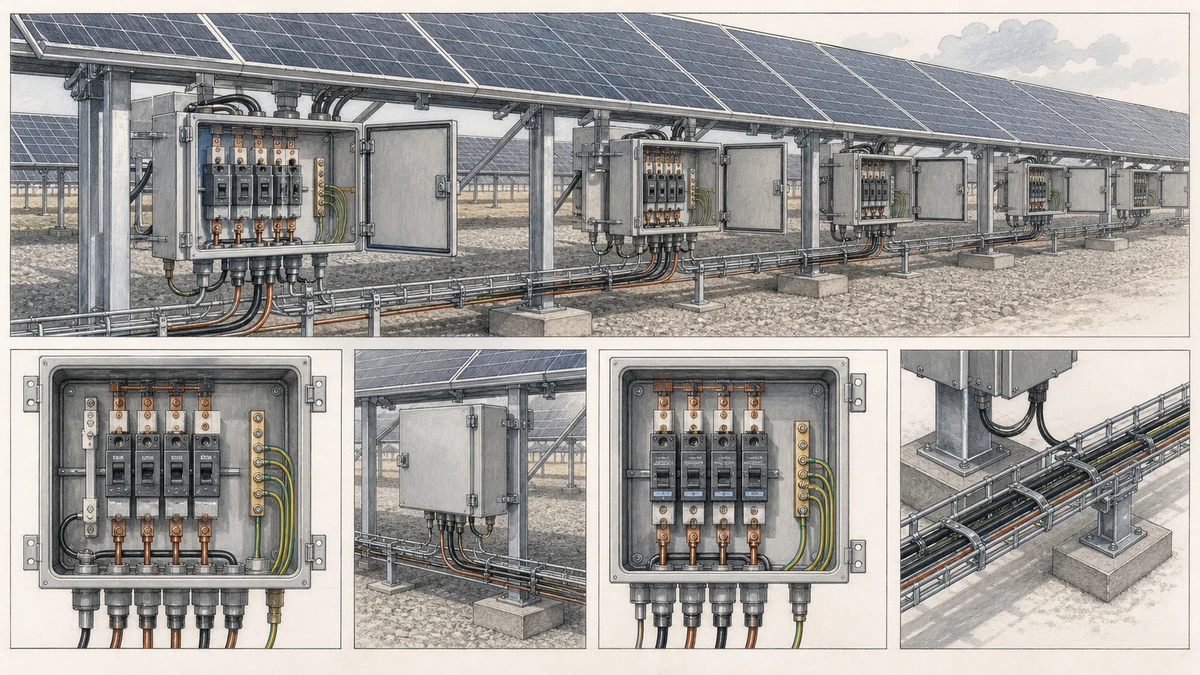
PV arrays can produce high open-circuit voltages, especially in cold conditions. A 4P DC circuit breaker is often considered where multiple poles are needed in series to meet the system voltage.
However, PV use requires more than choosing 4P. The designer must verify:
Battery systems can deliver high fault current and maintain voltage continuously. In these applications, the difference between a 2P and 4P DC breaker may affect both interruption performance and maintenance isolation.
A 4P breaker may be required when the battery system voltage exceeds the rating of a 2P arrangement. But the breaker must also have a suitable DC breaking capacity for the battery fault level.
Choosing between 2P and 4P should follow an engineering sequence rather than a visual comparison.
Start with the maximum possible DC voltage, not only the nominal voltage. For PV, use the cold-temperature corrected open-circuit voltage. For batteries, consider maximum charge voltage. For DC distribution, consider supply tolerance and transient conditions required by the design.
Review the breaker’s DC rating table. If the device requires two poles in series for a given voltage, do not use only one pole. If it requires four poles in a specific arrangement, do not substitute a different wiring method.
The breaker rating applies to the tested connection arrangement, not simply to the number printed on the handle.
The selected Sinobreaker DC Circuit Breaker must have an adequate breaking capacity at the application voltage. DC interruption capability can decrease as voltage increases, so the breaking capacity must be checked at the exact voltage level or approved rating point.
If the breaker is intended to serve as an isolating device, confirm suitability for isolation. This is especially important for maintenance disconnects, PV combiner outputs, battery isolation points, and DC distribution panels.
Many DC circuit breakers are polarity-sensitive. Reversing source and load connections, or changing the pole series arrangement, can affect arc movement and interruption performance.
Always follow the Sinobreaker wiring diagram supplied for the exact product model and voltage configuration.
A 4P breaker can provide more connection options, but it is not a universal replacement for every 2P breaker. If the 4P breaker is not wired according to its approved DC configuration, the expected voltage rating may not apply.
In PV systems and floating DC systems, fault current paths may not be the same as normal load current paths. A ground fault may place interruption stress on fewer poles than expected. This is why system grounding and fault analysis matter when comparing 2p vs 4p dc circuit breaker options.
An AC voltage rating cannot be used as a DC voltage rating unless the product is specifically marked and certified for that DC application. DC arcs are harder to extinguish, so the DC rating must be checked separately.
Series poles can help divide voltage during interruption, but only under tested conditions. The breaker design, internal arc path, magnetic blowout structure, wiring direction, and polarity all influence performance.
For Sinobreaker DC Circuit Breaker selection, use a 2P device when the application voltage, breaking capacity, isolation requirement, and wiring arrangement are fully covered by the 2P rating.
Use a 4P device when the system requires additional poles in series, higher declared DC voltage capability, or a specific positive/negative isolation arrangement that cannot be met by a 2P breaker.
The final decision should be based on:
No. A 4P DC circuit breaker is only better when the system requires the approved 4-pole arrangement. If the circuit voltage and fault current are within the 2P breaker’s rating, a 2P breaker may be the correct and simpler choice.
Only if the 2P breaker is specifically rated for the PV string’s maximum DC voltage and fault conditions. Many high-voltage PV applications require more poles in series, so the approved Sinobreaker wiring diagram and voltage rating must be checked before installation.
It can, but only if it is declared suitable for isolation under the applicable standard and product marking. Do not assume every DC circuit breaker automatically meets isolation requirements for maintenance or safety disconnection.