Adresse
304 North Cardinal
St. Dorchester Center, MA 02124
Heures de travail
Du lundi au vendredi : de 7h00 à 19h00
Le week-end : 10H00 - 17H00
Adresse
304 North Cardinal
St. Dorchester Center, MA 02124
Heures de travail
Du lundi au vendredi : de 7h00 à 19h00
Le week-end : 10H00 - 17H00

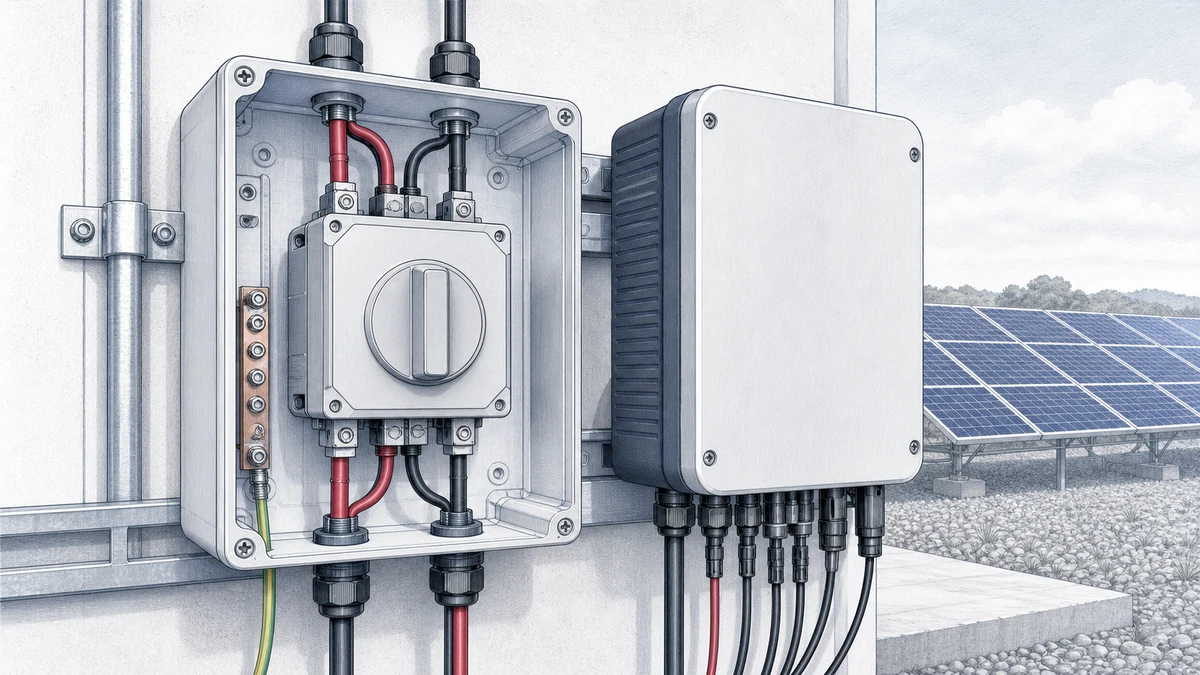
For PV, battery, EV charging, telecom, and other DC systems, the phrase **dc switch disconnector load breaking** must be treated carefully. A device may be suitable for isolation, but that does not automatically mean it can safely open a live DC circuit under load.
A Sinobreaker DC Switch Disconnector should always be selected and operated according to its marked voltage, current, utilization category, wiring diagram, polarity requirements, and installation instructions. In DC applications, the difference between “isolate” and “break load” is not a wording detail. It is a safety-critical distinction.
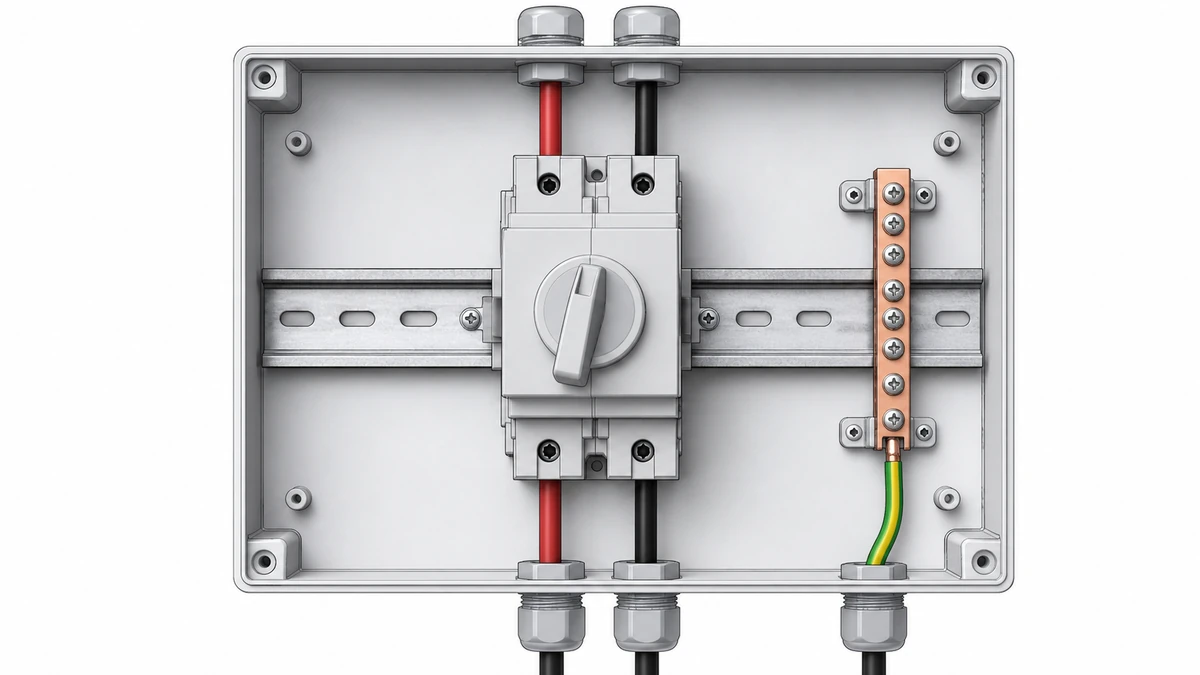
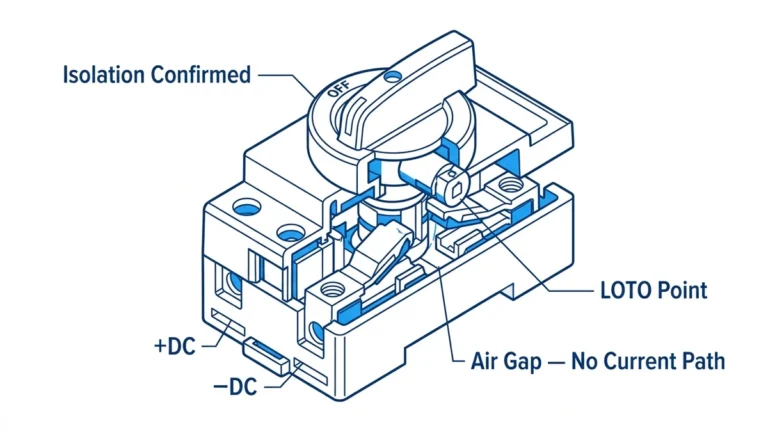
A DC Switch Disconnector is commonly used to provide a visible or defined off position for maintenance, emergency isolation, or system sectionalizing. When it is also rated to interrupt current, it may be used to open a circuit while current is flowing.
Isolation means the device can provide a safe separation distance after the circuit has already been opened or when the circuit is not carrying current. Load breaking means the device can interrupt current and extinguish the arc created when contacts separate.
In DC circuits, the arc does not naturally pass through zero every half cycle as it does in AC systems. This makes DC interruption more demanding. A switch that appears mechanically similar to a DC load-break switch may still be unsuitable for opening load unless its ratings confirm that function.
When a DC contact opens under load, the current can continue flowing through an arc. The device must stretch, cool, split, and extinguish that arc inside its arc chamber. If the switch is not designed for this duty, the result can be contact welding, enclosure damage, sustained arcing, fire risk, or failure to isolate.
This is why a Sinobreaker DC Switch Disconnector should not be judged only by handle size, enclosure type, pole count, or the word “isolator.” The actual load-breaking capability must come from the device marking and documentation.
IEC 60947-3 applies to switches, disconnectors, switch-disconnectors, and fuse-combination units up to 1,500 V DC. It includes requirements and tests relevant to DC switching, including load-current operation. The important point is that isolation terminology alone does not prove a specific load-breaking capability.
IEC 60947-3 defines utilization categories that describe the type of load and test duty. These categories matter because a DC switch used in a PV string, a battery circuit, or a resistive DC load may face different electrical stresses.
For example, PV DC disconnect applications often refer to categories such as DC-PV2. Industry product literature, including PV disconnect guides, identifies these categories as being tied to load behavior and test conditions rather than to a generic “isolator” label. In practical terms, the utilization category tells the installer what kind of DC duty the device has been tested for.
A device called a switch, isolator, disconnector, or switch-disconnector may have different capabilities depending on its construction and certification. For Sinobreaker selection, the nameplate and datasheet should be checked for:
If the rating does not state that the device can break load at the system voltage and current, it should be treated as an off-load isolator.
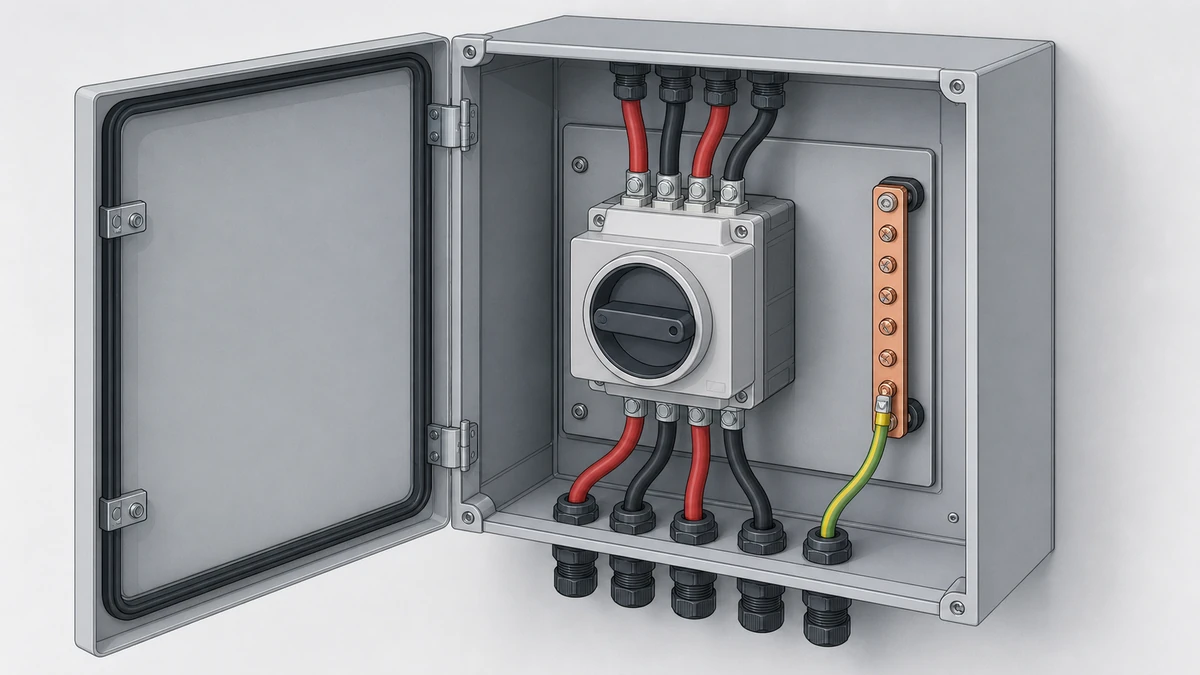
A Sinobreaker DC Switch Disconnector can open load only when the complete application matches the device rating and installation instructions. The switch must be designed, tested, wired, and operated for that duty.
Load-breaking suitability depends on the actual system voltage and current, not only on the nominal system type. A switch rated for a certain current at 500 V DC may not have the same load-breaking capacity at 1,000 V DC. DC voltage strongly affects arc energy and interruption difficulty.
For PV systems, open-circuit voltage under low temperature conditions must be considered. For battery systems, maximum DC voltage and available current must be checked. For DC loads with inductive characteristics, the duty may be more severe than a simple resistive load.
If the application is PV DC isolation and switching, the relevant PV DC utilization category should be confirmed. ABB, for example, identifies DC-PV2 as a utilization category for PV DC disconnects and publishes application-specific voltage and current ratings. This illustrates a key selection principle: load-breaking capability must be read from the actual rating and category of the device, not assumed from the product family name.
For Sinobreaker products, the same logic applies. The correct DC Switch Disconnector must be matched to the intended DC application category.
Many high-voltage DC switch disconnectors use multiple poles in series to divide arc voltage and improve interruption performance. If the poles are not connected according to the wiring diagram, the device may no longer meet its stated breaking rating.
A PV switch-disconnector example from Schneider Electric shows another important point: some DC devices are polarity sensitive and explicitly require the connection polarity to be respected. This is not a minor installation preference. Polarity, terminal direction, and circuit arrangement can affect arc movement and interruption behavior.
For Sinobreaker installations, always follow the supplied wiring diagram, including:
A DC Switch Disconnector rated for load breaking is intended to open normal load current within its rating. It is not automatically a short-circuit protective device. Fault interruption requires properly rated fuses, circuit breakers, or other protective devices coordinated with the system.
A switch-disconnector may survive and isolate after a protective device clears the fault, but it should not be expected to interrupt short-circuit current unless its documentation specifically states that capability.
A DC isolator cannot open load when the device is only rated for isolation, when the system exceeds its ratings, or when the installation does not match the tested configuration.
Some disconnectors are designed to be operated only when no current is flowing. These devices can provide isolation after another device has opened the circuit, but they should not be used to interrupt load current.
Warning signs include:
If these details are missing, do not assume load-breaking capability.
A DC Switch Disconnector that is suitable at one voltage may be unsuitable at a higher voltage. For example, using a device above its rated DC voltage can prevent the arc from extinguishing. Using it above its rated current can overheat contacts and increase arc energy.
In PV systems, this is especially important because cold-weather open-circuit voltage can exceed standard test condition values. In battery systems, high prospective fault current and sustained DC output must be considered.
Utilization categories are linked to load behavior. A switch tested for one kind of DC load should not be used for a different, more demanding duty without confirmation. Inductive loads, motors, capacitors, and battery circuits may create different stresses than PV string isolation.
The safe rule is simple: if the Sinobreaker datasheet does not cover the intended application, voltage, current, wiring arrangement, and duty, the switch should not be used to open load.
If a polarity-sensitive DC switch is wired backward, or if required series-pole links are omitted, the internal arc path may not work as designed. This can turn a rated load-break device into an unsafe installation.
Even where a product is mechanically capable of switching, incorrect wiring can invalidate its rating. Always check the connection diagram before energizing the circuit.
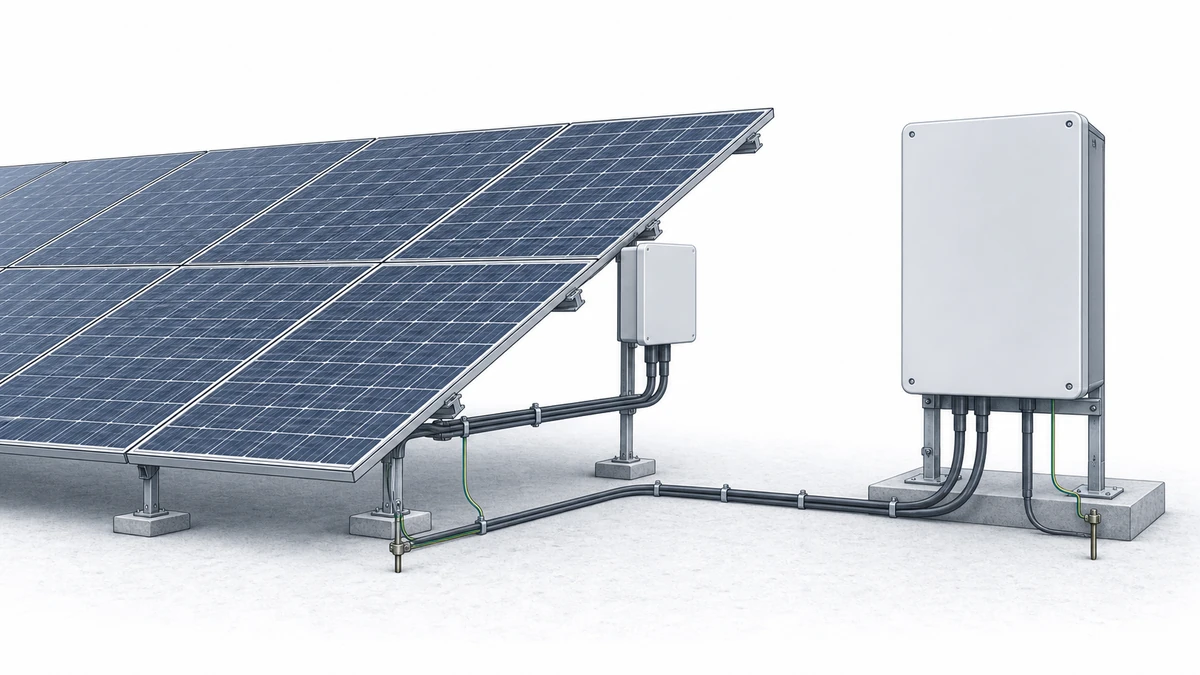
The correct selection process starts with the electrical system, then confirms the device rating.
Before selecting a Sinobreaker DC Switch Disconnector, identify:
For PV applications, calculate maximum open-circuit voltage at the lowest expected temperature. For battery applications, confirm maximum charge voltage and short-circuit protection coordination.
A suitable Sinobreaker DC Switch Disconnector should have a rating that clearly covers the intended duty. The device documentation should answer these questions:
If the answer is unclear, the device should not be treated as load-breaking equipment.
Load switching and fault protection are different functions. In many DC systems, the switch-disconnector provides manual isolation and load switching, while fuses or breakers provide short-circuit protection.
A good design coordinates:
This coordination helps ensure that the Sinobreaker DC Switch Disconnector is used within its intended role.
Even a correctly selected switch can become unsafe if installed or operated incorrectly. DC load-breaking performance depends on the complete assembly.
For Sinobreaker DC Switch Disconnectors, follow the exact terminal layout supplied with the product. If the documentation specifies a connection direction, pole bridging method, or polarity arrangement, it must be respected.
Do not improvise pole combinations to reach a higher voltage unless the manufacturer has approved that configuration. DC interruption is tested in specific arrangements, and changing those arrangements can change arc behavior.
A DC switch installed outdoors, in a combiner box, near an inverter, or inside a battery cabinet may face heat, humidity, dust, UV exposure, or condensation. These conditions can affect insulation, contact temperature, and enclosure performance.
Check the installation requirements for:
A load-break switch should be operated decisively. Slow, hesitant, or partial handle movement can prolong arcing and increase contact damage. Operators should switch firmly from ON to OFF or OFF to ON according to the product instructions.
If the device shows signs of damage, heat discoloration, abnormal sound, mechanical stiffness, or smell after operation, it should be isolated by qualified personnel and inspected before reuse.
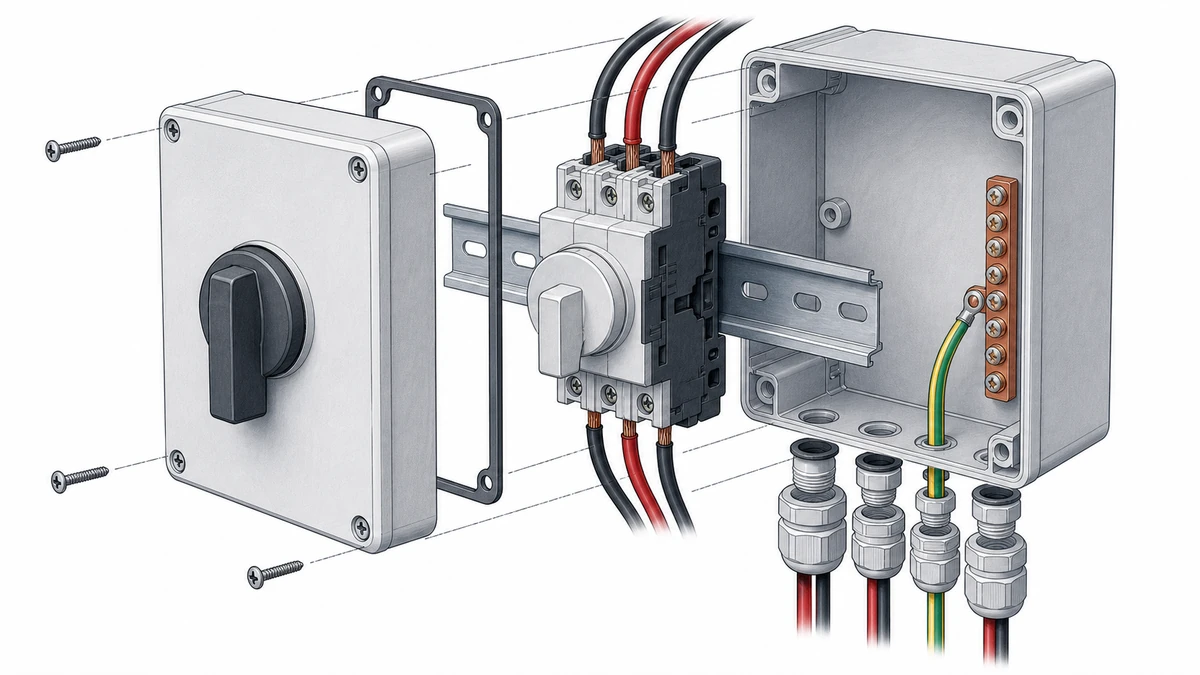
Many unsafe installations come from assuming that similar-looking devices have the same performance. In DC systems, assumptions can be dangerous.
An isolator may provide safe separation but may not be rated to interrupt current. A switch-disconnector combines switching and isolation functions only when the rating confirms both.
A device may be DC rated at a lower voltage or current than the application requires. Always compare the exact voltage and current values.
Using more poles can be part of a certified DC switching arrangement, but only when connected as tested and instructed. Randomly placing poles in series is not a substitute for a verified rating.
Some PV DC switch-disconnectors require correct polarity. The installation manual controls how the device should be connected and operated.
Yes, but only if it is specifically rated for load breaking at the actual DC voltage, current, utilization category, and wiring configuration of the system. A Sinobreaker DC Switch Disconnector should be checked against its label, datasheet, and installation instructions before being used to open load.
Only if the isolator is also rated as a load-break switch for that application. If it is marked for isolation only, it should not be used to interrupt load current. Emergency switching in DC systems must use equipment with confirmed breaking capacity.
Check the maximum DC voltage, operating current, utilization category, polarity requirements, pole configuration, environmental rating, and coordination with fuses or circuit breakers. For safe dc switch disconnector load breaking, the device rating must match the complete application, not just the system name.