Adresse
304 North Cardinal
St. Dorchester Center, MA 02124
Heures de travail
Du lundi au vendredi : de 7h00 à 19h00
Le week-end : 10H00 - 17H00
Adresse
304 North Cardinal
St. Dorchester Center, MA 02124
Heures de travail
Du lundi au vendredi : de 7h00 à 19h00
Le week-end : 10H00 - 17H00

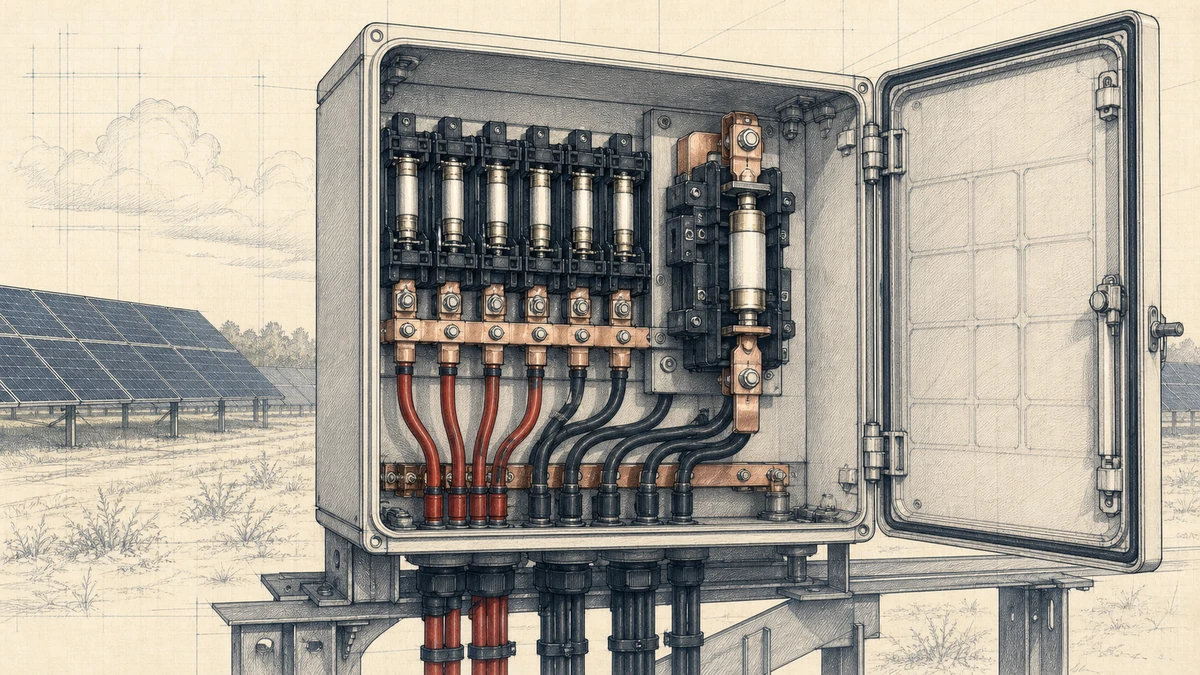
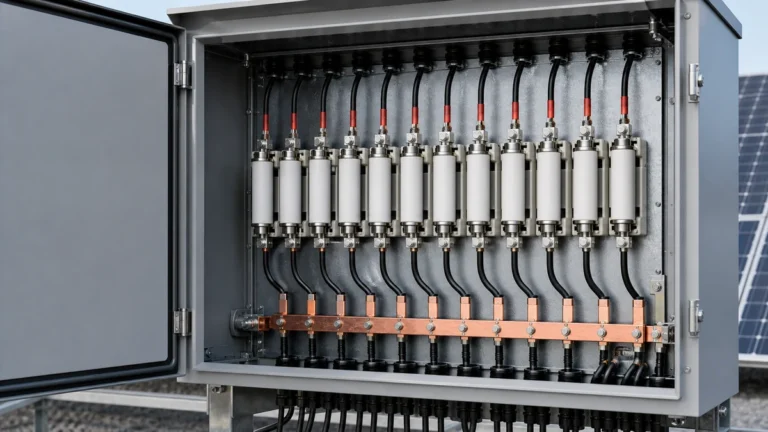
In PV combiner boxes, inverter inputs, battery-adjacent DC circuits, and other solar DC protection points, the fuse ampere rating is only one part of the selection decision. The more critical question is whether the fuse-link is actually rated to interrupt the available DC fault current at the system voltage.
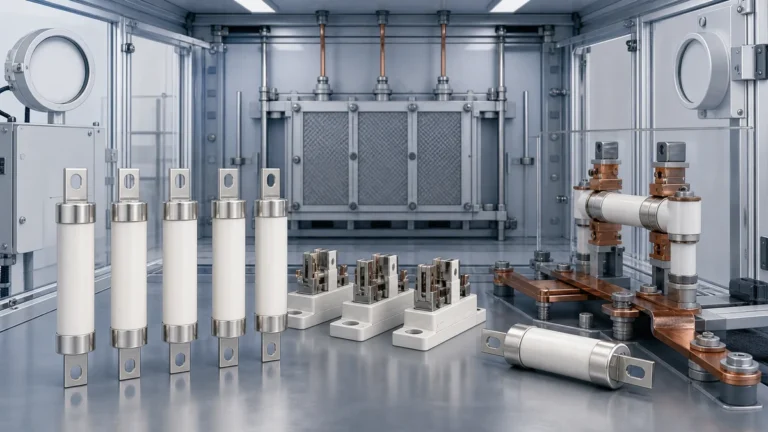
That is why the phrase **gpv fuse dc voltage rating** matters. A gPV fuse is not simply a fuse with the correct current rating. It is a DC fuse-link designed and declared for photovoltaic overcurrent protection duty, with a specified DC voltage rating, interrupting rating, utilization category, and compatible mounting arrangement.
For Sinobreaker DC Fuse applications, the practical rule is simple: do not substitute an AC voltage assumption for a DC interrupting requirement. DC arcs behave differently, PV fault currents have their own characteristics, and the complete fuse-holder assembly must be checked as a rated system.
In an AC circuit, current naturally passes through zero every half-cycle. That zero crossing helps extinguish an arc once the fuse element melts and the circuit opens. The fuse still needs a proper interrupting rating, but the waveform gives the device a natural interruption opportunity.
A DC circuit does not provide that same assistance. Once a DC arc is established, there is no periodic voltage zero crossing to help force the current to stop. The fuse must create enough arc voltage, cooling, separation, and internal energy absorption to interrupt the circuit safely.
This is the central reason an AC-rated fuse cannot be assumed suitable for DC service. Even if the ampere rating looks correct, the DC interruption duty may exceed what the fuse-link was designed, tested, or declared to handle.
The DC voltage rating of a gPV fuse-link defines the maximum DC system voltage at which that fuse-link is intended to interrupt faults under its declared conditions. In PV systems, this can be especially important because string and array voltages may rise under cold open-circuit conditions.
IEC 60269-6 provides supplementary requirements for fuse-links used in photovoltaic strings and arrays in equipment with nominal voltages up to 1,500 V DC. This standard scope reinforces a key point: PV fuse-links are treated as a distinct DC protection category, not as ordinary AC fuses with a different label.
For system designers and installers, the voltage check should come before any convenience substitution. If the application is 1,000 V DC or 1,500 V DC, the selected gPV fuse-link must be explicitly rated for that DC service.
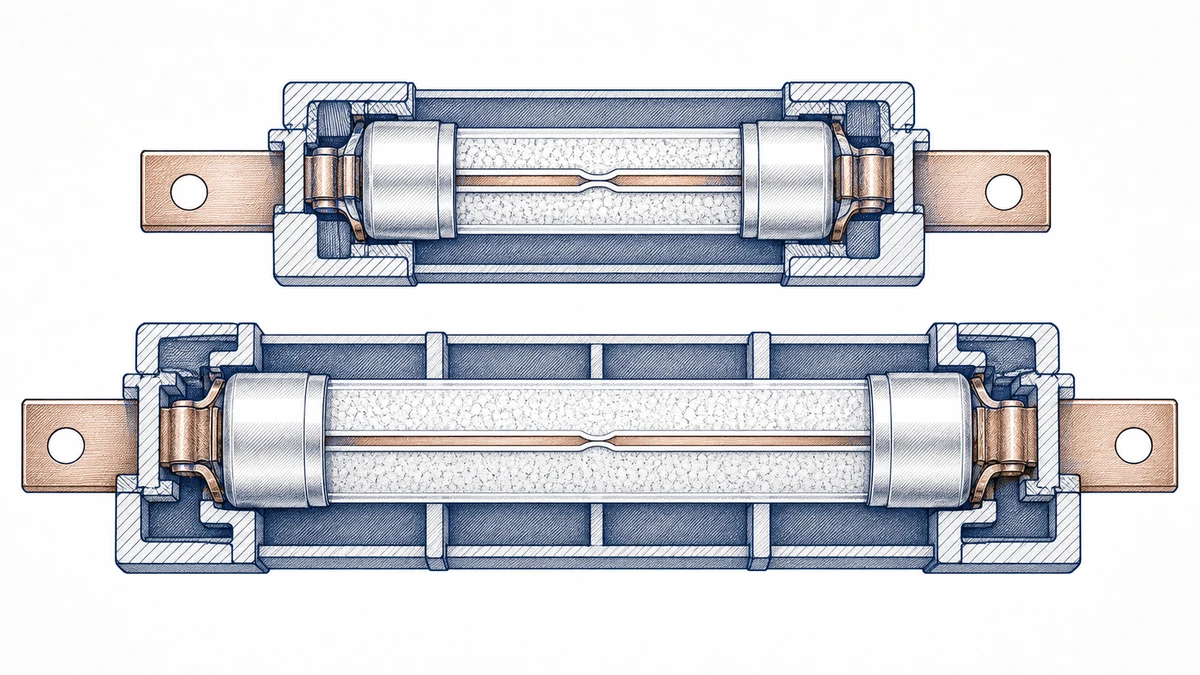
When a fuse-link operates, the fusible element melts and an internal arc forms. The fuse must then control and extinguish that arc before the fault can continue to damage conductors, modules, equipment, or enclosures.
In DC service, arc extinction depends heavily on the fuse construction and the actual circuit conditions. Industry technical guidance notes that DC interruption must consider the DC voltage, the fault-path time constant, and the prospective fault current. These factors affect how much energy the fuse must absorb and how difficult it is to force the arc to extinguish.
That is why “same ampere rating” is not enough. A 16 A fuse-link, for example, may look suitable by current alone, but the correct selection also depends on its declared DC voltage rating, gPV classification, and interrupting capacity.
The interrupting rating is the maximum prospective fault current the fuse-link is rated to interrupt at its declared voltage and test conditions. For PV circuits, the available fault current may be limited compared with some industrial power systems, but it still must be calculated and compared with the fuse-link data.
PV fuse product data commonly pairs the voltage rating with the interrupting rating and gPV class. That pairing matters because the fuse is not being selected as a generic current-limiting component. It is being selected for a specific DC fault interruption duty.
A compliant selection process checks:
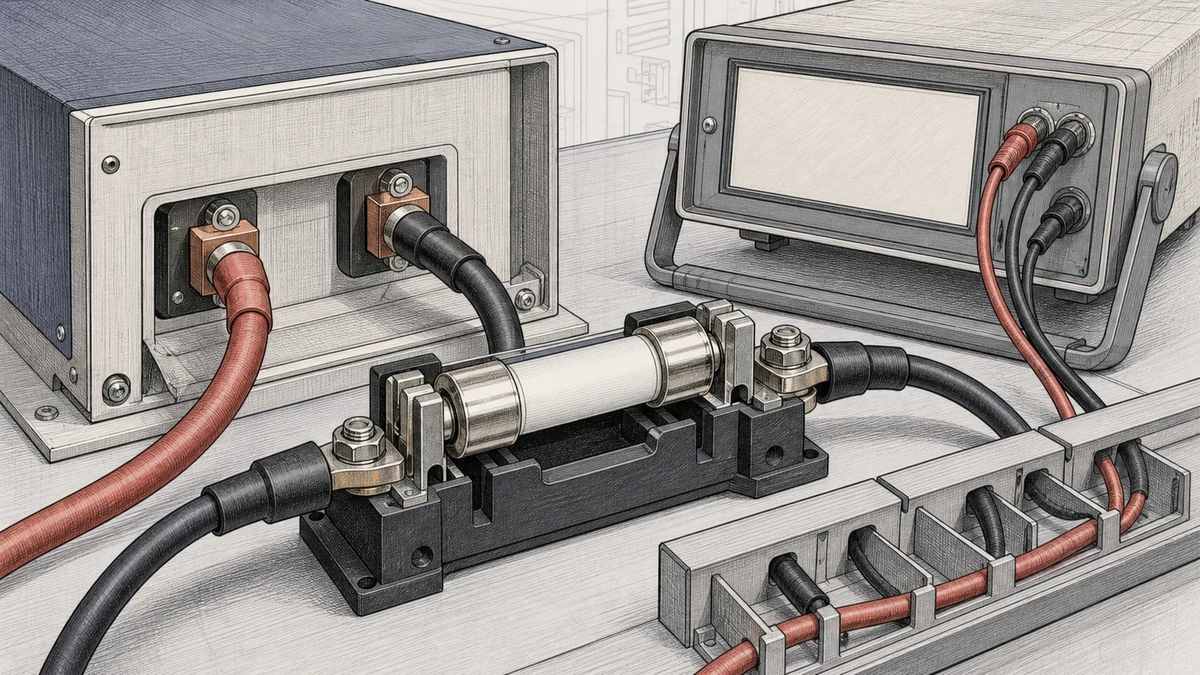
The gPV category is used for photovoltaic fuse-links intended to protect PV strings and arrays. These fuse-links are designed for the operating behavior of PV sources, where current contribution, voltage level, and fault characteristics differ from typical AC distribution systems.
IEC 60269-6 specifically addresses supplementary requirements for PV fuse-links in equipment with nominal voltages up to 1,500 V DC. For Sinobreaker DC Fuse selection, this supports a disciplined approach: choose a fuse-link declared for PV DC service, not a general fuse chosen only by physical size or ampere rating.
The gPV marking helps identify that the fuse-link is intended for PV overcurrent protection, but it does not replace the need to verify the exact ratings printed on the fuse and listed in the product data.
A fuse rated 10 A, 15 A, or 20 A tells you about continuous current selection, but it does not tell you whether the fuse can safely interrupt a DC fault at the installed voltage. The ampere rating must be coordinated with the PV string current, expected ambient conditions, enclosure derating, and applicable design rules.
After that, the DC voltage rating and interrupting rating must be verified. This is where many selection errors occur. A fuse may be mechanically similar to another model, but if its declared DC voltage or interrupting rating is lower, it cannot be treated as equivalent.
For a gPV fuse, the full identity matters:
A correctly selected gPV fuse-link still needs a compatible fuse-holder. The holder must be rated for the voltage, current, environmental conditions, and short-circuit duty of the installation. If the holder rating is lower than the fuse-link rating, the usable assembly is limited by the holder.
This is not just a documentation detail. The holder provides spacing, insulation, heat management, contact pressure, and touch protection. In DC PV systems, inadequate holder voltage rating or poor coordination can create overheating, arcing, or unsafe clearing behavior.
Published fuse-holder data commonly lists voltage and interrupting-related compatibility information. This reflects the same principle used for fuse-links: the installed configuration must be selected as a complete rated assembly.
A common shortcut is to assume that a fuse-link from one rating class can be placed into any physically compatible holder. That assumption can be dangerous. Physical fit does not confirm electrical suitability.
Before installing a Sinobreaker DC Fuse arrangement or any PV fuse assembly, confirm:
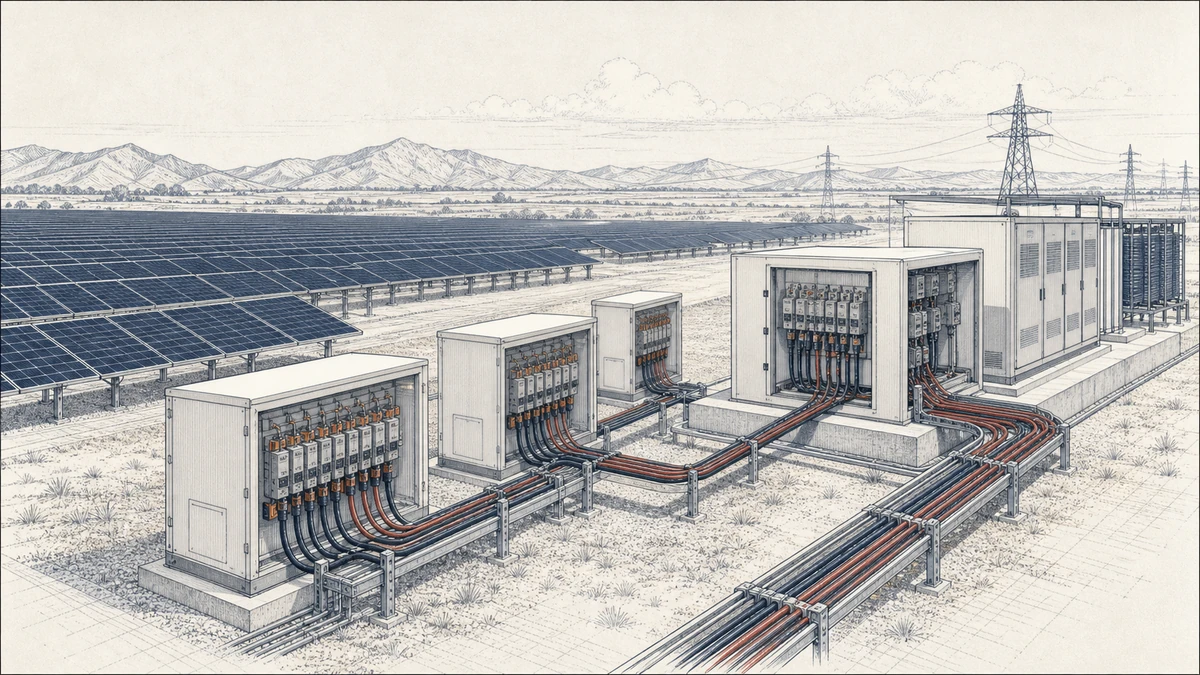
Start with the maximum possible DC voltage, not only the nominal operating voltage. In PV systems, this usually means considering cold-temperature open-circuit voltage. The selected gPV fuse-link voltage rating must be equal to or higher than that maximum value.
For example, a nominal system may operate below its nameplate maximum most of the time, but the fuse still needs to be rated for the highest voltage it may face during fault interruption.
Next, calculate or verify the prospective fault current at the fuse location. The fuse-link interrupting rating must exceed this value at the relevant DC voltage. If the available fault current is higher than the declared interrupting capacity, the fuse is not suitable.
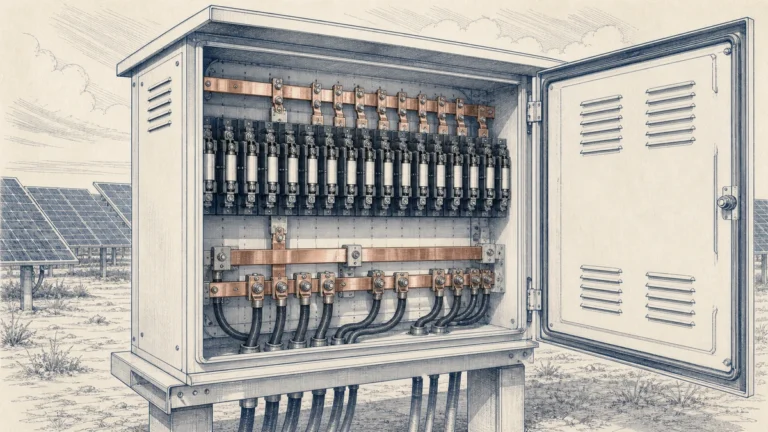
This check should include the actual system configuration, such as parallel strings, combiner layout, inverter input architecture, conductor routing, and any upstream or adjacent current sources.
The fuse-link should be marked and documented for gPV PV service. Product data should show the DC voltage rating, interrupting rating, current rating, and applicable standard or utilization category.
This is where the exact part number matters. Two fuse-links with similar current ratings may have different voltage ratings, breaking capacities, dimensions, or approvals. Selection should follow the declared data for the exact fuse-link, not a visual match.
After selecting the fuse-link, verify the fuse-holder and installation conditions. The fuse-holder must be compatible with the fuse-link and rated for the same installation duty. The wiring, terminals, enclosure, and thermal environment also need to support the continuous current and fault-clearing requirements.
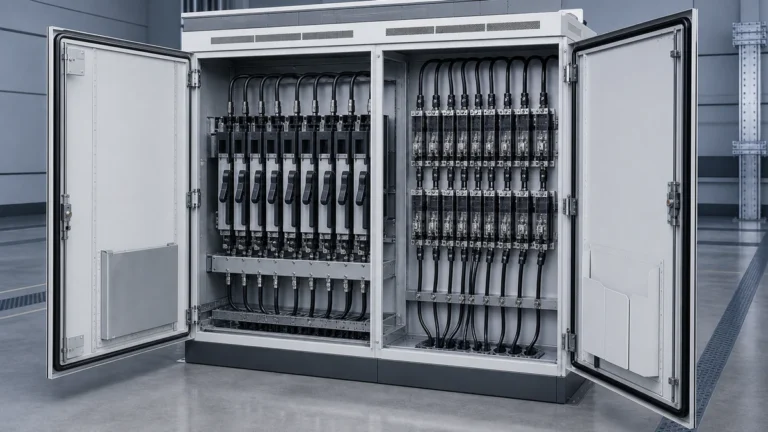
In practice, the safest configuration is one where the fuse-link, holder, and enclosure design are selected together rather than assembled from unrelated components.
An AC voltage rating does not automatically translate into a DC voltage rating. The interruption physics are different, and DC arcs can be more difficult to extinguish. Use only the declared DC rating for DC applications.
The ampere rating protects against overcurrent under defined conditions, but it does not prove the fuse can interrupt a DC fault at the installed voltage. Always pair current rating with DC voltage rating, interrupting rating, and gPV classification.
A high-rated fuse-link cannot upgrade a lower-rated holder. The assembly is limited by the weakest declared component rating. Holder voltage, current, thermal performance, and installation suitability all matter.
Many fuse-links may look similar or fit into similar spaces, but that does not confirm DC service suitability. Exact part data, ratings, and holder compatibility must be checked before installation.
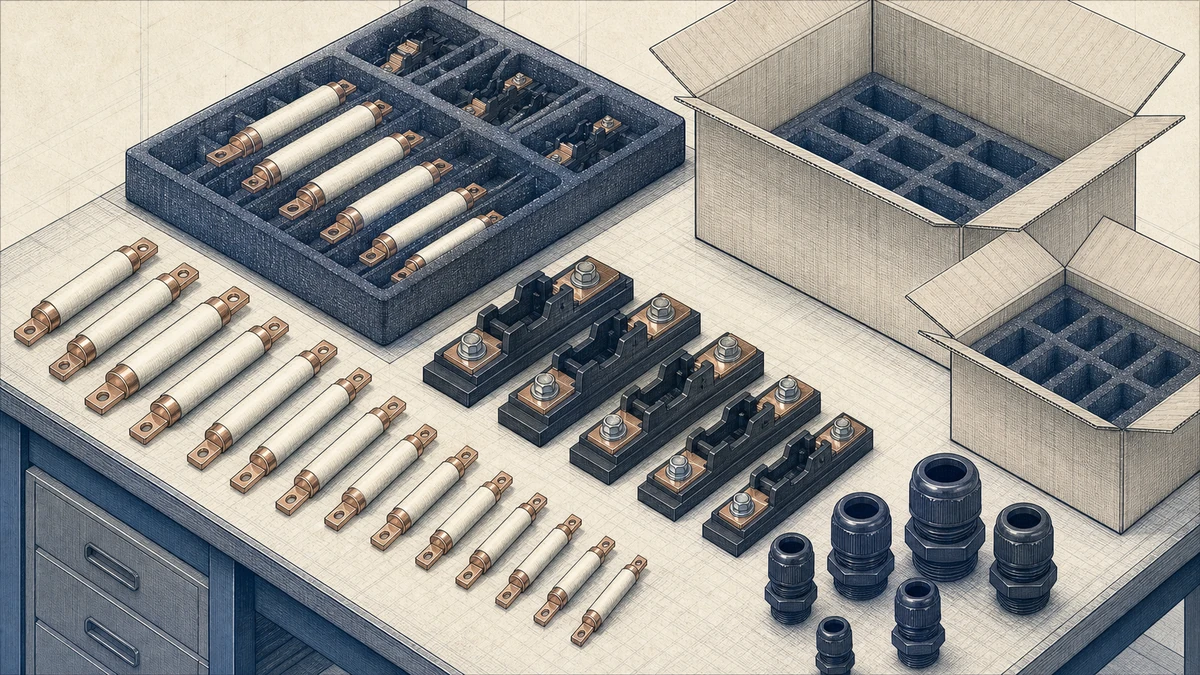
The purpose of a gPV fuse is not only to open during abnormal current. It must open safely under the specific DC conditions of the PV system. If the fuse-link is underrated for voltage or interrupting duty, the fault may not clear as intended.
That can lead to sustained arcing, equipment damage, fire risk, or unsafe service conditions. It can also compromise the expected protection coordination of a combiner box, inverter input, or PV array circuit.
For Sinobreaker DC Fuse selection, the best practice is to treat the gPV fuse voltage rating as a mandatory design parameter. It belongs in the same selection checklist as current rating, breaking capacity, temperature conditions, holder compatibility, and installation method.
It means the fuse-link is rated for photovoltaic DC service up to a specified maximum DC voltage. The **gpv fuse dc voltage rating** must be equal to or higher than the maximum DC voltage the fuse may need to interrupt during a fault.
No, not unless the fuse is explicitly rated and documented for the required DC service. DC circuits have no natural voltage zero crossing, so the fuse must be designed and tested to interrupt DC faults at the declared voltage and prospective current.
The fuse-holder must be compatible with the fuse-link and suitable for the installation voltage, current, and fault conditions. If the holder has a lower declared rating than the fuse-link, the complete assembly is limited by the lower rating.