Indirizzo
304 Nord Cardinale
St. Dorchester Center, MA 02124
Orario di lavoro
Da lunedì a venerdì: dalle 7.00 alle 19.00
Fine settimana: 10.00 - 17.00
Indirizzo
304 Nord Cardinale
St. Dorchester Center, MA 02124
Orario di lavoro
Da lunedì a venerdì: dalle 7.00 alle 19.00
Fine settimana: 10.00 - 17.00

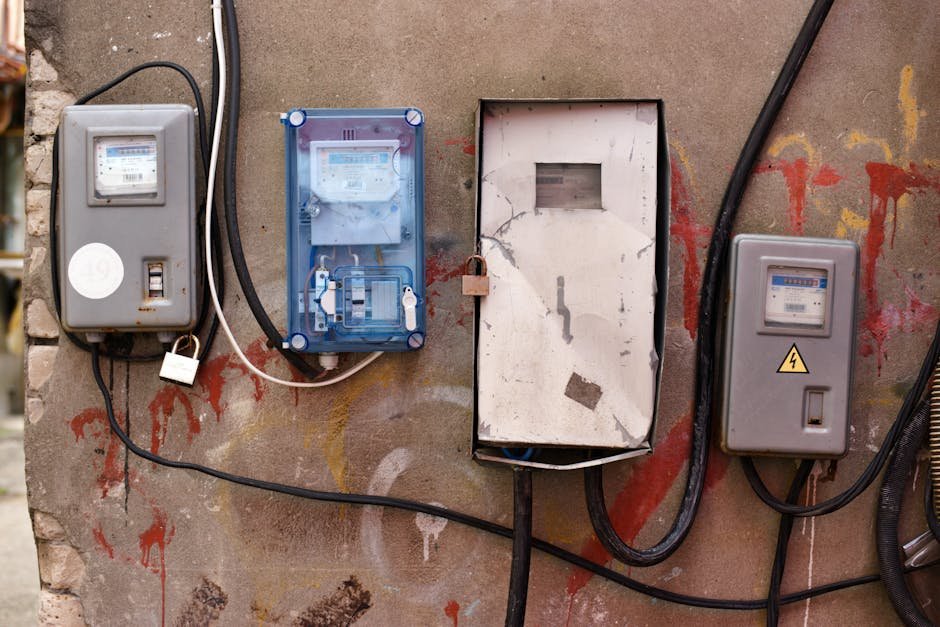
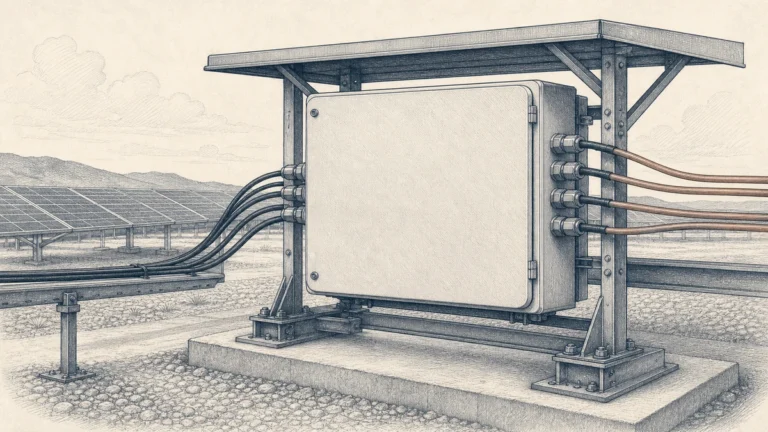
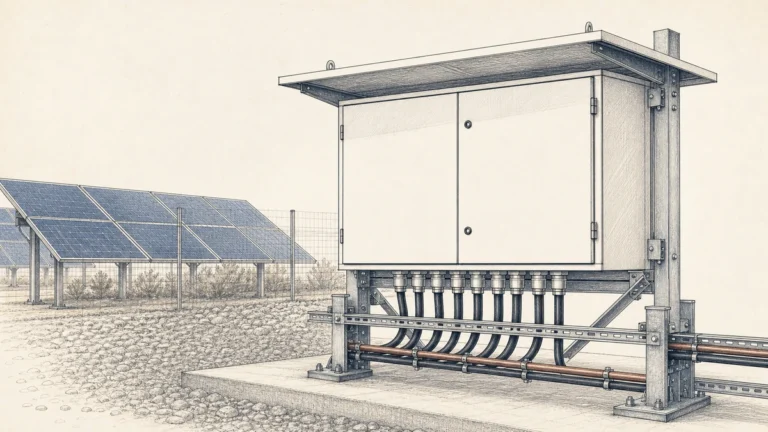
Selecting the right outdoor electrical box cover requires understanding how material composition, environmental ratings, and design features work together to protect your electrical system. With metal, plastic, and fiberglass options each offering distinct advantages, making an informed specification decision prevents costly failures and ensures long-term reliability.
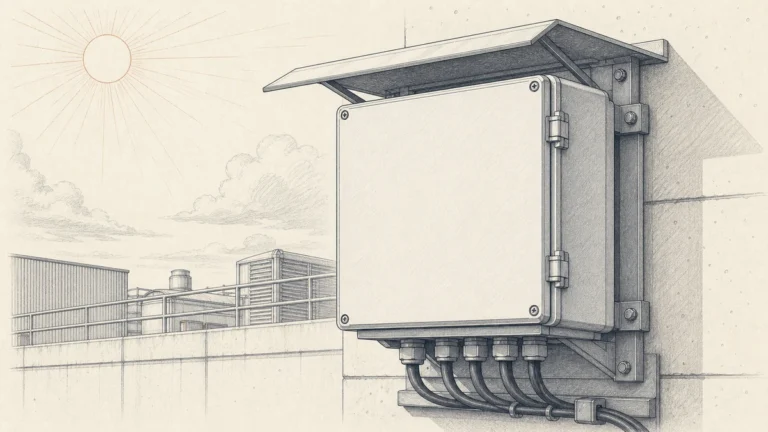
Outdoor electrical box covers face extreme environmental challenges—from UV radiation and temperature swings to moisture intrusion and physical impact. The wrong cover material can deteriorate within months, while poorly specified gasket systems allow water infiltration that corrodes connections and trips breakers. Understanding the specification criteria for covers helps you match the right protection level to your specific environmental exposure.
This comprehensive guide breaks down the critical specification parameters for outdoor electrical box covers. You’ll learn how to evaluate cover materials based on environmental exposure, interpret NEMA and IP rating requirements, select appropriate gasket configurations, and specify hinge designs for different applications.
💡 Specification Priority: Material selection should be driven by environmental exposure first, then mechanical requirements—a plastic cover adequate for standard climates will fail rapidly in coastal or industrial environments where stainless steel or fiberglass is required.
An outdoor electrical box cover specification defines the material composition, environmental rating, sealing system, and mechanical features required to protect electrical equipment from weather, contamination, and physical damage. These specifications translate environmental challenges into measurable requirements that ensure proper protection.
Material Specification: Defines the base material (metal alloy, plastic polymer, or fiberglass composite) and its protective coatings or treatments that resist environmental degradation.
Environmental Rating: NEMA or IP codes that quantify the cover’s protection against specific hazards like water spray, dust intrusion, corrosion, and ice formation.
Gasket System: The sealing technology (foam, rubber, silicone) and gasket profile that creates a weather-tight seal between the cover and box body.
Mechanical Features: Hinge type, latch design, mounting method, and knockout configurations that determine installation flexibility and operational access.
A properly specified outdoor electrical box cover performs four critical protection functions:
1. Environmental Exclusion: Prevents rain, snow, dust, and contaminants from entering the enclosure through rated sealing systems and proper drainage design.
2. Resistenza alla corrosione: Protects both the cover itself and internal components from chemical attack through appropriate material selection and protective coatings.
3. Mechanical Protection: Shields equipment from physical impact, unauthorized access, and accidental contact through robust construction and secure fastening.
4. Thermal Management: Maintains safe operating temperatures through proper material thermal properties and ventilation design when required.
Analogia con il mondo reale: Specifying an outdoor electrical box cover is like choosing a phone case—a basic plastic case works fine indoors, but if you’re working on a construction site in harsh weather, you need a rugged, waterproof, shock-resistant case with proper seals. The specification ensures the protection matches the exposure.
Material specifications directly determine how long your cover will last in specific environmental conditions. A powder-coated steel cover rated for standard climates may rust through in 2-3 years near saltwater, while a properly specified 316 stainless steel or fiberglass cover provides 20+ years of service in the same location.
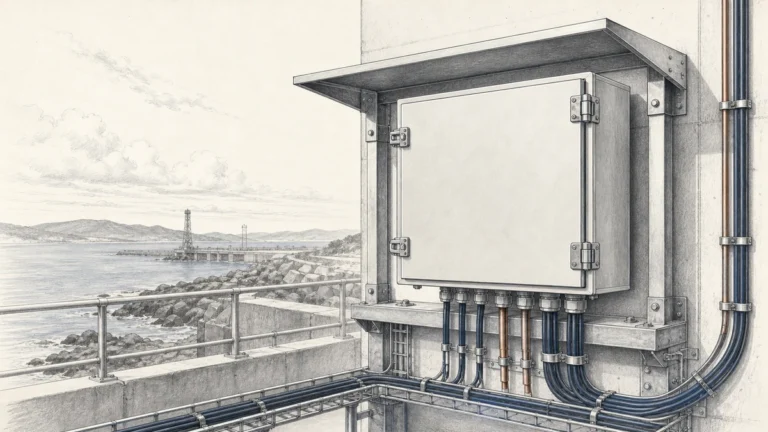
Esempio reale: A coastal industrial facility specified standard painted steel covers for outdoor motor control centers. Within 18 months, 40% of covers showed significant rust perforation, requiring emergency replacement with fiberglass NEMA 4X covers at triple the original cost plus labor and downtime expenses.
NEC Article 312 and 314 require outdoor enclosures to provide adequate protection against the specific environmental conditions present. Inspectors verify that cover ratings match location requirements—a NEMA 3R cover in a wet location or NEMA 4 where corrosion is present will fail inspection.
Why codes require proper ratings: Inadequate environmental protection leads to moisture infiltration, ground fault conditions, and fire hazards. Rating requirements ensure covers provide legally mandated protection levels.
Initial cover cost represents only 15-25% of total ownership cost over a 20-year lifecycle. Properly specified covers that resist environmental degradation eliminate replacement costs ($200-800 per cover including labor), reduce maintenance inspection frequency, and prevent equipment damage from moisture infiltration.
Cost Analysis Example: A 100A NEMA 3R steel cover costs $85, while a fiberglass NEMA 4X cover costs $165. In a corrosive environment, the steel cover requires replacement every 4 years ($340 total over 20 years plus four replacement labor charges at $120 each = $820 total cost), while the fiberglass cover lasts 20+ years ($165 total cost)—a $655 savings per cover.
Gasket specifications determine whether covers maintain weather-tight seals throughout their service life. Foam gaskets compress and lose sealing force within 2-5 years in high UV exposure, while properly specified EPDM or silicone gaskets maintain sealing for 15-20 years. Gasket failure is the leading cause of water infiltration in otherwise properly rated covers.
Hinge and latch specifications affect both operational safety and long-term reliability. Concealed hinges prevent injury from exposed hinge pins and resist corrosion better than external hinges. Quick-release latches enable faster emergency access, while padlockable latches prevent unauthorized operation. Proper specification balances these operational requirements with environmental protection.
Understanding each specification parameter helps you select covers that provide adequate protection without over-specification that increases costs unnecessarily.
Base Material Options:
- Carbon Steel: Lowest cost, requires protective coating, suitable for non-corrosive environments
- Stainless Steel (304/316): High corrosion resistance, higher cost, excellent durability
- Aluminum Alloy: Lightweight, natural corrosion resistance, moderate cost
- Polycarbonate Plastic: Impact resistant, UV stabilized, good insulation properties
- Fiberglass Reinforced Polyester (FRP): Maximum corrosion resistance, excellent strength-to-weight ratio
Coating and Treatment Specifications:
– Powder coating thickness and type (minimum 2-3 mils for outdoor use)
– Hot-dip galvanizing specification (ASTM A123 for steel components)
– Anodizing type and thickness for aluminum (Type II or III)
– UV stabilization additives for plastics (minimum 2% UV inhibitor concentration)
NEMA Rating System (North American):
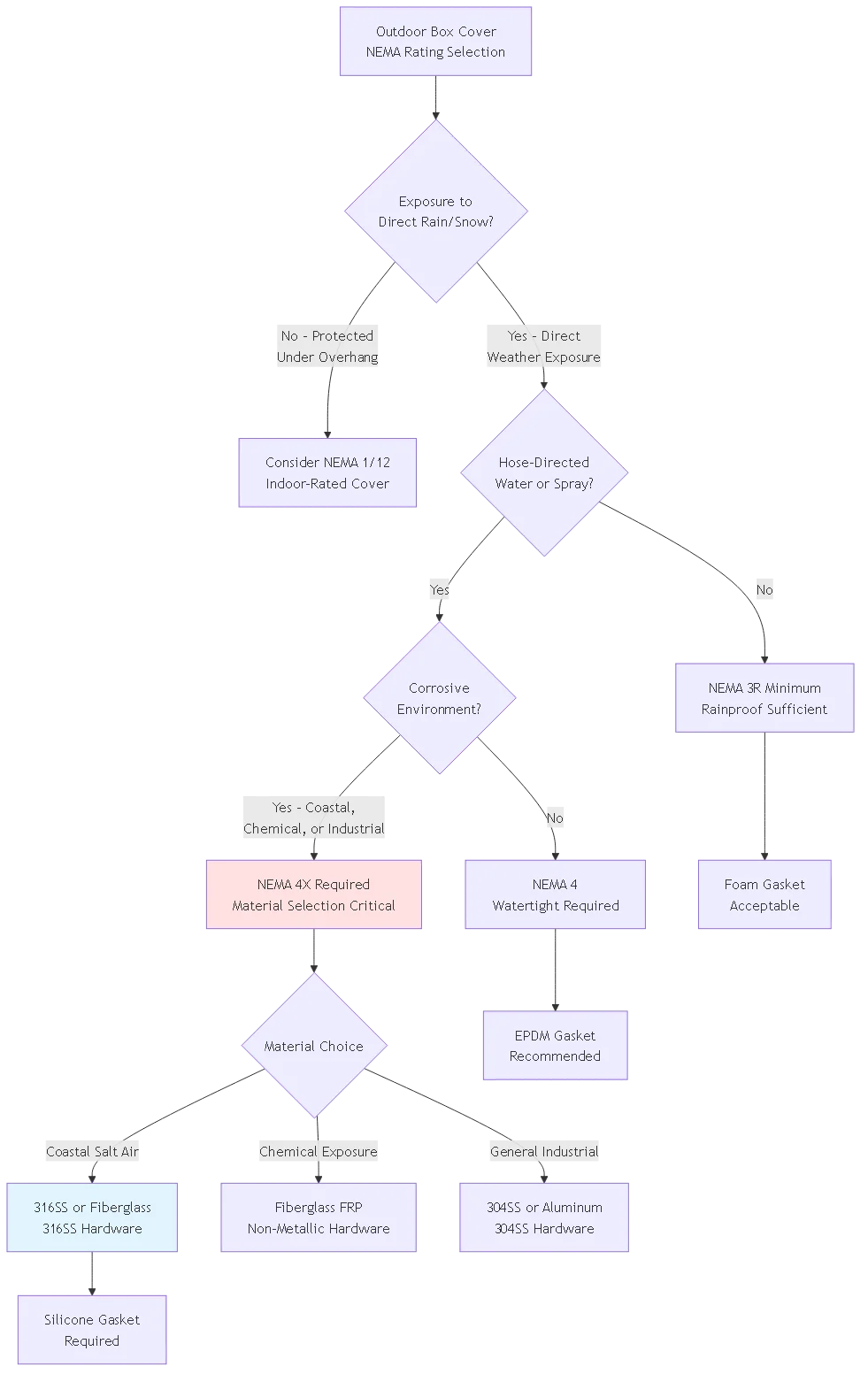
- NEMA 3R: Rain, sleet, ice resistant—minimum for outdoor use
- NEMA 3: NEMA 3R plus windblown dust protection
- NEMA 4: Hose-directed water and splashing resistant
- NEMA 4X: NEMA 4 plus corrosion resistance
- NEMA 6P: Submersion resistant for specific depth and duration
IP Rating System (International):
- IP65: Dust-tight, water jet resistant—common outdoor standard
- IP66: Dust-tight, heavy water jet resistant
- IP67: Dust-tight, temporary submersion resistant (1m for 30 min)
- IP68: Dust-tight, continuous submersion resistant
Gasket Material Selection:
- Foam Gaskets: Low cost, adequate for non-critical NEMA 3R applications, 3-5 year life
- EPDM Rubber: Excellent weather resistance, -40°F to +250°F temperature range, 15-20 year life
- Silicone Rubber: Superior UV and ozone resistance, -65°F to +400°F range, 20+ year life
- Neoprene: Good general weather resistance, oil resistant, 10-15 year life
Gasket Profile Specifications:
– Continuous one-piece design vs multi-piece (one-piece preferred for reliability)
– Gasket thickness (typically 1/8″ to 1/4″ compressed thickness)
– Compression ratio (25-40% compression for effective sealing)
– Adhesive-backed vs mechanically retained gaskets
Hinge Type Options:
- Continuous (Piano) Hinge: Full-length support, maximum strength, higher cost
- Butt Hinges: Two or three discrete hinges, lower cost, adequate for smaller covers
- Concealed Hinges: Protected from weather and damage, improved aesthetics
- Quick-Release Hinges: Tool-free cover removal for maintenance access
Hinge Material Requirements:
– Stainless steel minimum (300-series) for corrosive environments
– Brass or zinc-plated steel acceptable for standard environments
– Non-metallic hinges (reinforced nylon) for maximum corrosion resistance
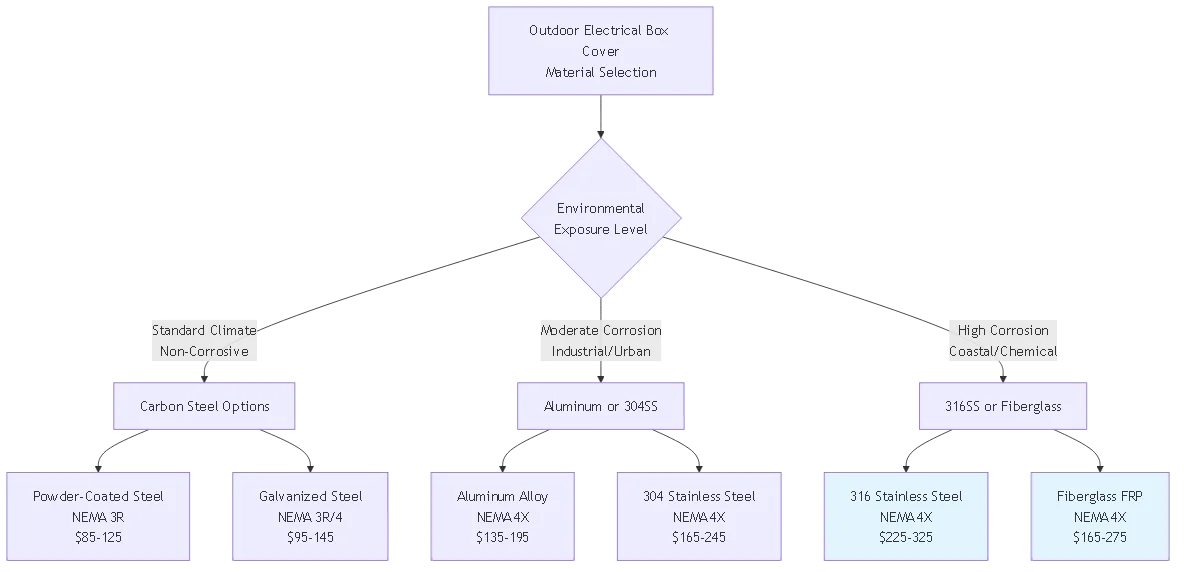
Carbon Steel (Powder-Coated or Galvanized)
✅ Vantaggi:
– Lowest initial cost ($85-145 for typical 100A cover)
– High mechanical strength and impact resistance
– Excellent electromagnetic shielding for sensitive equipment
– Wide availability from multiple manufacturers
– Easy to modify in field (drilling, cutting for custom applications)
❌ Svantaggi:
– Requires protective coating that degrades over time
– Susceptible to corrosion if coating is damaged
– Heavy weight complicates installation of larger covers
– Thermal expansion/contraction can stress gasket seals
– Requires grounding bonding connection
Ideale per: Standard climate outdoor installations where corrosion exposure is minimal and mechanical strength is prioritized. Typical applications include residential service panels, non-coastal commercial buildings, and protected locations under eaves or overhangs.
Stainless Steel (304 or 316 Grade)
✅ Vantaggi:
– Excellent corrosion resistance without protective coating
– 20+ year service life in harsh environments
– High mechanical strength and durability
– Professional appearance maintains aesthetics
– 316 grade provides maximum marine and chemical resistance
❌ Svantaggi:
– 2-3x cost premium over carbon steel ($165-325 vs $85-145)
– Heavy weight (similar to carbon steel)
– Can show fingerprints and water spots
– Thermal conductivity may cause condensation inside enclosure
– Higher hardness makes field modifications more difficult
Ideale per: Coastal installations, chemical processing facilities, food processing plants, pharmaceutical manufacturing, and any location where maximum corrosion resistance justifies the cost premium.
Aluminum Alloy
✅ Vantaggi:
– Natural corrosion resistance from oxide layer formation
– 40-50% lighter weight than steel (easier installation)
– Good strength-to-weight ratio
– Non-magnetic (won’t interfere with sensitive instruments)
– Moderate cost ($135-195)—between steel and stainless
❌ Svantaggi:
– Lower mechanical strength than steel (less impact resistant)
– Galvanic corrosion risk when in contact with dissimilar metals
– Anodized finish can wear over time
– Lower electromagnetic shielding effectiveness
– Thermal expansion 2x greater than steel (gasket stress)
Ideale per: Industrial environments where weight is a concern, roof-mounted installations, applications requiring non-magnetic enclosures, and moderate corrosion exposure where 304SS is overkill.
Polycarbonate Plastic
✅ Vantaggi:
– Excellent impact resistance (virtually unbreakable)
– Transparent options available for visual inspection without opening
– Complete corrosion immunity (no metal to corrode)
– Electrical insulation properties (no grounding required)
– Lightweight (70% lighter than steel)
– Moderate cost ($95-165)
❌ Svantaggi:
– UV degradation over time despite stabilizers (yellowing, embrittlement)
– Lower temperature rating (typically -40°F to +150°F vs -40°F to +250°F for metal)
– Thermal expansion 5-7x greater than steel (gasket sealing challenges)
– Some chemicals can crack or craze the material
– Lower structural rigidity (may require internal support for large sizes)
Ideale per: Applications requiring visual equipment inspection, high-impact areas (sports facilities, schools), non-grounded systems, areas where metal detectors are used, and corrosive environments where temperature extremes are not present.
Fiberglass Reinforced Polyester (FRP)
✅ Vantaggi:
– Maximum corrosion resistance—outperforms all metals
– High strength-to-weight ratio (stronger than plain plastic)
– Excellent chemical resistance to acids, alkalis, solvents
– Good UV resistance with proper gel coat
– Temperature range -40°F to +250°F (comparable to metal)
– Non-conductive (electrical insulation)
– Cost competitive with stainless steel ($165-275)
❌ Svantaggi:
– Can crack under extreme impact (less forgiving than metal)
– Gel coat surface can wear over time (exposing fibers)
– Limited color options (typically gray or off-white)
– Some manufacturers have quality variation
– Thermal expansion greater than metal but less than solid plastic
Ideale per: Chemical processing plants, wastewater treatment facilities, coastal industrial installations, food processing with washdown environments, and any location where maximum corrosion resistance is required regardless of cost.
NEMA ratings define the environmental protection level provided by an enclosure cover. For outdoor electrical box covers, NEMA 3R is the absolute minimum, with higher ratings required for specific exposures.
NEMA 3R (Rainproof)
Protection Provided:
– Rain, snow, and sleet exclusion
– External ice formation resistance
– Undamaged by formation of ice on enclosure
Not Protected Against:
– Windblown dust (requires NEMA 3)
– Hose-directed water (requires NEMA 4)
– Corrosive atmospheres (requires NEMA 4X)
Applicazioni tipiche:
– Residential outdoor panels under eaves
– Standard climate commercial installations
– Locations without direct water spray exposure
NEMA 4 (a tenuta stagna)
Protection Provided:
– All NEMA 3R protections
– Hose-directed water exclusion
– Splashing water protection
– Higher gasket sealing requirements
Requisiti di progettazione:
– Continuous gasket seal around entire cover perimeter
– Cover must seat against gasket with positive compression
– All fasteners must compress gasket evenly
– Drain holes must be provided but must not compromise sealing
Applicazioni tipiche:
– Equipment near loading docks or wash areas
– Installations subject to spray from irrigation or cleaning
– Locations exposed to driven rain or water runoff
NEMA 4X (Watertight and Corrosion-Resistant)
Protection Provided:
– All NEMA 4 protections
– Corrosion resistance from material or coating
– Resistance to chemical atmospheres
Material Requirements:
– Stainless steel, aluminum, or non-metallic materials
– If coated steel is used, coating must resist specific corrosive environment
– All hardware (hinges, latches, screws) must be corrosion resistant
Applicazioni tipiche:
– Coastal installations (within 5 miles of saltwater)
– Chemical processing environments
– Food processing and pharmaceutical facilities
– Car wash facilities
– Wastewater treatment plants
For international projects, IP (Ingress Protection) ratings provide similar environmental protection specifications:
| NEMA Rating | Approximate IP Equivalent | Protection Summary |
|---|---|---|
| NEMA 3R | IP24 to IP34 | Rain protected, limited dust protection |
| NEMA 3 | IP54 | Dust and rain protected |
| NEMA 4 | IP65 | Dust-tight, water jet protected |
| NEMA 4X | IP65/IP66 | Dust-tight, water jet protected, corrosion-resistant |
| NEMA 6P | IP67/IP68 | Temporary or continuous submersion rated |
⚠️ Importante: NEMA and IP ratings are not directly equivalent—they test different parameters. An IP65 enclosure does not necessarily meet all NEMA 4 requirements. When specifying for North American installations, use NEMA ratings; for international projects, specify IP ratings.
The gasket system is the critical interface between the outdoor electrical box cover and the enclosure body. Proper gasket specification ensures the environmental rating is maintained throughout the cover’s service life.
| Gasket Material | Intervallo di temperatura | Resistenza ai raggi UV | Expected Life | Costo |
|---|---|---|---|---|
| Polyurethane Foam | -20°F to +150°F | Poor | 3-5 anni | $ |
| Neoprene Rubber | -40°F to +200°F | Buono | 10-15 years | $$ |
| EPDM Rubber | -40°F to +250°F | Eccellente | 15-20 anni | $$ |
| Silicone Rubber | -65°F to +400°F | Superior | 20+ years | $$$ |
Continuous One-Piece Gasket: Single gasket loop around entire cover perimeter with no joints or seams. This is the preferred configuration for NEMA 4 and higher ratings because it eliminates potential leak paths at gasket joints.
Corner Sealing Details: Gaskets must properly seal at corners—the most common failure point. Look for:
– Molded corners (best—one continuous piece)
– Vulcanized corner joints (good—heat-bonded corners)
– Mitered corners with sealant (acceptable—requires proper installation)
Gasket Retention Methods:
- Adhesive-backed: Simplest installation, but adhesive can fail in temperature extremes
- Mechanical retainer: Gasket sits in molded channel or behind retaining lip—most reliable
- Compression fit: Gasket compressed between mating surfaces—requires proper fastener torque
🎯 Suggerimento professionale: For critical applications requiring NEMA 4 or higher ratings, specify continuous one-piece EPDM or silicone gaskets with mechanical retention. Adhesive-backed foam gaskets are acceptable only for NEMA 3R applications where occasional minor seepage is tolerable.
Proper gasket compression is essential for maintaining environmental seals:
Under-Compression: Less than 25% compression results in gaps that allow water infiltration. Common causes include:
– Insufficient fastener torque
– Warped cover or box mounting surface
– Gasket material too hard for available clamping force
Over-Compression: Greater than 50% compression causes gasket material to extrude, tear, or permanently deform. Common causes include:
– Excessive fastener torque
– Gasket material too soft
– Improper gasket thickness specification
Optimal Compression: 25-40% compression provides reliable sealing with adequate gasket recovery. Specify gaskets with initial thickness that achieves this compression range with proper fastener torque (typically 8-12 ft-lbs for M6 stainless screws).
Hinge design affects both the usability and longevity of outdoor electrical box covers. Proper hinge specification ensures reliable operation throughout the cover’s service life.
Continuous (Piano) Hinge
Design: Full-length hinge running the entire height or width of the cover.
Vantaggi:
– Load distributed across entire cover edge (no stress concentration)
– Maximum holding strength for large or heavy covers
– Better seal maintenance (even gasket compression along hinge side)
- Aspetto professionale
Svantaggi:
– Higher material and installation cost
– Full cover width required for clearance when opening
– Hinge pin can accumulate dirt and bind if not properly sealed
Le migliori applicazioni: Large covers (>24″ dimension), heavy equipment access covers, high-cycle applications (>10 openings per month), applications where cover weight exceeds 15 lbs.
Butt Hinge (2 or 3 Discrete Hinges)
Design: Individual hinges spaced along cover edge.
Vantaggi:
– Lower cost than continuous hinge
– Easy replacement if damaged
– Less opening clearance required
– Standard hardware (readily available)
Svantaggi:
– Stress concentration at hinge mounting points (can crack plastic covers)
– Cover can warp between hinges on large sizes
– Gasket compression uneven between hinge locations
Le migliori applicazioni: Small to medium covers (<24" dimension), light covers (<10 lbs), budget-conscious projects, residential applications.Concealed/Hidden Hinge.
Design: Hinge mechanism located inside the cover profile, not visible when closed.
Vantaggi:
– Protected from weather exposure (longer life)
– No exposed hinge pins to cause injury
– Clean professional appearance
– Tamper resistant
Svantaggi:
– Typically requires specific cover design (not universal)
– Higher cost than exposed hinges
– More difficult to service or replace
– Limited availability on retrofit covers
Le migliori applicazioni: High-end commercial installations, public access areas where safety is critical, architectural applications where aesthetics matter, high-corrosion environments.
Quick-Release Hinge
Design: Tool-free hinge pin removal allows cover to be completely detached.
Vantaggi:
– Complete cover removal for major maintenance
– Easier access to interior for equipment replacement
– Cover can be taken to work area for modifications
– Simplifies gasket replacement
Svantaggi:
– Can be removed by unauthorized persons (security risk)
– Hinge pin can work loose over time (requires periodic checking)
– Higher cost than fixed hinges
Le migliori applicazioni: Industrial maintenance areas where frequent major access is required, equipment that requires periodic removal for off-site service, applications where cover removal simplifies installation procedures.
| Environment Type | Minimum Hinge Material | Pin Material | Service Life |
|---|---|---|---|
| Standard (NEMA 3R) | Zinc-plated steel | Zinc-plated | 5-10 years typical |
| Industrial (NEMA 4) | 304 Stainless Steel | 304 Stainless | 10-15 years typical |
| Coastal (NEMA 4X) | 316 Stainless Steel | 316 Stainless | 15-20 years typical |
| Chemical (NEMA 4X) | Reinforced Nylon or PVDF | Stainless or PVDF | 20+ years typical |
Quarter-Turn Latch: Fast operation (90° rotation), moderate security, requires compatible tool or driver. Best for frequent-access applications.
Padlockable Hasp: Maximum security, weather-sealed when properly designed, requires padlock (specify corrosion-resistant). Best for high-security or utility applications.
Compression Latch: Provides positive cover-to-gasket compression, adjustable to maintain seal as gasket ages, higher cost. Best for critical NEMA 4/4X applications.
Threaded Fasteners: Lowest cost, maximum security when properly installed, requires tools for access. Specify stainless steel captive screws (#10-32 or M5) with bonding washers for grounding continuity.
⚠️ Avvertenze: All cover fasteners, hinges, and latches must be corrosion-resistant material matching or exceeding the cover body material specification. A fiberglass NEMA 4X cover with zinc-plated steel screws will fail from fastener corrosion long before the cover body deteriorates.
An outdoor electrical box cover cannot provide a higher environmental rating than the box body itself. Proper specification requires matching the cover rating to the box rating and mounting surface preparation.
Mounting Surface Flatness: For NEMA 4 ratings, the box mounting flange must be flat within 0.010″ per linear foot. Warped or damaged mounting surfaces prevent proper gasket compression and will leak regardless of cover quality.
Surface Finish: Rough cast surfaces, weld spatter, or corrosion on the sealing surface will create leak paths through the gasket. Smooth machined or rolled surfaces provide optimal sealing.
Fastener Hole Alignment: Misaligned fastener holes cause uneven gasket compression. Holes should align within 1/32″ and provide perpendicular thread engagement.
Requisiti per la messa a terra: NEC 250.96(A) requires bonding of metal covers to metal enclosure bodies. This requires:
– Clean metal-to-metal contact at hinges (remove paint/coating)
– Bonding jumper across hinges if painted or coated
– Grounding screws with bonding washers (star washers or bonding lock washers)
Non-Metallic Covers: Polycarbonate and fiberglass covers do not require grounding bonding to the box body. However, all metal components (hinges, latches, handles) should be bonded together and to the box ground.
Knockout Coverage: The cover must not block access to required conduit entries. Verify cover design accommodates:
– Top, bottom, and side knockouts as needed
– Conduit hub clearance (minimum 1.5″ clearance recommended)
– Sufficient interior depth for conduit termination
Cable Gland Provisions: Some covers include pre-cut conduit entries with included cable glands. Verify gland ratings match the cover environmental rating (NEMA 4 cover requires NEMA 4 glands).
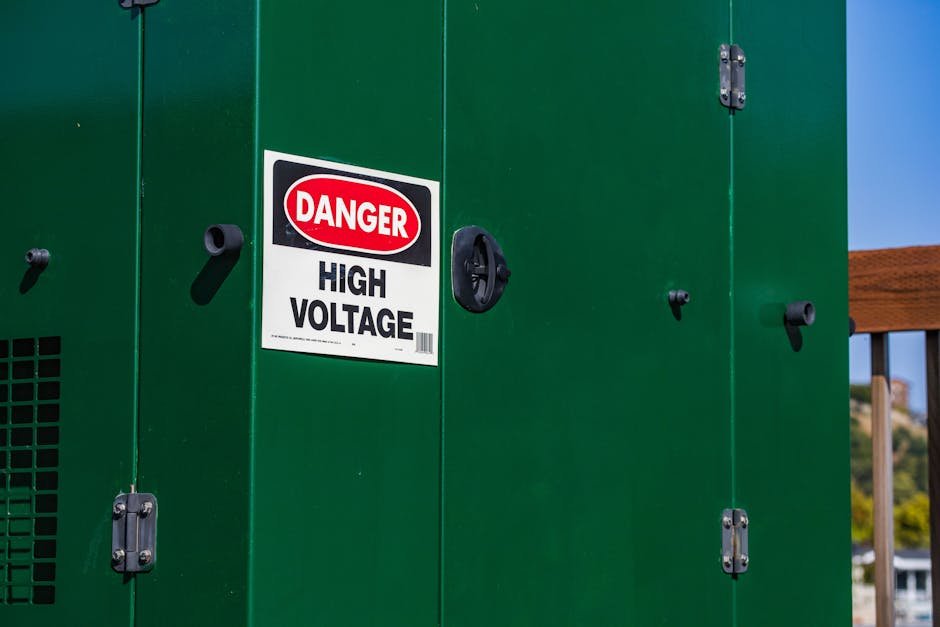
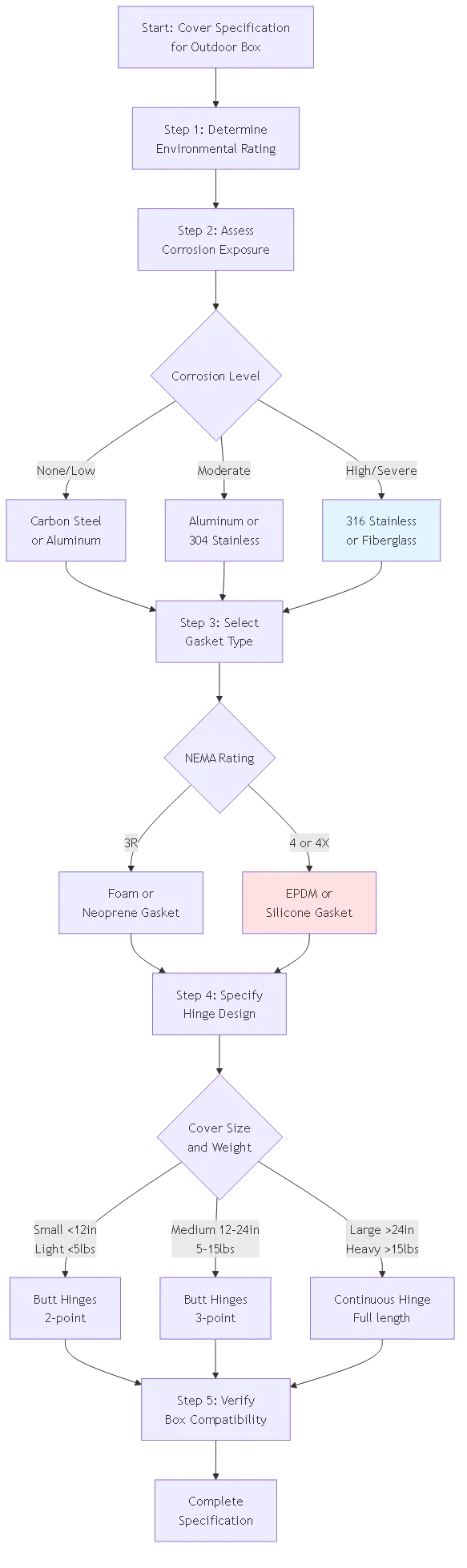
Problema: Specifying a NEMA 4 cover on a NEMA 3R box creates a false sense of protection. The overall assembly rating is limited by the lowest-rated component—in this case, NEMA 3R.
Scenari comuni:
– Upgrading existing installation with higher-rated cover without replacing box
– Specifying premium cover to “compensate” for questionable box installation
– Assuming cover rating alone determines environmental protection
Correzione: Always specify covers that match the box body rating. If upgrading environmental protection is required, replace both the box and cover with properly rated components. A NEMA 3R box with NEMA 4 cover is still only NEMA 3R rated.
⚠️ Avvertenze: Installing a higher-rated cover on a lower-rated box may pass visual inspection but will fail when moisture infiltrates through the box body, conduit entries, or mounting method. The complete assembly must meet the required rating.
Problema: Using foam gaskets in high-UV exposure applications leads to gasket compression set (permanent deformation) within 2-3 years. The gasket loses sealing force, allowing water infiltration even though the cover itself remains intact.
Scenari comuni:
– Specifying lowest-cost cover option without evaluating gasket material
– Assuming all NEMA 3R covers provide equivalent long-term sealing
– Not accounting for extreme temperature cycling that accelerates gasket aging
Correzione: For NEMA 4 applications or any installation exposed to direct sunlight, specify EPDM or silicone gaskets. The $15-25 premium for better gasket material is trivial compared to the $200-400 cost of water damage to equipment or the labor cost to replace failed gaskets.
Gasket Upgrade Decision:
– Standard climate, protected location → Foam acceptable
– Direct sun exposure, temperature cycling → EPDM minimum
– Coastal, chemical, or extreme environments → Silicone required
Problema: A $85 powder-coated steel cover appears attractive compared to a $165 fiberglass cover. However, in a coastal environment, the steel cover corrodes and requires replacement every 4-5 years, while the fiberglass cover lasts 20+ years.
Scenari comuni:
– Purchasing agent selects lowest initial cost without considering environment
– Project budget constraints force short-term thinking
– Underestimating corrosion exposure severity
Correzione: Calculate total cost of ownership over expected equipment life (typically 20 years). Include:
– Initial cover cost
– Replacement costs (material + labor)
– Equipment damage risk from cover failure
– Maintenance inspection costs
Esempio di calcolo (coastal environment, 20-year life):
Powder-Coated Steel Option:
– Initial cost: $95
– Life expectancy: 4 years
– Replacements needed: 4 times over 20 years
– Replacement cost: $95 material + $120 labor = $215 per replacement
– Total 20-year cost: $95 + (4 × $215) = $955
Fiberglass Option:
– Initial cost: $175
– Life expectancy: 20+ years
– Replacements needed: 0
– Total 20-year cost: $175
Savings with proper specification: $780 per cover location.
Problema: Specifying a corrosion-resistant cover body (stainless steel or fiberglass) but allowing standard zinc-plated or painted steel hinges, latches, and fasteners. The hardware corrodes rapidly, compromising the cover function long before the cover body fails.
Scenari comuni:
– Focus on cover body material while overlooking hardware specifications
– Accepting manufacturer’s “standard hardware” without reviewing material
– Retrofit installations using existing hardware from removed cover
Correzione: All hardware must match or exceed the corrosion resistance of the cover body:
– NEMA 4X covers require 300-series stainless steel hardware (minimum)
– Coastal applications require 316 stainless steel hardware
– Chemical environments may require non-metallic hardware (PVDF, reinforced nylon)
Linguaggio delle specifiche: “All cover hardware including hinges, latches, fasteners, and mounting screws shall be Type 316 stainless steel. Zinc-plated or painted hardware not acceptable.”
Problema: Large or heavy covers (>24″ dimension or >15 lbs weight) supported by standard 2-point butt hinges experience stress concentration at hinge mounting points. This causes cover warping, gasket seal failure, and eventual hinge mounting failure.
Scenari comuni:
– Using same hinge type across all cover sizes without engineering evaluation
– Underestimating cover weight when loaded with equipment
– Not accounting for ice or snow load on horizontal covers
Correzione: Specify hinge type and quantity based on cover size and weight:
Small Covers (<12" max dimension, <5 lbs):
- two butt hinges adequate
- 1.5" minimum hinge lengthMedium Covers. (12-24″ max dimension, 5-15 lbs):
– Three butt hinges or continuous hinge
– 2″ minimum hinge length for butt hinges
Large Covers (>24″ max dimension, >15 lbs):
– Continuous (piano) hinge required
– Minimum 0.060″ hinge material thickness
Problema: Covers with inadequate fastener quantity or improper fastener spacing cannot compress the gasket uniformly. This creates gaps where water can infiltrate, particularly at corners and along long unsupported edges.
Scenari comuni:
– Accepting manufacturer’s standard fastener pattern without verification
– Using fewer fasteners than specified to speed installation
– Warped mounting surfaces that prevent uniform gasket compression
Correzione: Verify gasket compression specifications:
– NEMA 3R: Maximum 8″ fastener spacing around perimeter
– NEMA 4: Maximum 6″ fastener spacing around perimeter
– NEMA 4X: Maximum 4″ fastener spacing, corner fasteners within 2″ of corners
– All covers: Minimum 4 fasteners regardless of size
Fastener Torque Specification: Provide proper torque specification to installers:
– M5 (10-32) stainless screws: 6-8 ft-lbs
– M6 (1/4-20) stainless screws: 8-12 ft-lbs
– Overtorquing causes gasket extrusion; undertorquing causes leaks
🎯 Suggerimento professionale: For critical NEMA 4/4X applications, specify covers with captive fasteners that cannot be lost during service and include torque specification labels on the inside of the cover.
NEMA 3R covers provide protection against rain, sleet, snow, and external ice formation, but are not required to resist hose-directed water or windblown dust. NEMA 4 covers provide watertight protection including resistance to hose-directed water, making them suitable for areas exposed to wash-down, irrigation spray, or driven rain conditions.
To determine which rating you need, evaluate the water exposure type at your installation location. For standard outdoor locations like residential service panels under eaves or protected building walls, NEMA 3R is typically sufficient and costs 20-30% less than NEMA 4. However, if your equipment is located near loading docks, car wash areas, irrigation systems, or exposed building sides where driven rain or water spray is likely, specify NEMA 4 minimum.
The key specification difference is the gasket sealing system: NEMA 3R covers typically use compression gaskets around fastener locations, while NEMA 4 covers require continuous perimeter gaskets that create a complete seal around the entire cover opening. This continuous gasket and the additional fasteners required to compress it properly account for most of the cost difference between NEMA 3R and NEMA 4 covers.
Coastal environments within 5 miles of saltwater require NEMA 4X rated covers with maximum corrosion resistance. For locations within 2 miles of saltwater, specify either Type 316 stainless steel or fiberglass reinforced polyester (FRP) covers with all stainless steel hardware including hinges, latches, and fasteners.
Type 316 stainless steel contains 2-3% molybdenum which provides superior resistance to chloride-induced pitting corrosion from salt spray. Standard 304 stainless steel will develop surface corrosion in severe coastal environments within 3-5 years. Fiberglass FRP provides even better corrosion resistance than 316 stainless and is often the most cost-effective choice for coastal installations, with typical installed costs of $165-275 compared to $225-325 for 316 stainless.
Critical specification requirements for coastal covers include: gasket material must be silicone rubber (not foam or neoprene) for UV and salt resistance; all fasteners must be Type 316 stainless steel with a minimum length engagement of 6 threads; hinges should be continuous piano-type rather than discrete butt hinges to distribute stress and reduce corrosion concentration points. Verify the manufacturer provides a corrosion resistance certification specifically for marine/coastal environments rather than general NEMA 4X certification.
Modern polycarbonate outdoor electrical box covers include UV stabilizing additives (typically 2% by weight) that significantly improve UV resistance, allowing 10-15 years of direct sunlight exposure before significant yellowing or embrittlement occurs. However, polycarbonate’s UV resistance is inherently lower than fiberglass or metal alternatives, making material selection dependent on expected service life and replacement budget.
If your application requires 20+ year service life in direct sunlight, fiberglass reinforced polyester with UV-resistant gel coat provides superior long-term performance. The gel coat surface protects the underlying fiberglass structure from UV damage, while polycarbonate is UV-stabilized throughout the material but will eventually degrade from surface-level UV exposure.
For applications where transparent or translucent covers are desired for visual equipment inspection without opening the cover, polycarbonate is the only practical choice among UV-resistant materials. In these cases, specify polycarbonate with minimum 2% UV stabilizer content and plan for replacement every 12-15 years in high-UV locations (southern exposures, high-altitude installations, or tropical climates). Alternatively, position the cover on the north side of equipment or under protective overhangs to extend service life.
For temperature cycling between -20°F and +130°F, specify EPDM (ethylene propylene diene monomer) rubber gaskets with a temperature rating of -40°F to +250°F. EPDM provides excellent performance across this temperature range while maintaining flexibility at low temperatures and resisting compression set at high temperatures.
Silicone rubber gaskets offer even better temperature performance (-65°F to +400°F) but cost 40-60% more than EPDM. Silicone is justified when temperatures exceed EPDM’s range or when maximum UV resistance is required (coastal or high-altitude locations). Foam gaskets should not be used in applications with temperature cycling beyond -10°F to +110°F because the foam structure degrades rapidly, losing sealing force within 3-5 years.
Temperature cycling also affects cover material thermal expansion, which stresses gasket seals. Metal covers (steel, stainless, aluminum) expand less than plastic covers during temperature swings. If specifying polycarbonate covers in extreme temperature cycling environments, verify the gasket design accommodates thermal expansion—look for gasket compression specifications of 30-40% rather than 25-30% to maintain sealing as the cover expands and contracts.
Hinge material specification is critical and must match or exceed the corrosion resistance of the cover body material. A common specification error is ordering fiberglass or stainless steel NEMA 4X covers with standard zinc-plated steel hinges—the hinges will corrode and fail within 2-4 years in corrosive environments, rendering the cover unusable long before the cover body shows any degradation.
For NEMA 4X coastal environments, specify Type 316 stainless steel hinges with Type 316 stainless hinge pins. Type 304 stainless steel hinges are acceptable for industrial or general outdoor NEMA 4X applications where chloride exposure is minimal. For extreme chemical environments, specify non-metallic hinges manufactured from reinforced nylon or PVDF (polyvinylidene fluoride) with stainless or PVDF hinge pins.
Verify the hinge specification explicitly in your procurement documents: “All hinges, hinge pins, latches, and mounting hardware shall be Type 316 stainless steel minimum. Zinc-plated, painted, or Type 304 stainless hardware not acceptable.” Many manufacturers offer “standard hardware” with covers that does not match the cover body corrosion resistance—explicit specification prevents this mismatch.
NEMA 4 gasket sealing requires continuous perimeter gasket compression with maximum fastener spacing of 6 inches around the entire cover perimeter. For NEMA 4X applications in severe environments, reduce maximum spacing to 4 inches. Corner locations should have fasteners within 2 inches of the corner to prevent gasket lifting at corners—the most common leak location.
Calculate required fastener quantity using the cover perimeter: measure the total perimeter length in inches, divide by the maximum spacing (6″ for NEMA 4, 4″ for NEMA 4X), and round up to the next whole number. Add corner fasteners (typically 4) if not already included in the perimeter calculation. For example, a 16″ × 20″ cover has a perimeter of 72 inches. At 6″ maximum spacing: 72 ÷ 6 = 12 fasteners minimum.
Fastener torque is equally important as quantity and spacing. Under-torqued fasteners do not compress the gasket adequately (leaks), while over-torqued fasteners crush and extrude the gasket material (also leaks). Specify proper torque: 6-8 ft-lbs for #10-32 (M5) fasteners, 8-12 ft-lbs for 1/4-20 (M6) fasteners using stainless steel screws into stainless steel threaded inserts or nuts. Provide installation torque specifications to field personnel and consider specifying covers with captive screws to prevent fastener loss during maintenance.
In standard outdoor environments (non-coastal, non-chemical, minimal corrosion exposure), a properly specified powder-coated steel cover with 2.5-3.0 mil thick polyester powder coating provides 12-18 year service life before significant coating degradation and rust appear. Fiberglass reinforced polyester covers in the same environment typically provide 25+ years of service life with minimal degradation.
The cost differential is typically $80-95 for powder-coated steel NEMA 3R covers versus $145-175 for fiberglass NEMA 4X covers for equivalent sizes. For standard environments where steel performs adequately, the fiberglass premium is not justified on a pure cost basis—the steel cover will likely provide sufficient service life for most equipment lifecycles.
However, three factors can justify fiberglass specification even in standard environments: First, if the cover location is difficult to access (roof-mounted, high walls, remote locations), the higher replacement labor cost overwhelms the material cost difference, favoring the longer-life fiberglass option. Second, if the installation includes multiple covers (>10 locations), the reduced lifecycle cost of fiberglass becomes significant. Third, if there is any uncertainty about future corrosion exposure (nearby future construction, changing environmental conditions), specifying fiberglass provides insurance against unknown future conditions.
Selecting the optimal outdoor electrical box cover requires systematic evaluation of material performance, environmental rating requirements, gasket sealing technology, and mechanical design features. Material selection should prioritize long-term environmental resistance over initial cost, with carbon steel appropriate for protected standard climates, aluminum or 304 stainless for industrial environments, and 316 stainless or fiberglass for coastal or chemical exposures.
Punti di forza:
1. Match cover environmental rating (NEMA 3R/4/4X or IP equivalent) to actual exposure conditions—over-rating wastes money, under-rating causes failures
2. Specify gasket materials based on UV exposure and temperature cycling: foam for NEMA 3R standard climates, EPDM for NEMA 4 applications, silicone for severe coastal or high-temperature environments
3. Select hinge type and quantity based on cover size and weight: butt hinges for covers <24" and <15 lbs, continuous hinges for larger or heavier covers
4. verify all hardware (hinges, latches, fasteners) matches exceeds cover body corrosion resistance—mismatched is a common failure mode
5. calculate total cost of ownership over 20-year equipment life rather than initial purchase price—lifecycle costing often justifies premium materials
Proper outdoor electrical box cover specification protects equipment investments, maintains code compliance, and minimizes long-term maintenance costs through thoughtful material and design feature selection.
Risorse correlate:
- Waterproof Distribution Box Solutions for Outdoor Electrical Systems
- DC SPD Surge Protection for Solar Panel Installations
- PV Combiner Box Selection Guide for Photovoltaic Arrays
Ready to specify outdoor electrical box covers for your project? Our technical team helps you evaluate environmental exposure, select optimal materials, and specify appropriate gasket and hinge configurations that balance initial cost with lifecycle performance. Contact us for application-specific cover recommendations and detailed specification support.
Ultimo aggiornamento: Ottobre 2025
Autore: Team tecnico SYNODE
Recensito da: Dipartimento di ingegneria elettrica
{
  "@context": "https://schema.org",
  "@type": "FAQPage",
  "mainEntity": [
    {
      "@type": "Question",
      "name": "What is the difference between a NEMA 3R and NEMA 4 outdoor electrical box cover, and how do I know which rating I need?",
      "acceptedAnswer": {
        "@type": "Answer",
        "text": "NEMA 3R covers provide protection against rain, sleet, snow, and external ice formation, but are not required to resist hose-directed water or windblown dust. NEMA 4 covers provide watertight protection including resistance to hose-directed water, making them suitable for areas exposed to wash-down, irrigation spray, or driven rain conditions. To determine which rating you need, evaluate the water exposure type at your installation location. For standard outdoor locations like residential service panels under eaves or protected building walls, NEMA 3R is typically sufficient and costs 20-30% less than NEMA 4. However, if your equipment is located near loading docks, car wash areas, irrigation systems, or exposed building sides where driven rain or water spray is likely, specify NEMA 4 minimum. The key specification difference is the gasket sealing system: NEMA 3R covers typically use compression gaskets around fastener locations, while NEMA 4 covers require continuous perimeter gaskets that create a complete seal around the entire cover opening."
      }
    },
    {
      "@type": "Question",
      "name": "How do I select the right cover material for a coastal installation within 2 miles of saltwater?",
      "acceptedAnswer": {
        "@type": "Answer",
        "text": "Coastal environments within 5 miles of saltwater require NEMA 4X rated covers with maximum corrosion resistance. For locations within 2 miles of saltwater, specify either Type 316 stainless steel or fiberglass reinforced polyester (FRP) covers with all stainless steel hardware including hinges, latches, and fasteners. Type 316 stainless steel contains 2-3% molybdenum which provides superior resistance to chloride-induced pitting corrosion from salt spray. Fiberglass FRP provides even better corrosion resistance than 316 stainless and is often the most cost-effective choice for coastal installations. Critical specification requirements for coastal covers include: gasket material must be silicone rubber for UV and salt resistance; all fasteners must be Type 316 stainless steel with a minimum length engagement of 6 threads; hinges should be continuous piano-type rather than discrete butt hinges to distribute stress and reduce corrosion concentration points."
      }
    },
    {
      "@type": "Question",
      "name": "Can I use a polycarbonate plastic cover in direct sunlight, or will UV exposure degrade the material?",
      "acceptedAnswer": {
        "@type": "Answer",
        "text": "Modern polycarbonate outdoor electrical box covers include UV stabilizing additives (typically 2% by weight) that significantly improve UV resistance, allowing 10-15 years of direct sunlight exposure before significant yellowing or embrittlement occurs. However, polycarbonate's UV resistance is inherently lower than fiberglass or metal alternatives. If your application requires 20+ year service life in direct sunlight, fiberglass reinforced polyester with UV-resistant gel coat provides superior long-term performance. For applications where transparent or translucent covers are desired for visual equipment inspection without opening the cover, polycarbonate is the only practical choice among UV-resistant materials. In these cases, specify polycarbonate with minimum 2% UV stabilizer content and plan for replacement every 12-15 years in high-UV locations."
      }
    },
    {
      "@type": "Question",
      "name": "What gasket material should I specify for an outdoor electrical box cover that will experience temperature extremes from -20°F winter to +130°F summer?",
      "acceptedAnswer": {
        "@type": "Answer",
        "text": "For temperature cycling between -20°F and +130°F, specify EPDM (ethylene propylene diene monomer) rubber gaskets with a temperature rating of -40°F to +250°F. EPDM provides excellent performance across this temperature range while maintaining flexibility at low temperatures and resisting compression set at high temperatures. Silicone rubber gaskets offer even better temperature performance (-65°F to +400°F) but cost 40-60% more than EPDM. Foam gaskets should not be used in applications with temperature cycling beyond -10°F to +110°F because the foam structure degrades rapidly. Temperature cycling also affects cover material thermal expansion, which stresses gasket seals. If specifying polycarbonate covers in extreme temperature cycling environments, verify the gasket design accommodates thermal expansion with gasket compression specifications of 30-40% rather than 25-30%."
      }
    },
    {
      "@type": "Question",
      "name": "Do I need to specify different hinge materials for outdoor covers in corrosive environments, or is the cover body material specification sufficient?",
      "acceptedAnswer": {
        "@type": "Answer",
        "text": "Hinge material specification is critical and must match or exceed the corrosion resistance of the cover body material. A common specification error is ordering fiberglass or stainless steel NEMA 4X covers with standard zinc-plated steel hinges—the hinges will corrode and fail within 2-4 years in corrosive environments, rendering the cover unusable long before the cover body shows any degradation. For NEMA 4X coastal environments, specify Type 316 stainless steel hinges with Type 316 stainless hinge pins. For extreme chemical environments, specify non-metallic hinges manufactured from reinforced nylon or PVDF with stainless or PVDF hinge pins. Verify the hinge specification explicitly in procurement documents to prevent manufacturers from supplying standard hardware that does not match the cover body corrosion resistance."
      }
    },
    {
      "@type": "Question",
      "name": "How do I determine the correct number and spacing of fasteners required to maintain proper gasket compression on a NEMA 4 outdoor electrical box cover?",
      "acceptedAnswer": {
        "@type": "Answer",
        "text": "NEMA 4 gasket sealing requires continuous perimeter gasket compression with maximum fastener spacing of 6 inches around the entire cover perimeter. For NEMA 4X applications in severe environments, reduce maximum spacing to 4 inches. Calculate required fastener quantity using the cover perimeter: measure the total perimeter length in inches, divide by the maximum spacing (6 inches for NEMA 4, 4 inches for NEMA 4X), and round up to the next whole number. For example, a 16 inch by 20 inch cover has a perimeter of 72 inches, requiring 72 divided by 6 equals 12 fasteners minimum. Fastener torque is equally important: specify 6-8 ft-lbs for number 10-32 fasteners, 8-12 ft-lbs for 1/4-20 fasteners using stainless steel screws."
      }
    },
    {
      "@type": "Question",
      "name": "What is the expected service life difference between a powder-coated steel cover and a fiberglass cover in a standard outdoor environment?",
      "acceptedAnswer": {
        "@type": "Answer",
        "text": "In standard outdoor environments (non-coastal, non-chemical, minimal corrosion exposure), a properly specified powder-coated steel cover with 2.5-3.0 mil thick polyester powder coating provides 12-18 year service life before significant coating degradation and rust appear. Fiberglass reinforced polyester covers in the same environment typically provide 25+ years of service life with minimal degradation. The cost differential is typically $80-95 for powder-coated steel NEMA 3R covers versus $145-175 for fiberglass NEMA 4X covers. Three factors can justify fiberglass specification even in standard environments: difficult access locations where replacement labor cost is high, installations with multiple covers where reduced lifecycle cost becomes significant, and uncertainty about future corrosion exposure where fiberglass provides insurance against unknown future conditions."
      }
    }
  ]
}
Parola chiave di riferimento: outdoor electrical box cover
URL Slug: outdoor-electrical-box-cover-selection-guide
Meta Titolo: Outdoor Electrical Box Cover Selection: Materials & Ratings 2025
Meta descrizione: Expert guide to selecting outdoor electrical box covers: compare metal, plastic, fiberglass materials, gasket types, NEMA ratings, hinge designs, and weatherproofing specs.
Livello di contenuto: Livello 2 (Contenuto standard)
Funnel di conversione: Top of Funnel (consapevolezza)
Conteggio parole obiettivo: 2800-4000 parole
Diagrammi della sirena target: 3
Configurarli nelle impostazioni di Rank Math, quindi eliminare questa casella prima della pubblicazione.