Endereço
304 North Cardinal
St. Dorchester Center, MA 02124
Horas de trabalho
De segunda a sexta-feira: das 7h às 19h
Fim de semana: 10:00 - 17:00
Endereço
304 North Cardinal
St. Dorchester Center, MA 02124
Horas de trabalho
De segunda a sexta-feira: das 7h às 19h
Fim de semana: 10:00 - 17:00

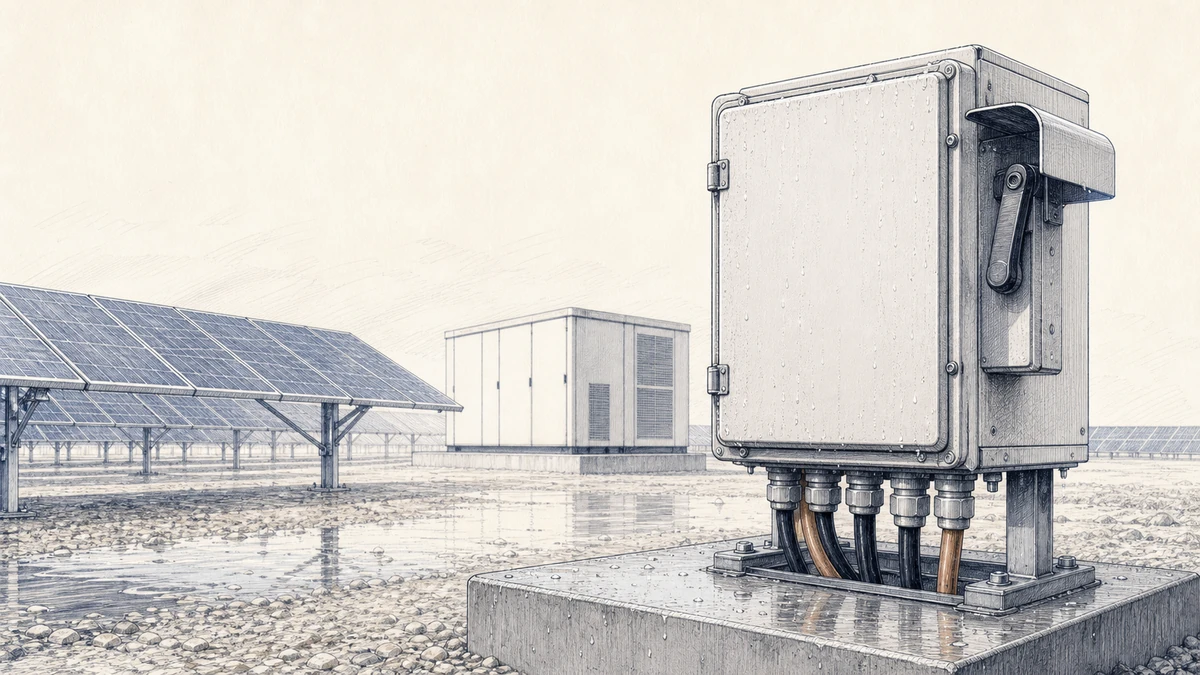
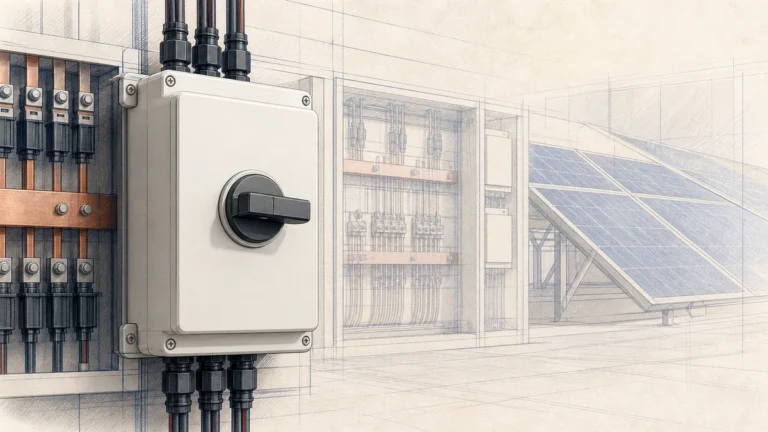
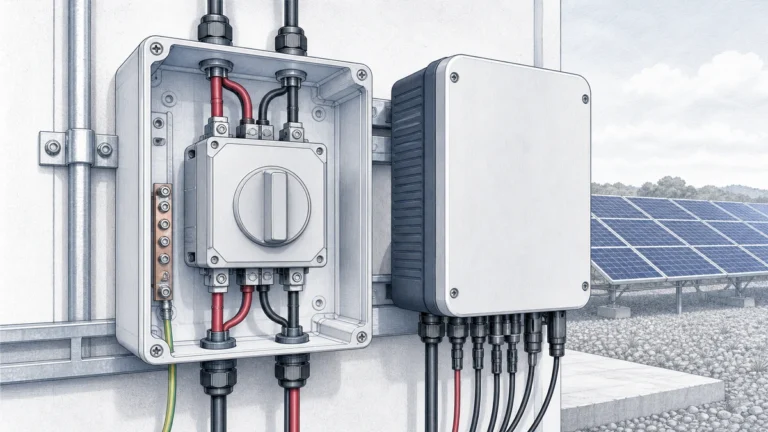
An outdoor dc disconnect enclosure is more than a box around a switch. For a DC Switch Disconnector used in solar PV, battery energy storage, EV charging, telecom, or industrial DC circuits, the enclosure helps protect live parts from rain, dust, sunlight, impact, condensation, and installation-related sealing failures.
For Sinobreaker DC Switch Disconnector applications, enclosure selection should be based on the whole outdoor environment: ingress protection, enclosure type, UV durability, accessory sealing, cable entry design, mounting position, and the manufacturer’s installation instructions.
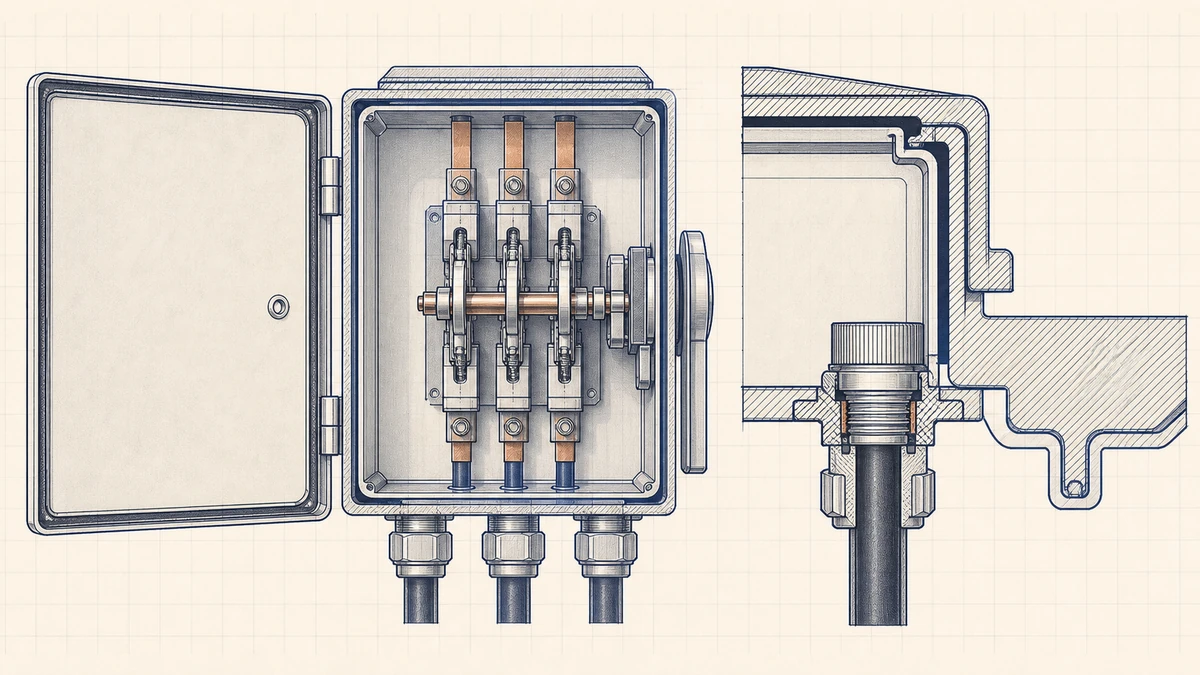
A DC disconnect is often installed where service personnel need visible, accessible isolation. In outdoor DC systems, that location may expose the enclosure to direct sunlight, wind-driven rain, dust, temperature cycling, snow, salt air, or standing moisture.
The enclosure must support safe operation of the DC Switch Disconnector by helping to maintain:
A high DC voltage rating on the switch does not automatically mean the enclosure is suitable for every outdoor condition. Likewise, a strong-looking outdoor box does not automatically confirm UV resistance, water resistance, or suitability for the installed cable entries.
IEC 60529 defines the IP Code system for classifying degrees of protection provided by electrical enclosures. The standard applies to enclosures for electrical equipment with rated voltage up to 72.5 kV and classifies protection against access, solid foreign objects, and water ingress.
For an outdoor dc disconnect enclosure, an IP rating is useful because it provides a structured way to describe ingress protection. However, the IP designation addresses the stated ingress-protection classification only. It does not automatically cover every outdoor exposure condition, such as UV ageing, corrosion, ice, long-term gasket compression, improper cable gland installation, or chemical exposure.
The first digit in an IP rating describes protection against access to hazardous parts and ingress of solid foreign objects.
Common examples include:
IP5X: Dust-protected, with limited dust ingress allowed under defined test conditionsIP6X: Dust-tight under defined test conditionsFor dusty solar farms, mining sites, industrial yards, and desert locations, the first digit is important because dust can accumulate around switch mechanisms, seals, terminals, and cable entries.
The second digit describes water ingress protection under defined test conditions.
Common outdoor-related examples include:
IPX4: Protection against splashing waterIPX5: Protection against water jetsIPX6: Protection against powerful water jetsIPX7: Protection against temporary immersion under defined conditionsAn enclosure marked IP66, for example, indicates dust-tight protection and protection against powerful water jets under the relevant test method. It does not mean the enclosure is approved for permanent submersion, long-term UV exposure, salt spray, or all installation orientations unless those conditions are separately supported.
For a DC Switch Disconnector, the enclosure may pass an IP test as a closed box but perform differently after field installation. The final sealing result depends on:
ABB’s PV DC combiner-box application note, for example, shows an outdoor DC disconnect-box application with IP66/IK08 enclosure information and separately identifies IP-rated accessories, including a UV air-compensation plug. This illustrates an important principle: outdoor enclosure performance must be evaluated as an assembled system, not only as an empty housing.
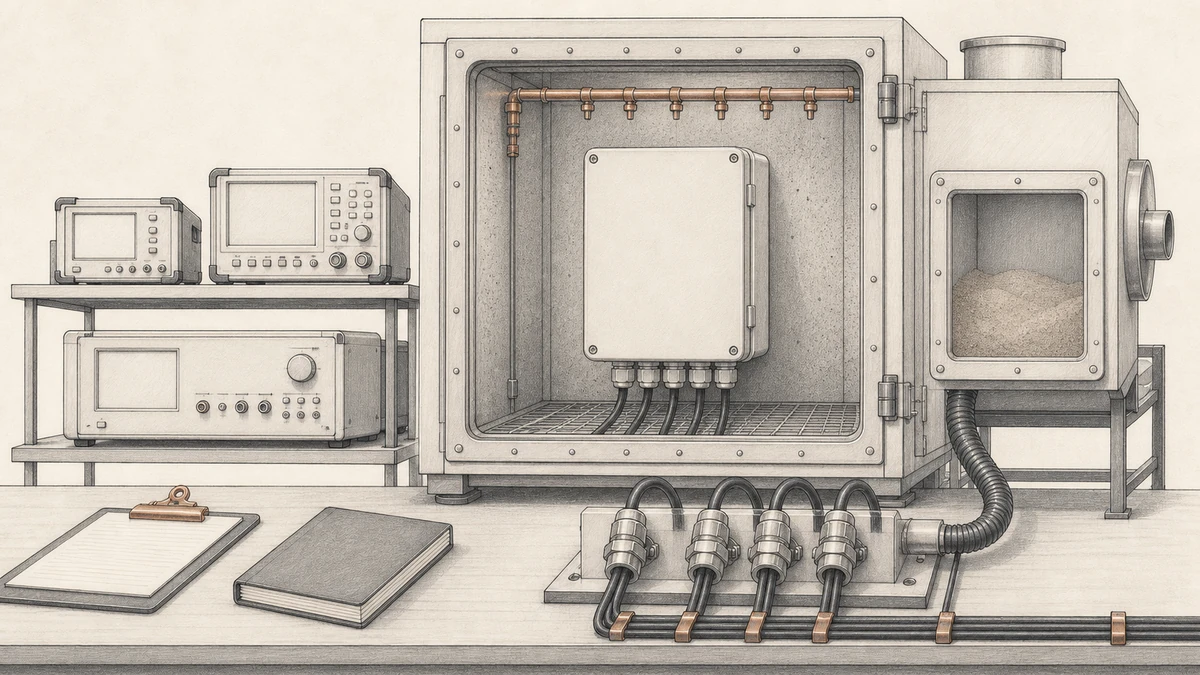
NEMA 250 covers enclosures for electrical equipment rated no more than 1,000 V and includes indoor and outdoor enclosure Types such as 3, 3R, 3X, 4, and 4X. For North American projects, NEMA enclosure Type is often specified for outdoor disconnects, industrial controls, and PV-related equipment.
NEMA also states that the enclosure and equipment must be installed and used according to the manufacturer’s instructions and applicable code. This matters because the rating depends not only on the enclosure design but also on correct installation.
Outdoor DC disconnect applications may specify one of the following enclosure Types depending on exposure conditions:
| NEMA Type | Typical Outdoor Relevance | Practical Meaning for DC Disconnects |
|—|—|—|
| Type 3 | Outdoor protection against rain, sleet, snow, and windblown dust | Suitable where dust and weather exposure are concerns |
| Type 3R | Outdoor protection against rain, sleet, and snow | Common for outdoor electrical equipment where windblown dust protection is not the main requirement |
| Type 3X | Similar outdoor protection with added corrosion protection | Useful where corrosion resistance is required |
| Type 4 | Protection against rain, sleet, snow, windblown dust, splashing water, and hose-directed water | Often selected for washdown or harsh outdoor environments |
| Type 4X | Type 4 protection with added corrosion protection | Often preferred for coastal, chemical, wastewater, or corrosive industrial sites |
The correct NEMA Type depends on the real installation environment. A rooftop PV disconnect, a ground-mount solar farm disconnect, and a coastal battery storage disconnect may need different enclosure constructions.
IP ratings and NEMA Types are not identical systems. IP ratings focus on defined degrees of ingress protection against solids and water. NEMA Types include additional environmental considerations depending on the Type, such as corrosion protection or performance under specific outdoor conditions.
A project specification may require both, but one should not be casually substituted for the other. If a design calls for a NEMA Type 4X outdoor dc disconnect enclosure, an IP66 statement alone may not prove equivalent corrosion performance. If a design calls for IP66, a NEMA outdoor Type alone may not fully document the same IP test classification.
Outdoor polymer enclosures are widely used because they can provide electrical insulation, corrosion resistance, lower weight, and easier installation. However, polymer performance depends on material formulation, wall thickness, stabilizers, color, exposure level, and temperature.
A generic claim such as “UV resistant” is not enough for a serious outdoor DC Switch Disconnector specification. The material evidence should identify the actual polymer performance under recognized evaluation criteria.
UL Solutions explains that UL 746C evaluates polymeric materials used in electrical equipment for environmental performance and durability. This includes F1/F2 ratings associated with ultraviolet exposure and water immersion.
For outdoor disconnect enclosure selection, that means the enclosure material should have material-specific evidence. A buyer should not rely only on visual appearance, marketing language, or the assumption that all plastic outdoor boxes perform the same.
In practical terms:
F1 is commonly associated with suitability for outdoor use with respect to UV exposure and water exposure testingF2 indicates more limited performance under the evaluated outdoor exposure conditionsFor a Sinobreaker DC Switch Disconnector installed outdoors, polymer enclosure selection should consider whether the housing, cover, handle, gland plate, plugs, and other exposed nonmetallic parts have suitable outdoor durability evidence.
Sunlight affects more than the main enclosure body. Outdoor exposure can also degrade:
A durable outdoor dc disconnect enclosure should therefore be reviewed as a complete assembly. If the enclosure body is UV rated but the cable glands are not, the installed system may still fail prematurely.
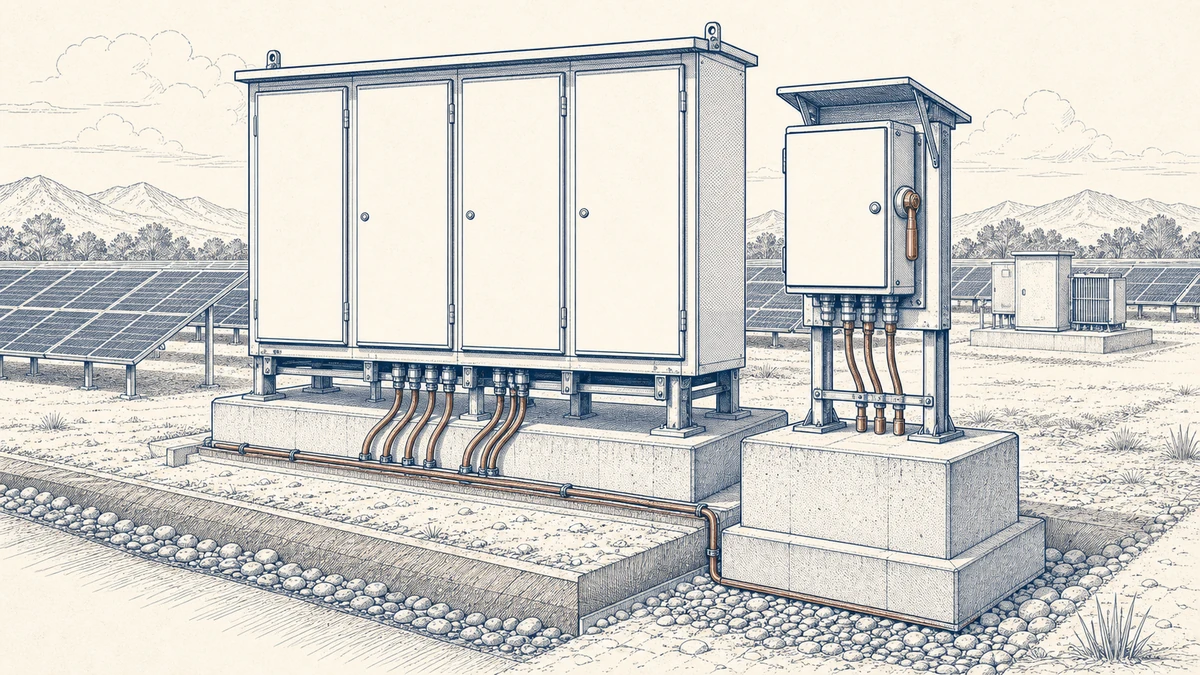
Different enclosure materials suit different environments. The best choice depends on voltage level, installation site, corrosion exposure, impact requirements, cost, weight, and maintenance expectations.
Polycarbonate and other engineering plastics are common for outdoor DC disconnect enclosures because they are lightweight, electrically insulating, and resistant to many environmental conditions when properly formulated.
Key selection points include:
Plastic enclosures are especially useful where insulation, corrosion resistance, and installation efficiency are priorities.
Metal enclosures may be preferred for high mechanical strength, vandal resistance, industrial environments, or high-temperature exposure. Stainless steel is often selected where corrosion resistance is important.
However, metal outdoor enclosures still require careful design:
A metal enclosure is not automatically superior for every outdoor DC disconnect. In some environments, a qualified polymer enclosure may provide better corrosion performance and electrical insulation.
Many outdoor enclosure failures occur at cable entries rather than through the main box wall. Once installers drill holes, fit glands, add conduit hubs, or install plugs, the original enclosure protection depends on the quality of those components and the installation method.
Cable glands should be selected for the cable diameter, enclosure material, IP or NEMA requirement, UV exposure, temperature range, and installation location.
Important checks include:
For conduit systems, hubs and fittings must be suitable for outdoor wet locations where applicable. Poorly sealed conduit entries can direct water into the enclosure even if the enclosure itself is well rated.
Outdoor enclosures experience daily temperature changes. Warm internal air can cool and condense, especially in humid climates. A highly sealed enclosure may still accumulate internal moisture if pressure cycling pulls humid air through small gaps.
Depending on the design, condensation control may require:
Any plug or vent added to the enclosure must have its own suitable rating. The accessory should not reduce the required outdoor performance of the assembled DC disconnect enclosure.
The operating handle is a critical interface because it must transfer mechanical motion while maintaining enclosure protection. Outdoor DC disconnect handles should be reviewed for:
A robust enclosure with a weak handle seal can still allow water ingress near the switch mechanism.
When specifying a Sinobreaker outdoor dc disconnect enclosure, use a system-level checklist rather than choosing only by size and appearance.
Confirm that the enclosure can physically and electrically support the selected DC Switch Disconnector:
A compact enclosure may look attractive but can create wiring stress, heat buildup, or difficult maintenance access.
Match the enclosure rating to the real outdoor environment:
The enclosure should be selected for the worst credible site condition, not only the average weather condition.
For procurement and project approval, request documentation that supports the claimed performance:
The most reliable specification is one that connects the enclosure, switch, accessories, and installation method into one approved assembly.
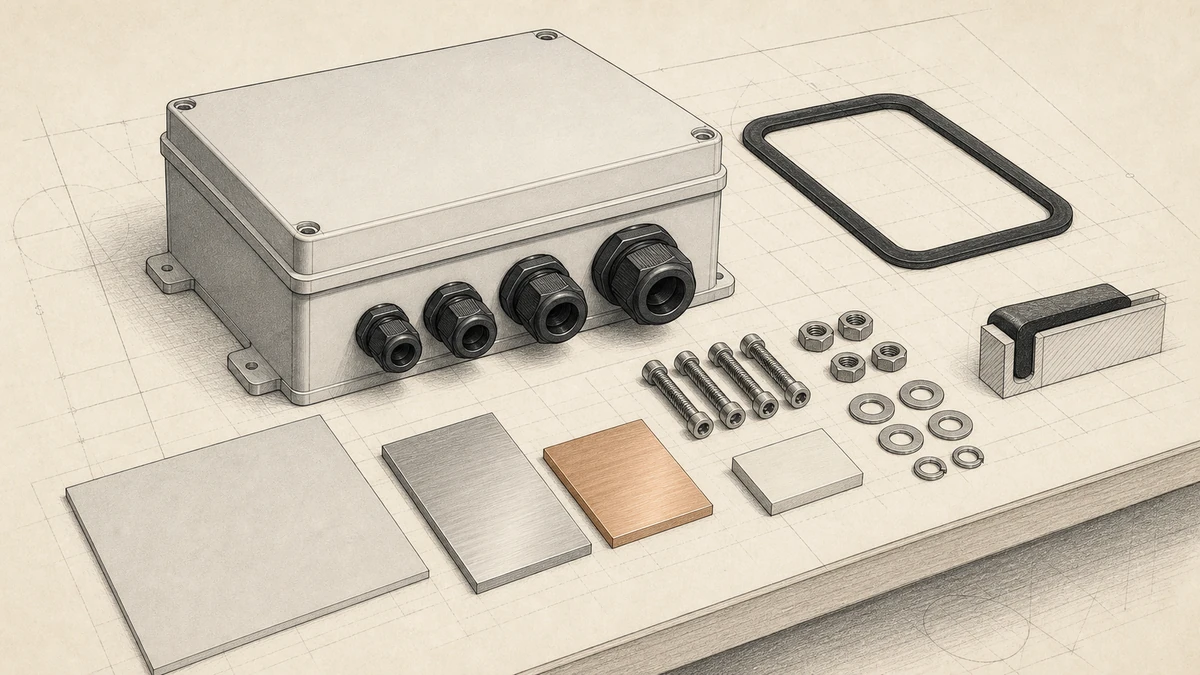
Outdoor DC disconnect failures are often caused by mismatched assumptions. Avoid these common errors:
IP65, IP66ou IP67 as a complete outdoor suitability statementFor Sinobreaker DC Switch Disconnector installations, the goal is not simply to select a box with a high number on the label. The goal is to maintain safe and reliable outdoor isolation performance through the full installed system.
Not always. IP66 indicates dust-tight protection and protection against powerful water jets under defined IEC 60529 test conditions. It does not automatically prove UV resistance, corrosion resistance, correct cable gland sealing, condensation control, or suitability for every mounting condition. Outdoor suitability should be confirmed through the complete enclosure, accessory, material, and installation documentation.
Neither rating is universally “better” because they describe different classification systems. NEMA 4X includes outdoor protection plus corrosion protection requirements within the NEMA system, while IP66 describes dust-tight and powerful water-jet ingress protection under the IP Code. If a project requires NEMA 4X, an IP66 statement alone may not be enough. If a project requires IP66, a NEMA Type statement alone may not document the same IP classification.
Check the actual polymer material evidence, not only the phrase “UV resistant.” For polymeric materials used in electrical equipment, UL 746C provides evaluation methods related to environmental performance and durability, including F1/F2 ratings associated with UV exposure and water immersion. Also confirm that exposed accessories such as handles, glands, plugs, vents, labels, and gaskets are suitable for outdoor service.