Indirizzo
304 Nord Cardinale
St. Dorchester Center, MA 02124
Orario di lavoro
Da lunedì a venerdì: dalle 7.00 alle 19.00
Fine settimana: 10.00 - 17.00
Indirizzo
304 Nord Cardinale
St. Dorchester Center, MA 02124
Orario di lavoro
Da lunedì a venerdì: dalle 7.00 alle 19.00
Fine settimana: 10.00 - 17.00

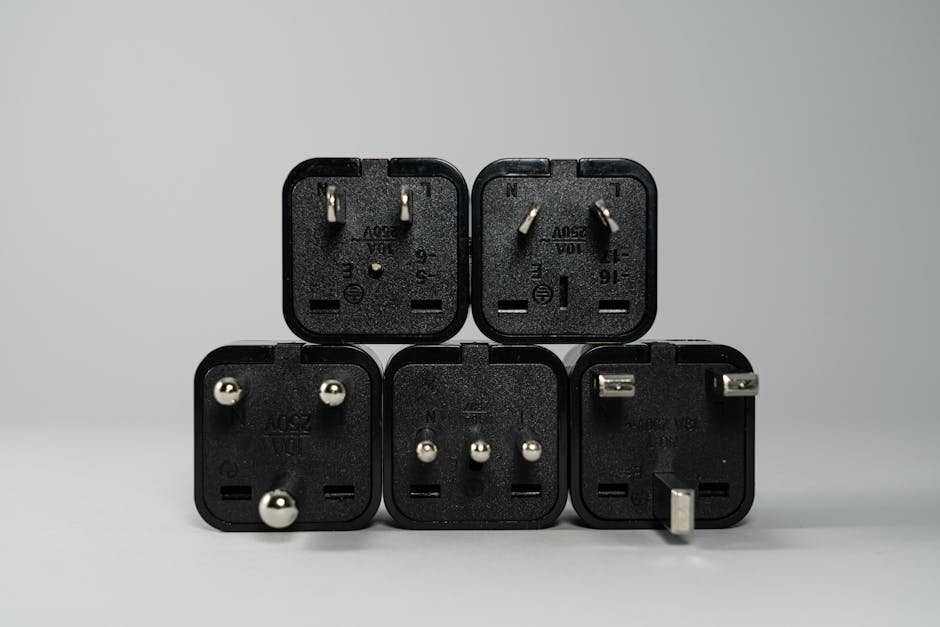
Fonte: Unsplash/Pixabay
Termini di ricerca: “fusibili da 12 volt”, “fusibili per autoveicoli”, “fusibili a lama”.”
Testo Alt: “Assortimento di fusibili a 12 volt CC con fusibili a lama, ANL e a tubo di vetro per la protezione da sovracorrenti di impianti elettrici a bassa tensione di autoveicoli, imbarcazioni, camper e impianti solari”.”
Dimensioni: 1200×630px minimo
I fusibili a 12 volt DC sono la protezione primaria contro le sovracorrenti per miliardi di veicoli, imbarcazioni, camper e sistemi solari off-grid in tutto il mondo. A differenza delle loro controparti in c.a. o dei sistemi in c.c. a più alta tensione, i fusibili a 12 volt devono affrontare sfide uniche: elevato assorbimento di corrente a parità di potenza, variazioni estreme di temperatura e vibrazioni nelle applicazioni mobili.
Questa guida completa tratta i tipi di fusibili a 12 V, la metodologia di dimensionamento dell'amperaggio, le considerazioni sulla caduta di tensione e i criteri di selezione specifici per l'applicazione per i sistemi di batterie automobilistici, marini, per veicoli ricreativi e solari.
Lo standard a 12 volt è nato dall'ingegneria automobilistica negli anni '50 ed è diventato onnipresente grazie alla sua diffusione:
Contesto storico:
- Prima degli anni '50: sistemi automobilistici a 6V (insufficienti per i carichi moderni)
- Transizione degli anni '50: I 12 V offrivano il doppio della potenza senza raddoppiare le dimensioni dei fili.
- Dominio attuale: 12V alimenta la maggior parte dei veicoli, delle imbarcazioni e dei camper a livello globale.
- Adozione del solare: Banchi di batterie da 12 V comuni nei piccoli sistemi off-grid
Caratteristiche elettriche:
A parità di potenza erogata, i sistemi a 12 V richiedono una corrente significativamente maggiore:
Confronto di potenza a 1200W:
- 120V AC: 1200W ÷ 120V = 10A
- 48V DC: 1200W ÷ 48V = 25A
- 24V DC: 1200W ÷ 24V = 50A
- 12V DC: 1200W ÷ 12V = 100A

Risultato: il fusibile a 12V deve gestire una corrente 10 volte superiore a quella di 120V a parità di potenza!
Implicazioni:
- Sono necessarie dimensioni maggiori dei conduttori (maggiore ampacità)
- Maggiore caduta di tensione per metro di filo
- Generazione di calore del fusibile: Perdite I²R significative con correnti elevate
- Stress del connettore e del terminale (meccanico e termico)
Il tipo più comune: Corpo in plastica con due lame piatte in metallo
Sottocategorie:
1. Fusibili ATO/ATC standard
- Dimensioni: 19 mm × 5 mm di distanza tra le lame
- Gamma di amperaggio: Da 1A a 40A
- Codifica dei colori: Standardizzato (vedi tabella sotto)
- Applicazioni: Circuiti interni per autoveicoli, circuiti accessori per camper
- Tensione nominale: 32V DC tipico
- Costo: $0,50-1,50 cad.
2. Fusibili a lama mini (ATM)
- Dimensioni: Spaziatura lama 11 mm × 4 mm (ingombro ridotto)
- Gamma di amperaggioDa 2A a 30A
- Applicazioni: Veicoli moderni con vincoli di spazio
- Costo: $0,75-2,00 ciascuno
3. Fusibili a micro-lama
- Dimensioni: 9 mm × 3,8 mm di distanza tra le lame (la più piccola)
- Gamma di amperaggio: Da 5A a 30A
- Applicazioni: Veicoli di ultima generazione (2010+), pannelli portafusibili compatti
- Costo: $1,00-2,50 cad.
4. Fusibili a lama maxi
- Dimensioni: 29 mm × 9 mm di distanza tra le lame (la più grande)
- Gamma di amperaggioDa 20A a 80A
- Applicazioni: Circuiti automobilistici ad alta corrente (uscita dell'alternatore, alimentazioni principali)
- Costo: $2.00-4.00 cad.
Standard di codifica dei colori (ATO/ATC):
| Amperaggio | Colore | Applicazione tipica |
|---|---|---|
| 1A | Nero | Quadro strumenti |
| 2A | Grigio | Elettronica sensibile |
| 3A | Viola | Luci interne (LED) |
| 5A | Abbronzatura | Luci di parcheggio, memoria radio |
| 7.5A | Marrone | Iniezione di carburante, computer |
| 10A | Rosso | Alzacristalli elettrici, radio |
| 15A | Blu | Accendisigari, porte USB |
| 20A | Giallo | Ventole di raffreddamento, serrature elettriche |
| 25A | Trasparente/Naturale | Soffiante del riscaldamento (bassa velocità) |
| 30A | Verde | Soffio del riscaldamento (alta velocità), sedili elettrici |
| 40A | Arancione | Sbrinatore del lunotto, motori grandi |
Vantaggi:
- Facile ispezione visiva (fusibile bruciato visibile attraverso la plastica)
- Sostituzione semplice (tirare e spingere)
- Standardizzato tra i produttori
- Resistente alle vibrazioni (attrito)
- Basso costo e disponibilità universale
Svantaggi:
- Limitato a 40A massimo (standard), 80A (maxi)
- Il corpo in plastica può degradarsi in caso di calore estremo (>80°C)
- Non impermeabile (richiede una scatola di fusibili sigillata)
Design: Stile a lama con terminali imbullonati, senza custodia
Specifiche:
- Gamma di amperaggio: Da 35A a 750A
- Dimensione fisica: Lunghezza da 1,5″ a 3″ a seconda della classificazione.
- Tensione nominale: 32V DC (sistemi a 12V/24V)
- Valutazione dell'interruzione: 5.000-10.000A tipici
- Tipo di terminale: Avvitamento (perno da 5/16″ o M8)
Dimensioni comuni per i sistemi a 12 V:
- 40-60A: Inverter di piccole dimensioni (500W)
- 80-100A: Inverter medi (1000-1200W)
- 150-200A: Inverter di grandi dimensioni (1500-2400W)
- 300A+: scollegamento della batteria principale, apparecchiature di saldatura
Applicazioni:
- Protezione da scollegamento della batteria principale
- Protezione dell'ingresso dell'inverter
- Circuiti di regolazione della carica solare ad alta corrente
- Protezione del motore del salpa ancora e dell'elica di prua
- Alimentazione della batteria principale del camper
Vantaggi:
- Capacità di corrente molto elevata
- Sostituibile senza strumenti specializzati
- Possibilità di ispezione visiva
- Dimensioni standard del settore
- Costo inferiore rispetto ai fusibili equivalenti di Classe T
Svantaggi:
- Terminali esposti (richiedono una copertura protettiva o un portafusibili)
- Dimensioni fisiche maggiori
- La valutazione I²t non è precisa come quella dei fusibili di Classe T
- Limitato a 750A massimo
Design: Corpo cilindrico ad azione rapida e limitazione di corrente
Specifiche:
- Gamma di amperaggio: Da 1A a 1200A
- Tensione nominale: Fino a 600V DC (adatto per il solare ad alta tensione)
- Dimensioni: Varie lunghezze (standardizzate in base al rating)
- Valutazione dell'interruzione: 200.000A (20kA) tipico
- Tempo di risposta: Ad azione rapida (<0,01 secondi con sovraccarico di 200%)Perché la Classe T per il solare:
NEC Articolo 690.16 richiede una protezione da sovracorrenti a limitazione di corrente per alcuni impianti FV:
I fusibili di Classe T forniscono:
1. Limitazione della corrente (riduce la corrente di guasto disponibile)
2. Risposta ultraveloce (protegge i semiconduttori)
3. Elevata capacità di interruzione (gestisce un'enorme corrente di cortocircuito del campo solare).
4. Valutazione I²t precisa (protegge l'elettronica sensibile dell'inverter)
Valori solari comuni a 12 V:
- 30-60A: Piccoli regolatori di carica solare
- 100-150A: Sezionatore principale della batteria (sistemi a 12 V) <2000Ah)
- 200-300A: Inverter 12V di grandi dimensioni (2400-3600W)Vantaggi:
- Interruzione massima (200kA)
- Design a limitazione di corrente (riduce i danni in caso di guasti)
- Funzionamento preciso (±10% contro ±20% dei fusibili a lama)
- Omologazione UL per applicazioni solari
Svantaggi:
- Costo più elevato ($15-60 ciascuno contro $2-5 per ANL)
- Richiede un portafusibile specifico di classe T
- Non così universalmente disponibile
- Impossibile da ispezionare visivamente (corpo opaco)
Design: Cilindro in vetro con tappi in metallo, elemento interno visibile
Specifiche:
- AGC (soffio rapido): 1/4″ × 1-1/4″ di lunghezza, 1-15A
- AGU (soffio lento): 1/4″ × 1-1/4″ di lunghezza, 1-30A
- Tensione nominale: 32V DC
- Applicazioni: Vecchi quadri strumenti automobilistici e marini, piccola elettronica
Vantaggi:
- Ispezione visiva (elemento visibile attraverso il vetro)
- Poco costoso ($0,50-1,00)
- Supporti semplici per il montaggio a pannello
Svantaggi:
- Fragile (il vetro si frantuma a causa delle vibrazioni)
- Bassa capacità di corrente (<30A)
- Nessuna tolleranza ai sovraccarichi (si spegne esattamente alla corrente nominale)
- Scarse prestazioni in presenza di vibrazioni (veicoli/marine)
- Obsoleto nella maggior parte delle applicazioni moderneSostituzione moderna: I fusibili a lama mini hanno sostituito in larga misura i fusibili a tubo di vetro nei veicoli prodotti dopo il 2000.
Design: Stile avvitato simile a quello dell'ANL ma con alloggiamento in plastica
Specifiche:
- Gamma di amperaggio: Da 40A a 500A
- Tensione nominale: 32V DC o 58V DC (a seconda del modello)
- Valutazione dell'interruzione: 10.000A tipico
- Alloggiamento: Plastica trasparente per l'ispezione visiva
Vantaggi:
- Terminali protetti (più sicuri dell'ANL esposto)
- Ispezione visiva attraverso l'involucro trasparente
- Resistente alla corrosione (ambienti marini)
- Standardizzazione del settore (compatibile con più produttori)
Svantaggi:
- Costo più elevato rispetto ai fusibili ANL
- Ingombro fisico maggiore (l'alloggiamento aggiunge dimensioni)
- Limitato a 500A massimo
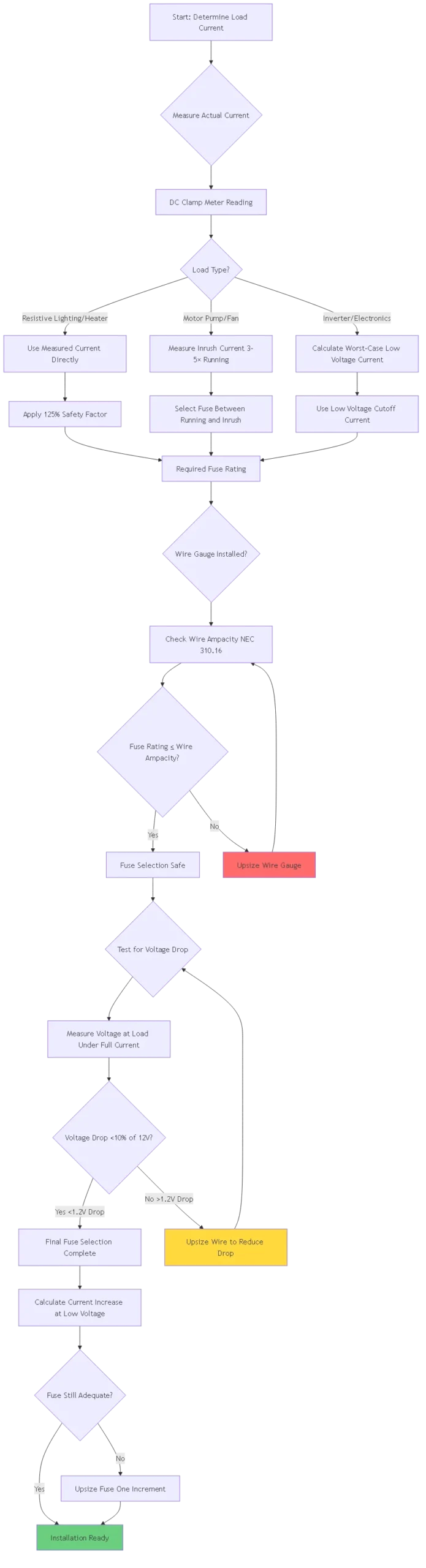
Principio fondamentale: Il valore nominale del fusibile deve essere pari a 125% di corrente continua massima.
Valore nominale del fusibile = Corrente di carico continua massima × 1,25

Esempio 1: Barra luminosa a LED da 12 V
Corrente misurata: 12A continui
Fusibile richiesto: 12A × 1,25 = 15A
Selezionare: Fusibile a lama da 15A (corrispondenza esatta)

Esempio 2: Pompa dell'acqua a 12 V
Corrente misurata: 8A continui
Fusibile richiesto: 8A × 1,25 = 10A
Selezionare: Fusibile a lama da 10A
Perché il fattore 125%:
1. La temperatura ambiente influisce sul punto di interruzione del fusibile
2. Le fluttuazioni di tensione aumentano la corrente (P=VI costante)
3. I componenti che invecchiano assorbono più corrente
4. Correnti di sovratensione durante l'avvio
5. Tolleranza di fabbricazione nei valori nominali dei fusibili (±10-20%)
I motori presentano sfide uniche a causa dello spunto all'avvio:
Caratteristiche tipiche di spunto del motore:
Spunto all'avvio: 3-5× corrente di esercizio
Durata: 0,5-2 secondi
Il fusibile deve essere in grado di sopportare la corrente d'inserzione senza bruciarsi

Esempio: pompa di sentina a 12 V
Corrente di funzionamento: 5A
Spunto all'avvio: 5A × 4 = 20A per 1 secondo
Selezione del fusibile:
Approccio sbagliato:
20A di spunto → Utilizzare un fusibile da 20A × 1,25 = 25A.
Risultato: Nessuna protezione per un cavo dimensionato per 5A continui!

Approccio corretto:
1. Dimensionare il filo per la corrente di funzionamento: 5A × 1,25 = 6,25A → filo da 10 AWG (capacità 30A)
2. Selezionare la portata del fusibile tra corrente di marcia e di spunto:
   - Troppo piccolo (7,5A): Soffio fastidioso all'avvio
   - Troppo grande (30A): Non protegge il filo da 10 AWG
   - Ottimale: fusibile da 10A o 15A (permette lo spunto, protegge il filo)
3. Prova nell'applicazione reale (ciclo della pompa 10 volte)
4. In caso di soffi fastidiosi: Aumentare il fusibile di un passo
Fusibili a flusso lento e fusibili a flusso rapido:
Per i carichi del motore, i fusibili a lenta interruzione (a tempo) tollerano lo spunto:
Fusibile ad accensione rapida: si fulmina alla corrente nominale di 135% in <1 second
slow-blow fuse: tolerates 200% current for 5-10 seconds

Applicazione motore:
- 20A di spunto, 5A di marcia, fusibile da 10A selezionato
- Soffio rapido 10A: sovratensione 20A = 200% → Si brucia immediatamente
- Soffio lento 10A: sovratensione 20A = 200% → Tollera per 5 secondi (pompa avviata)

Scegliere la soffiatura lenta per i motori, la soffiatura rapida per l'elettronica.
Regola d'oro: Il fusibile deve proteggere il filo, non solo il carico.
Ampacità dei fili di riferimento (Tabella NEC 310.16):
| Calibro del filo | Ampacità (75°C) | Fusibile massimo |
|---|---|---|
| 18 AWG | 16A | 15A max |
| 16 AWG | 22A | 20A max |
| 14 AWG | 32A | 30A max |
| 12 AWG | 41A | 40A max |
| 10 AWG | 55A | 50A max |
| 8 AWG | 73A | 70A max |
| 6 AWG | 101A | 100A max |
| 4 AWG | 135A | 125A max |
| 2 AWG | 181A | 175A max |
Regola di sicurezza critica:
❌ PERICOLOSO - Fusibile sovradimensionato:
Filo: 14 AWG (ampacità 32A)
Fusibile: 40A
Problema: il filo si surriscalda prima che il fusibile si bruci → PERICOLO DI INCENDIO

✓ SICURO - Di dimensioni adeguate:
Filo: 14 AWG (ampacità 32A)
Fusibile: 30A massimo
Protezione: Il fusibile scatta prima che il filo si surriscaldi
La caduta di tensione aumenta l'assorbimento di corrente per i carichi a potenza costante:
Esempio: inverter a 12 V, uscita 1000 W
A 13,0V: 1000W ÷ 13,0V = 77A corrente di ingresso
A 11,5 V: 1000 W ÷ 11,5 V = 87 A di corrente di ingresso (13% superiore!)
A 10,5 V (batteria esaurita): 1000W ÷ 10,5V = 95A (23% in più!)

Dimensionamento del fusibile:
Errato: 77A × 1,25 = 96A → Selezionare un fusibile da 100A
Corretto: 95A (caso peggiore) × 1,25 = 119A → Selezionare un fusibile da 125A

Oppure: utilizzare un sezionatore a bassa tensione per impedire il funzionamento al di sotto di 11V.
Impatto della caduta di tensione sulla selezione dei fusibili:
Esempio di circuito luminoso a 12 V:
Filo: 14 AWG, 30 piedi di lunghezza
Carico: 10A nominali a 12V
Caduta di tensione: 2 V (significativa per un sistema a 12 V)
Tensione al carico: 10V

La corrente aumenta per mantenere la potenza:
120W di carico alla sorgente
Corrente effettiva: 120W ÷ 10V = 12A al carico (20% superiore!)

Il dimensionamento del fusibile deve tenere conto della caduta di tensione:
12A × 1,25 = 15A il fusibile minimo richiesto (non 10A × 1,25 = 12,5A).
Circuiti OEM di fabbrica:
I veicoli moderni utilizzano un'ampia protezione dei fusibili:
Conteggio dei fusibili tipico di una berlina:
- Scatola dei fusibili dell'abitacolo: 30-50 fusibili
- Scatola fusibili vano motore: 20-40 fusibili
- Totale: 50-90 circuiti singoli con fusibili

Valutazioni comuni:
- 5A: Quadro strumenti, memoria ECU
- 10A: Radio, luci interne
- 15A: Presa di corrente, clacson
- 20A: Alzacristalli elettrici, sedili riscaldati
- 30A: Motore del soffiatore, serrature elettriche
- 40-60A: Ventole di raffreddamento, pompa ABS (fusibili maxi)
- 80-150A: Uscita alternatore, alimentazione batteria principale (fusibili mega/ANL)
Installazione di accessori aftermarket:
Esempio 1: Barra luminosa a LED (100W)
Corrente: 100W ÷ 12V = 8,3A
Fusibile: 8,3A × 1,25 = 10,4A → Selezionare un fusibile a lama da 15A
Cavo: 16 AWG minimo (ampacità 22A > fusibile 15A)
Posizione: Collegarsi al circuito accessorio o aggiungere un circuito dedicato
Esempio 2: Telecamera da cruscotto (5W)
Corrente: 5W ÷ 12V = 0,4A
Fusibile: 0,4A × 1,25 = 0,5A → Selezionare un fusibile a lama da 2A
Filo: 20 AWG accettabile (ampacità 11A >> fusibile 2A)
Collegamento: Rubinetto per fusibile da aggiungere al circuito esistente
Esempio 3: Argano (9500 lb, 4,5kW)
Corrente: 4500W ÷ 12V = 375A
Fusibile: 375A × 1,25 = 469A → Selezionare un fusibile ANL da 500A
Filo: 4/0 AWG (ampacità 230A) - INSUFFICIENTE!
Conduttori paralleli: 2× 2/0 AWG (2 × 175A = 350A) - Ancora marginale
Corretto: 2× 4/0 AWG (2 × 230A = 460A adeguati)
Nota: ciclo di lavoro dell'argano <10%, la portata continua non è richiesta.
Requisiti dello standard ABYC E-11:
Mandato degli standard elettrici dell'American Boat & Yacht Council:
1. Protezione da sovracorrente entro 7 pollici dalla sorgente di alimentazione.
2. Componenti marini (resistenza alla corrosione)
3. Protezione dell'accensione in spazi con motori a benzina
4. Ampacità dei fili adeguata secondo la tabella ABYC
Selezione dei fusibili resistenti alla corrosione:
Sfide ambientali:
- Nebbia salina (altamente corrosiva per i terminali)
- Elevata umidità (condensa all'interno dei portafusibili)
- Temperature estreme (sala macchine 60°C+)
- Vibrazioni (azione delle onde, motore)

Requisiti dei portafusibili:
- Terminali nichelati o dorati
- Coperchi sigillati (grado di protezione IP66/IP67)
- Ferramenta di montaggio in acciaio inox
- Materiali resistenti ai raggi UV

Tipi di fusibili consigliati:
- Fusibili ANL in supporti impermeabili
- Fusibili MEGA (resistenza alla corrosione integrata)
- Fusibili a lama in supporti sigillati Blue Sea Systems
Esempio: Barca da pesca d'acqua salata
Circuito della pompa di sentina (sicurezza critica)
Pompa: 500 GPH, 12V, 5A in funzione, 18A di spunto all'avvio
Fusibile: 10A ANL a lenta interruzione in supporto impermeabile
Cavo: Rame marino stagnato 14 AWG
Installazione: Sotto la linea di galleggiamento = massimo rischio di corrosione
Manutenzione: Ispezionare i terminali ogni 6 mesi, sostituirli annualmente
Suite di elettronica di navigazione
Carico combinato:
- GPS/Cartplotter: 2A
- Radio VHF: 6A in trasmissione, 0,5A in ricezione
- Cercatore di pesci: 1.5A
- Transponder AIS: 2A
Totale: 11,5A massimo simultaneo

Fusibile: 11,5A × 1,25 = 14,4A → Scegliere un fusibile a lama da 15A.
Cavo: 14 AWG di tipo marino
Supporto: Portafusibile a lama sigillato Blue Sea Systems
Posizione: Area protetta del timone, al di sopra di potenziali intrusioni d'acqua
12V Distribuzione della batteria domestica:
In genere, i camper separano i sistemi a 12 V della "casa" (abitazione) da quelli del "telaio" (veicolo):
Batteria domestica Carichi tipici:
- Luci interne a LED: 10-15A totali
- Pompa dell'acqua: 8A
- Soffiatore del forno: 15A
- Frigorifero (modalità 12V): 12A
- Caricabatterie USB: 5A
- Sistema di intrattenimento: 8A
Totale massimo: 63A
Fusibile della batteria principale della casa:
Carico simultaneo nel caso peggiore: 63A
Fusibile: 63A × 1,25 = 79A → Selezionare un fusibile ANL da 80A o 100A.
Filo: 4 AWG (ampacità 135A > fusibile 100A)
Posizione: Entro 7 pollici dal terminale positivo della batteria (NEC 690.71)
Tipo: ANL in supporto impermeabile (installazione all'aperto comune)
Protezione del circuito individuale:
Pompa dell'acqua:
- Funzionamento: 8A, Spunto: 24A (3×)
- Fusibile: fusibile a lama da 15A a lenta combustione
- Filo: 14 AWG

Illuminazione a LED (tutte le zone):
- Carico: 12A continuo
- Fusibile: 12A × 1,25 = fusibile a lama da 15A
- Cavo: 14 AWG

Modalità frigorifero 12V:
- Ciclo di assorbimento: 12A continuo
- Fusibile: 12A × 1,25 = 15A fusibile a lama
- Filo: 14 AWG
Esempio di sistema a 12 V: Cabina piccola
Componenti del sistema:
Batteria: 400Ah LiFePO4 a 12,8V
Impianto solare: 800W (condizioni ottimali)
Regolatore di carica: 60A MPPT
Inverter: 2000W (ingresso a 12 V)
Ubicazione e dimensionamento dei fusibili:
1. Da un campo solare a un regolatore di carica
Corrente di cortocircuito della matrice: 15A per pannello × 2 pannelli = 30A
Fusibile: 30A × 1,25 = 37,5A → Selezionare un fusibile di classe T da 40A
Filo: 10 AWG (ampacità 55A)
Supporto: Portafusibile impermeabile in linea (classificato per esterni)
2. Regolatore di carica verso la batteria
Uscita controller: 60A massimo
Fusibile: 60A × 1,25 = 75A → Selezionare un fusibile ANL da 80A
Cavo: 6 AWG (ampacità 101A)
Posizione: Entro 7 pollici dal positivo della batteria (NEC 690.71)
Tipo: ANL in supporto impermeabile o Classe T
3. Dalla batteria all'inverter
Ingresso inverter a bassa tensione:
2000W ÷ 10,5V (batteria scarica) = 190A
Fusibile: 190A × 1,25 = 238A → Selezionare 250A Classe T o 300A ANL
Filo: Parallelo 2/0 AWG (2 × 175A = 350A di capacità)
Posizione: Terminale positivo della batteria
Tipo: Preferibile classe T (limitazione di corrente per la protezione dell'inverter)
4. Circuiti di carico CC (illuminazione, pompe)
Carichi CC combinati: 15A massimo
Fusibile: 15A × 1,25 = 19A → Selezionare il fusibile a lama da 20A
Filo: 12 AWG
Pannello: Pannello fusibili a lama Blue Sea Systems
Portafusibili a lama in linea:
Caso d'uso: Aggiunte aftermarket, protezione a circuito singolo
Tipi:
- Supporto a lama aperta: Solo per uso interno ($2-5)
- Impermeabile sigillato: Esterno/marino ($8-15)
- Circuito aggiuntivo ATC: Rubinetto per scatola di fusibili esistente ($5-10)

Collegamento dei fili:
- Si consigliano terminali ad anello (crimpati)
- Saldatura e termorestringimento per la resistenza alle vibrazioni
- Capacità tipica del filo 12-14 AWG
Portafusibili ANL:
Tipi:
- Singolo in linea: Il più comune ($15-30)
- Montaggio a pannello: Fusibili multipli in un unico involucro ($40-80)
- Coperchi impermeabili: Richiesto per uso marino/esterno ($25-50)

Installazione:
- Terminali dei bulloni: Coppia di serraggio 100-150 in-lbs
- Utilizzare rondelle a stella (per evitare l'allentamento dovuto alle vibrazioni).
- Applicare un composto antiossidante (Noalox) sui terminali in rame.
- Marine: Utilizzare capicorda in rame stagnato e ferramenta inossidabile
Portafusibili di classe T:
Requisiti:
- Supporto di classe T con certificazione UL (specifico per il tipo di fusibile)
- Tensione nominale adeguata (corrisponde alla tensione del sistema)
- Interruzione adeguata (>20kA)

Costo: $40-100 per supporto + $20-60 per fusibile
Marchi: Littelfuse, Mersen, Bussmann
Installazione: Raccomandata da un professionista (conformità NEC solare)
Requisiti NEC e ABYC:
Entrambi gli standard prevedono una protezione contro le sovracorrenti in prossimità della sorgente di alimentazione:
NEC 690.71 (Sistemi solari):
"La protezione contro le sovracorrenti deve essere fornita entro 7 pollici (178 mm)
dal terminale positivo della batteria"."

ABYC E-11.17.2 (Marine):
"Protezione da sovracorrente il più vicino possibile alla sorgente,
non superiore a 7 pollici"."

Motivo: Il cavo non protetto comporta un rischio di incendio in caso di cortocircuito.
Procedura di installazione:
1. Identificare il terminale positivo della batteria
2. Misurare un massimo di 7 pollici dal terminale
3. Installare il portafusibile entro questa distanza
4. Far passare il filo protetto verso i carichi
5. Utilizzare la lunghezza minima del filo (riduce il rischio)
6. Sostenere il filo ogni 18 pollici (per evitare sfregamenti).
Terminali a crimpare (preferibili per i 12 V):
Vantaggi:
- Resistente alle vibrazioni (nessun giunto freddo come la saldatura)
- Connessione a tenuta di gas (evita la corrosione)
- Installazione più rapida
- Connessione meccanica più forte

Procedura:
1. Spellare l'isolamento del filo per 3/8" - 1/2".
2. Inserire nel terminale a crimpare
3. Utilizzare una crimpatrice a cricchetto (non una pinza).
4. Crimpare nella canna, non nell'area dell'isolamento
5. Prova di trazione: Tirare con una forza di 20-30 libbre
6. Applicare il tubo termorestringente sulla crimpatura
Tipi di terminali:
Terminali ad anello: Ideale per le connessioni imbullonate (portafusibili, sbarre).
- Utilizzare il calibro corretto del filo
- Abbinare le dimensioni dei bulloni (1/4", 5/16", 3/8")

Terminali a forcella: Applicazioni a connessione rapida
- Non consigliati per alte vibrazioni
- Utilizzare terminali a forcella di bloccaggio per i circuiti critici

Connettori di testa: Giunzione da filo a filo
- Preferibilmente di tipo termorestringente (tenuta stagna)
- Crimpare entrambi i lati

Problema 1: il fusibile si brucia immediatamente dopo l'inserimento
Causa: Cortocircuito nel cablaggio o nell'apparecchiatura
Fasi diagnostiche:
1. Scollegare completamente il carico dal circuito
2. Misurare la resistenza da positivo a negativo/massa
3. Dovrebbe essere >1kΩ (infinita per la maggior parte dei circuiti).
4. Se <1Ω: Cortocircuito presente

Individuare il cortocircuito:
1. Ispezione visiva: Cercare l'isolamento danneggiato, fili schiacciati
2. Dividere e conquistare: Scollegare i carichi uno per uno
3. Quando la resistenza torna a >1kΩ, l'ultimo componente scollegato è difettoso.
4. Riparare il filo danneggiato o sostituire il componente difettoso
Problema 2: il fusibile si brucia sotto carico normale
Possibili cause:
1. Fusibile sottodimensionato rispetto al carico effettivo
2. Caduta di tensione che causa un maggiore assorbimento di corrente
3. Apparecchiature obsolete che assorbono più corrente
4. Collegamenti inadeguati che generano calore
5. Tipo di fusibile errato (a carica rapida invece che a carica lenta per il motore)
Diagnosi:
1. Misurare la corrente effettiva con una pinza amperometrica CC
2. Confronto con il valore nominale del fusibile
3. Se la corrente è > del valore nominale del fusibile: Problema di carico o fusibile sottodimensionato
4. Se la corrente < valore nominale del fusibile: Il fusibile è difettoso o il collegamento è difettoso e provoca calore

Controllare la caduta di tensione:
- Misurare la tensione sulla batteria: 12,6 V
- Misurare la tensione al carico: Dovrebbe essere >11,5 V
- Se <11V: esecuzione
Problema 3: Corrosione nel portafusibili (Marine)
Sintomi:
- Polvere verde/bianca sui terminali
- Elevata resistenza (caduta di tensione sul supporto)
- Collegamento intermittente
- Generazione di calore
Procedura di pulizia:
1. Scollegare completamente l'alimentazione
2. Rimuovere il fusibile
3. Pulire i terminali:
   - Spazzola metallica o tampone ScotchBrite
   - Spray detergente per contatti (CRC QD Electronic Cleaner)
   - Asciugare completamente
4. Applicare il rivestimento protettivo:
   - DeoxIT Gold per contatti placcati in oro
   - Boeshield T-9 o Corrosion-X per i contatti marini in generale.
5. Riassemblare con un fusibile nuovo
6. Testare la caduta di tensione: <0,1V accettabile attraverso il supporto
Prevenzione:
- Utilizzare portafusibili sigillati e impermeabili (grado di protezione IP67).
- Applicare grasso dielettrico ai terminali
- Ispezione trimestrale in ambienti marini
- Sostituire i supporti ogni 5 anni in caso di applicazioni in acqua salata.
1. È possibile utilizzare fusibili a lama per autoveicoli per applicazioni marine?
Sì, ma solo in portafusibili sigillati e impermeabili con grado di protezione IP66/IP67. I fusibili a lama standard per autoveicoli sono adatti all'uso marino se protetti dall'umidità e dalla salsedine. Tuttavia, il portafusibile deve essere di tipo marino, con terminali resistenti alla corrosione (nichel o placcati oro), coperchio sigillato e minuteria di montaggio in acciaio inox. Per i circuiti di sicurezza critici (pompe di sentina, luci di navigazione), utilizzare fusibili ANL o MEGA in supporti marini dedicati. Ispezionare i terminali ogni trimestre e applicare grasso dielettrico per prevenire la corrosione.
2. Qual è la differenza tra i fusibili ad accensione rapida e quelli ad accensione lenta?
I fusibili ad accensione rapida interrompono la corrente in <1 secondo a 135%, proteggendo l'elettronica sensibile da sovraccarichi anche brevi. I fusibili a lenta interruzione (con ritardo) tollerano la corrente di 200% per 5-10 secondi, consentendo l'avvio del motore senza fastidiose interruzioni. Utilizzare i fusibili rapidi per l'elettronica, le luci a LED e i circuiti senza motore. Utilizzare i fusibili a scarica lenta per i motori (pompe, ventole, argani), gli inverter e qualsiasi carico con elevato picco di avvio. I fusibili a lama identici all'esterno possono essere a soffiatura rapida o lenta: controllare attentamente la confezione.
3. Come si dimensiona un fusibile per un inverter a 12 V?
Calcolare la corrente di ingresso nel caso peggiore alla tensione minima della batteria: Potenza dell'inverter (W) ÷ Tensione minima (V) = Corrente (A), quindi moltiplicare per 1,25. Esempio: inverter da 1500W con taglio a bassa tensione di 10,5V: 1500W ÷ 10,5V = 143A, × 1,25 = 179A fusibile minimo. Selezionare un fusibile ANL/Classe T da 200A o 250A. Il cavo deve essere dimensionato per la portata del fusibile: 200A richiede un minimo di 4/0 AWG. Non dimensionare mai il fusibile in base alla tensione nominale di 12 V: la tensione della batteria si abbassa sotto carico.
4. Posso sostituire un fusibile bruciato con uno di amperaggio superiore?
Solo se l'ampacità del filo supporta la portata del fusibile più alta. I fusibili proteggono i fili dal surriscaldamento: l'uso di un fusibile da 30A su un filo da 18 AWG (ampacità di 16A) crea un rischio di incendio. Se i fusibili si bruciano ripetutamente con il valore nominale corretto: (1) Misurare la corrente di carico effettiva (potrebbe essere superiore alle aspettative), (2) Verificare la presenza di cortocircuiti, (3) Aggiornare prima il calibro del filo e poi il fusibile. Non superare mai l'ampacità del filo con il valore nominale del fusibile. Le ripetute bruciature dei fusibili indicano un problema elettrico che richiede una diagnosi, non una riparazione con un fusibile più grande.
5. Perché il mio fusibile marino si corrode così rapidamente?
Gli ambienti salini sono estremamente corrosivi a causa della nebbia salina e dell'umidità. I portafusibili standard consentono l'ingresso di umidità, causando la corrosione galvanica tra metalli dissimili. Soluzioni: (1) Utilizzare portafusibili impermeabili (Blue Sea Systems, Ancor), (2) Applicare grasso dielettrico a tutte le connessioni, (3) Utilizzare fili di rame stagnato e terminali placcati in oro, (4) Installare in un luogo protetto lontano dagli spruzzi, (5) Ispezionare e pulire ogni trimestre, (6) Sostituire i portafusibili ogni 3-5 anni. I fusibili ANL e MEGA in supporti impermeabili di qualità durano 10 volte di più dei fusibili a lama in supporti standard.
6. Di quale dimensione è il fusibile necessario per un verricello a 12 V?
Dimensionare il carico in stallo nel caso peggiore, non il carico nominale. Un argano da 9500 lb assorbe 350-450A quando è in stallo sotto carico pesante. Dimensionamento del fusibile: 450A × 1,25 = 563A → Selezionare un fusibile ANL da 600A o 750A. Tuttavia, il ciclo di lavoro del verricello è <10% (trazioni brevi), quindi la valutazione del filo continuo è meno critica. Utilizzare 2× 2/0 AWG o 2× 4/0 AWG in parallelo. Molti kit di verricelli includono un fusibile di dimensioni adeguate. Non utilizzare mai un fusibile <500A per un verricello da 9500 lb: si spegne durante le trazioni più intense.
7. Come si fa a capire se un fusibile è bruciato senza rimuoverlo?
Fusibili a lama: Guardare attraverso il corpo di plastica trasparente: l'elemento metallico deve essere continuo. Se è rotto o fuso, il fusibile è bruciato. Fusibili a tubo di vetro: L'elemento è visibile attraverso il vetro, per vedere se è rotto o scolorito. Fusibili ANL: Elemento visibile: verificare che non vi sia una sezione fusa o una separazione completa. Test: Utilizzare un multimetro in modalità resistenza sui terminali del fusibile con l'alimentazione disattivata. Un buon fusibile indica <0,1Ω; il fusibile bruciato è infinito (OL). L'ispezione visiva è più affidabile per le lame/il vetro, mentre per i fusibili ANL/Classe T è necessario un test con il metro.
I fusibili a 12 volt CC forniscono una protezione essenziale per gli impianti elettrici di automobili, imbarcazioni, camper e impianti solari. La scelta corretta del tipo di fusibile, il dimensionamento dell'amperaggio e le tecniche di installazione garantiscono un funzionamento sicuro e affidabile nelle applicazioni mobili e off-grid.
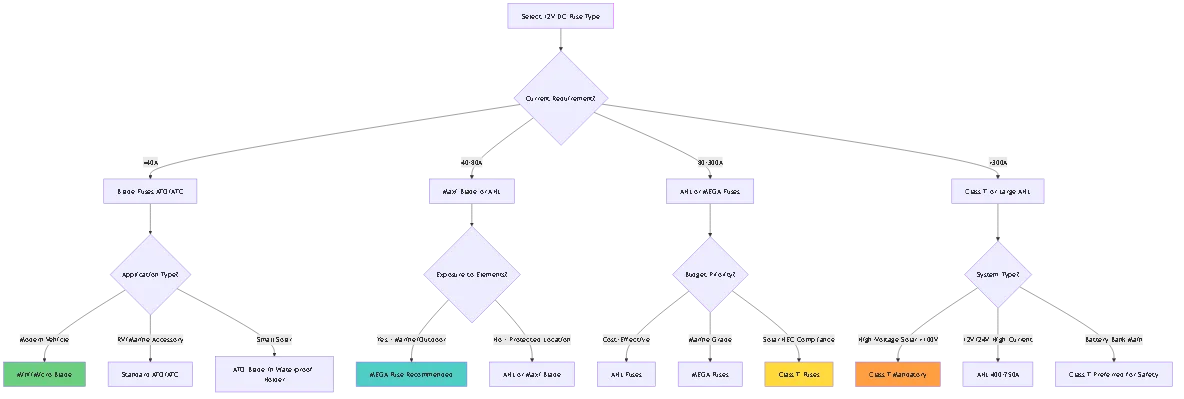
Sintesi della selezione:
Per gamma attuale:
- <40A: Fusibili a lama (ATO/ATC/Mini/Micro) - universali e poco costosi
- 40-80A: Fusibili a lama maxi o ANL - la soluzione più conveniente
- 80-300A: Fusibili ANL o MEGA - protezione di livello industriale
- >300A: Fusibili di classe T - limitazione di corrente, conformi alle normative solari
Per applicazione:
- Accessori per autoveicoli: Fusibili a lama in rubinetti add-a-circuit
- Equipaggiamento marino: Fusibili MEGA in supporti impermeabili, resistenti alla corrosione
- Batteria domestica del camper: Sezionatore principale ANL + pannello fusibili a lama per i circuiti
- Sistemi solari: Classe T per la conformità NEC, ANL per le costruzioni economiche
Lista di controllo per l'installazione:
- [ ] Valore nominale del fusibile = Corrente di carico × 1,25 (minimo)
- [ ] Valore nominale del fusibile ≤ Ampacità del filo (sicurezza critica)
- [ ] Soffio lento per i motori, soffio rapido per l'elettronica
- [ ] Supporto impermeabile per esterni/marini
- [ ] Installare entro 7 pollici dal positivo della batteria
- [ ] Terminali a crimpare con termorestringente
- [ ] Test: Caduta di tensione <0,1 V attraverso il fusibile/supporto
- [ ] Etichettare il valore nominale del fusibile e il circuito protettoPromemoria per la manutenzione:
- Ispezione annuale dei fusibili a lama (controllo dell'elemento visibile)
- Ispezione trimestrale dei fusibili marini (prevenzione della corrosione)
- Pulire immediatamente i terminali corrosi
- Sostituire i portafusibili ogni 5-10 anni
- Tenere a bordo fusibili di scorta (2 per ciascun valore nominale).
- Verificare che i valori nominali dei fusibili corrispondano alle etichette dei circuiti
Quando effettuare l'aggiornamento:
- Lama a ANL: Circuiti >40A, vibrazioni elevate
- ANL a Classe T: conformità NEC solare, limitazione di corrente necessaria
- Supporti standard o impermeabili: Marine, esterni, esterni RV
- Tubo di vetro a lama: Qualsiasi veicolo/barca moderna (migliore affidabilità)
Una corretta selezione e installazione dei fusibili a 12 V protegge le apparecchiature, previene gli incendi e garantisce anni di funzionamento senza problemi in ambienti mobili e non collegati alla rete.
Parola chiave di riferimento: Fusibili a 12 volt c.c.
URL Slug: Fusibili a 12 volt-dc
Meta Titolo: Guida ai fusibili a 12 Volt DC: Tipi, dimensionamento e selezione per il settore automobilistico/marino
Meta descrizione: Guida completa ai fusibili a 12 V CC per applicazioni automobilistiche, marine, camperistiche e solari. Scoprite i tipi di fusibili, il dimensionamento dell'amperaggio, i valori di tensione e i metodi di installazione corretti per la protezione a bassa tensione.
Livello di contenuto: Livello 3 (Contenuto di supporto)
Funnel di conversione: Top of Funnel (consapevolezza)
Conteggio parole obiettivo: 2800-4000 parole
Diagrammi della sirena target: 3
Configurarli nelle impostazioni di Rank Math, quindi eliminare questa casella prima della pubblicazione.
Sì, ma solo in portafusibili sigillati e impermeabili con grado di protezione IP66/IP67. I fusibili a lama standard per autoveicoli sono adatti all'uso marino se protetti dall'umidità e dalla salsedine. Il portafusibile deve essere di tipo marino, con terminali resistenti alla corrosione, coperchio sigillato e minuteria di montaggio in acciaio inox. Ispezionare trimestralmente i terminali e applicare grasso dielettrico.
I fusibili ad accensione rapida interrompono la corrente in meno di 1 secondo a 135%, proteggendo l'elettronica sensibile. I fusibili a lenta interruzione (con ritardo) tollerano la corrente di 200% per 5-10 secondi, consentendo lo spunto all'avvio del motore. Utilizzare i fusibili a soffiatura rapida per l'elettronica e le luci a LED. Utilizzare i fusibili a lenta interruzione per motori, pompe, ventilatori e inverter con elevati picchi di avvio.
Calcolare la corrente di ingresso nel caso peggiore alla tensione minima della batteria: potenza dell'inverter (W) ÷ tensione minima (V) = corrente (A), quindi moltiplicare per 1,25. Esempio: inverter da 1500W con taglio a 10,5V: 1500W ÷ 10,5V = 143A, × 1,25 = 179A minimo. Selezionare un fusibile ANL/Classe T da 200A o 250A. Non dimensionare mai il fusibile in base alla tensione nominale di 12 V. La tensione della batteria si abbassa sotto carico.
Solo se l'ampacità del filo supporta il valore nominale del fusibile più alto. I fusibili proteggono i fili dal surriscaldamento; l'uso di fusibili sovradimensionati crea un rischio di incendio. Se i fusibili si bruciano ripetutamente: misurare la corrente di carico effettiva, verificare la presenza di cortocircuiti, aggiornare prima il calibro del filo e poi il fusibile. Non superare mai l'ampacità del filo con il valore nominale del fusibile.
Gli ambienti salini causano una rapida corrosione dovuta alla nebbia salina e all'umidità. Soluzioni: utilizzare supporti impermeabili, applicare grasso dielettrico, utilizzare fili di rame stagnato e terminali placcati in oro, installare in luoghi protetti, ispezionare ogni trimestre e sostituire i supporti ogni 3-5 anni. I fusibili ANL e MEGA inseriti in supporti impermeabili durano molto di più.
Dimensionare per il carico di stallo nel caso peggiore. Un argano da 9500 lb assorbe 350-450A quando è in stallo. Dimensionamento del fusibile: 450A × 1,25 = 563A → Selezionare un fusibile ANL da 600A o 750A. Utilizzare un cablaggio in parallelo 2× 2/0 AWG o 2× 4/0 AWG. Non utilizzare mai un fusibile inferiore a 500A per un verricello da 9500 lb: si brucerebbe durante le trazioni più intense.
Fusibili a lama: Guardare attraverso il corpo di plastica trasparente: l'elemento metallico deve essere continuo. Fusibili a tubo di vetro: L'elemento è visibile attraverso il vetro, per verificare la presenza di rotture o scolorimenti. Test: Utilizzare un multimetro in modalità resistenza sui terminali del fusibile con l'alimentazione disattivata. Un fusibile buono indica meno di 0,1Ω; un fusibile bruciato indica un valore infinito.