Indirizzo
304 Nord Cardinale
St. Dorchester Center, MA 02124
Orario di lavoro
Da lunedì a venerdì: dalle 7.00 alle 19.00
Fine settimana: 10.00 - 17.00
Indirizzo
304 Nord Cardinale
St. Dorchester Center, MA 02124
Orario di lavoro
Da lunedì a venerdì: dalle 7.00 alle 19.00
Fine settimana: 10.00 - 17.00

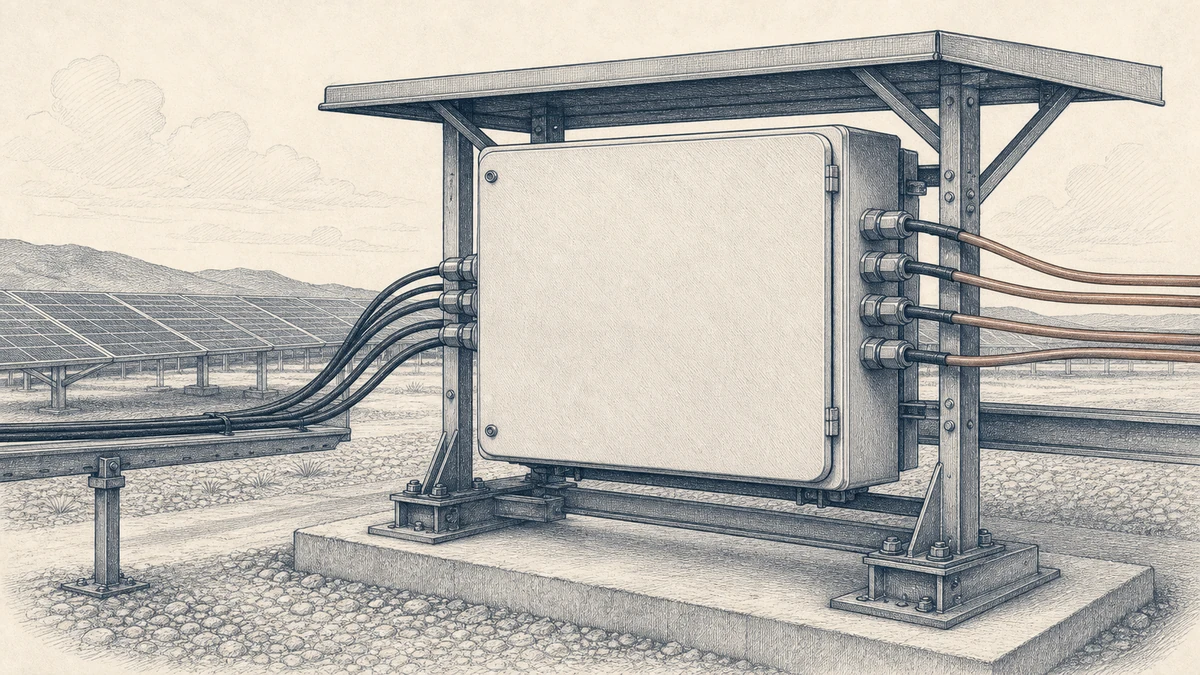
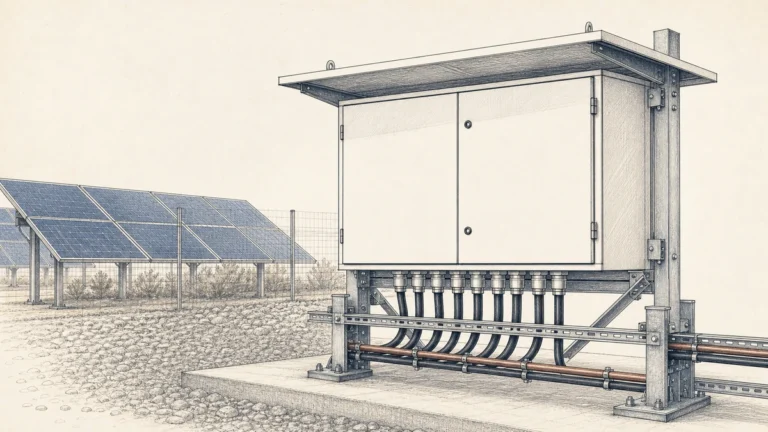
Distribution box circuit segregation is not just a neat wiring practice. In photovoltaic, control, and AC power applications, it affects service access, maintenance safety, fault containment, and whether the final assembly can be verified for its intended use. For a Sinobreaker Waterproof Distribution Box, the goal is to create a practical enclosure layout that keeps circuits identifiable, serviceable, and aligned with the verified assembly design rather than relying on a generic “box with terminals” approach.
A waterproof enclosure can protect components from rain, dust, and site exposure, but environmental protection alone does not define safe internal separation. PV DC strings, control wiring, surge protection, disconnect devices, monitoring circuits, and AC outgoing circuits may all behave differently during isolation and fault conditions. That is why the circuit arrangement should be specified before the box is built, inspected before it is energized, and documented for future maintenance.
PV DC circuits can remain live whenever modules are exposed to light. Even when an AC breaker is open or an inverter is isolated, upstream DC conductors may still be energized. Control circuits may also be fed from separate sources, batteries, meters, or monitoring equipment.
Good distribution box circuit segregation makes this reality visible. DC input paths, AC output paths, and control wiring should not be visually blended into one undifferentiated wiring space. Clear grouping, marking, and physical routing reduce the chance that a technician assumes an entire enclosure is dead after switching off only one functional unit.
IEC 61439-2:2020 is relevant here because it covers power switchgear and controlgear assemblies up to 1,000 V AC or 1,500 V DC and clarifies forms of internal separation. Where the selected form is higher than Form 1, parts in a functional-unit compartment that remain live after that unit is switched off must have at least IPXXB protection. This requirement reinforces a simple service principle: if something can remain live, it must not be casually reachable during normal access.
In mixed PV DC, control, and AC layouts, service confusion often comes from three issues:
A serviceable Sinobreaker Waterproof Distribution Box should make the system logic easy to follow. A technician should be able to open the cover, read the labels, identify the incoming and outgoing circuits, and understand which isolator or protective device controls which section.
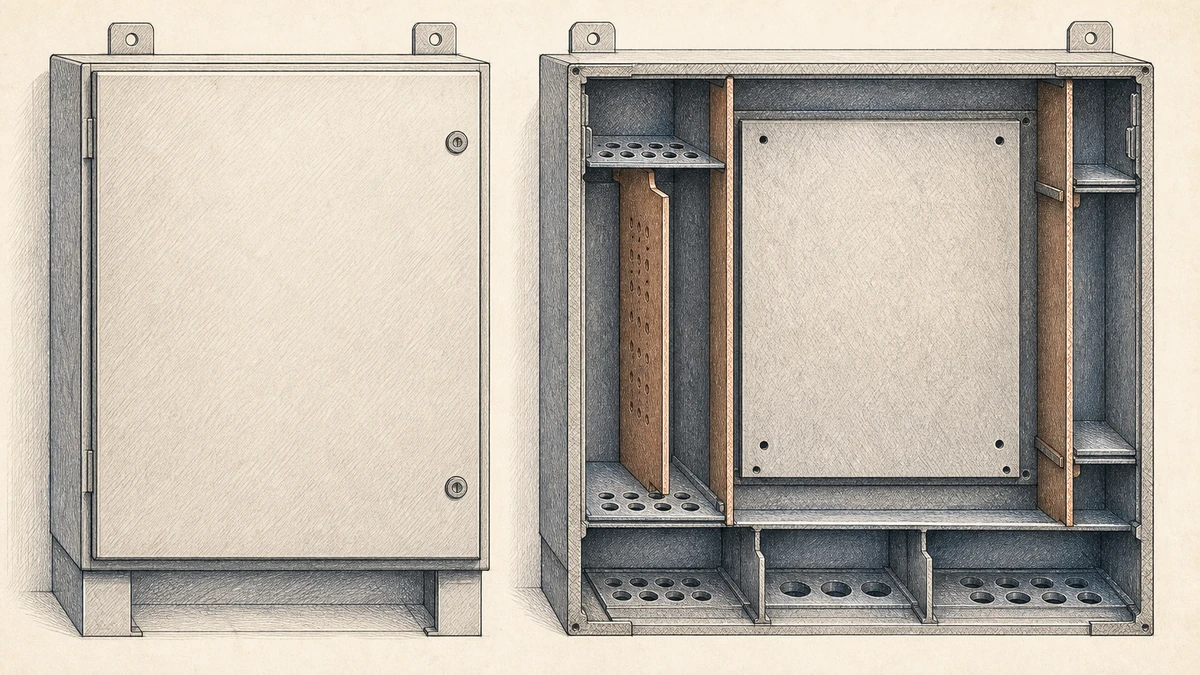
ABB’s IEC 61439 application paper describes internal forms of separation as subdivision of an assembly by barriers or partitions. It explains that separation can support direct-contact protection, reduce the probability of internal-arc propagation, and limit the passage of solid foreign bodies. The same paper also makes an important practical point: the chosen form must match the verified assembly design, not be inferred from a generic enclosure layout.
For a waterproof distribution box, this means partitions, shrouds, covers, terminal guards, and mounting zones should be part of the assembly concept. They should not be added casually after the main wiring is already complete.
IEC 61439-1:2020 establishes general service conditions, construction requirements, technical characteristics, and verification requirements for low-voltage assemblies. Any claim about a mixed PV DC, control, or AC arrangement needs the relevant IEC 61439 part and configuration-specific verification evidence.
This matters because a waterproof box, by itself, is not the same as a verified low-voltage assembly. The final configuration includes the enclosure, devices, busbars or terminals, conductors, creepage and clearance distances, heat rise behavior, protective measures, and service access arrangement. If any of these change, the verified performance may also change.
IEC TR 61439-0:2022 explains that the specifier defines system and application details so the manufacturer can produce an assembly that meets the intended need. Required separation, serviceability, and circuit arrangement are application decisions that need to be specified and verified for the actual assembly.
For buyers and system integrators, this means “waterproof distribution box” should not be the only requirement. The specification should also state:
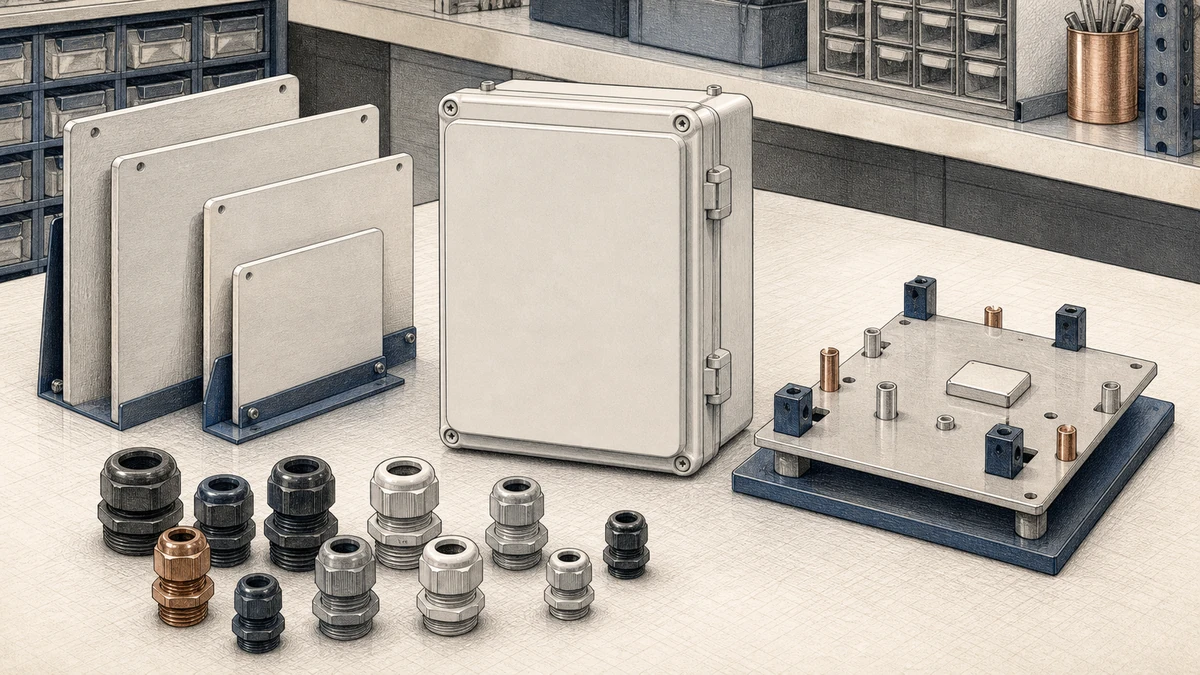
The first layout decision should be functional grouping. PV DC input circuits, DC protection devices, monitoring/control circuits, and AC circuits should each have a defined zone. Cable routing should support this zoning.
A practical layout may use:
This arrangement improves serviceability because technicians can troubleshoot one function without disturbing unrelated circuits.
PV DC circuits require special attention because they may remain energized during daylight. In a waterproof distribution box, DC conductors should be routed with minimal crossing and clear polarity identification. Positive and negative conductors should be arranged consistently, with adequate spacing and secure termination.
If DC surge protective devices, fuses, disconnectors, or string terminals are installed, their service access should be logical. A technician replacing a fuse or SPD module should not need to reach across unrelated AC terminals or control wiring.
Control circuits are often lower current, but they are not automatically harmless. Some are powered from external sources, and some may carry signals that affect inverter operation, monitoring, alarms, or shutdown logic.
Control wiring should be segregated by routing, labeling, and terminal grouping. Where practical, it should use separate trunking or a dedicated terminal zone. This reduces electromagnetic interference risk, simplifies testing, and helps avoid accidental disconnection during power-circuit maintenance.
AC breakers, residual current devices, contactors, or terminals may require periodic inspection or replacement. If AC service work forces the technician to work near exposed PV DC conductors, the enclosure layout is not service-friendly.
For higher forms of internal separation under IEC 61439-2, any parts in a functional-unit compartment that remain live after that unit is switched off must have at least IPXXB protection. In practical terms, shrouds, finger-safe terminals, barriers, and covered live sections are not decorative accessories; they are part of the service safety concept.
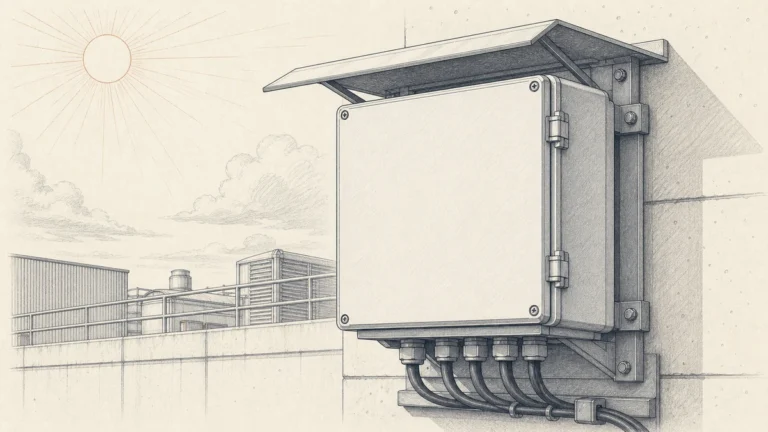
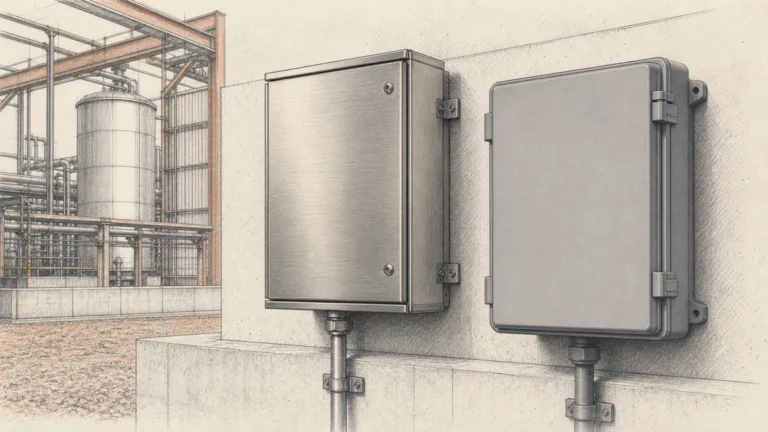
A Sinobreaker Waterproof Distribution Box may be selected for outdoor exposure, moisture resistance, dust protection, or harsh installation conditions. However, the external IP rating does not automatically define internal segregation between circuits.
A box can be waterproof but still difficult to service if:
The enclosure protects the assembly from the environment. Internal segregation helps protect people, circuits, and service procedures inside the assembly.
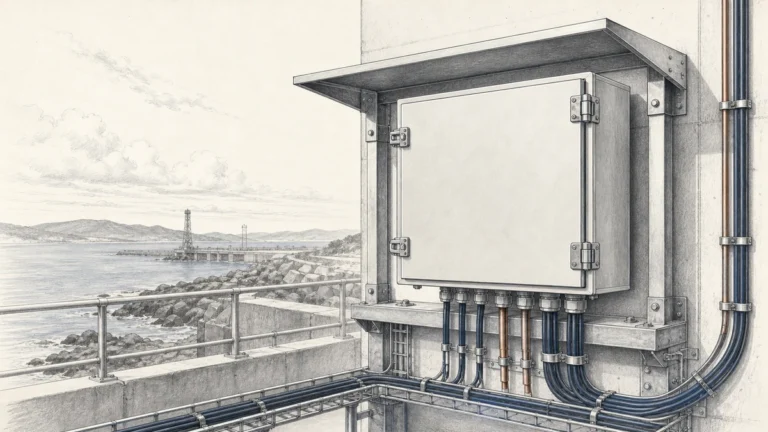
Cable glands are often treated as a final installation detail, but they strongly affect circuit segregation. If all cables enter randomly from the same side, internal routing becomes crowded and confusing. A better approach is to assign entry areas by circuit type.
For example, PV string inputs can enter through one gland row, AC outgoing cables through another, and control or communication cables through a separate area. This reduces conductor crossing and makes visual inspection faster.
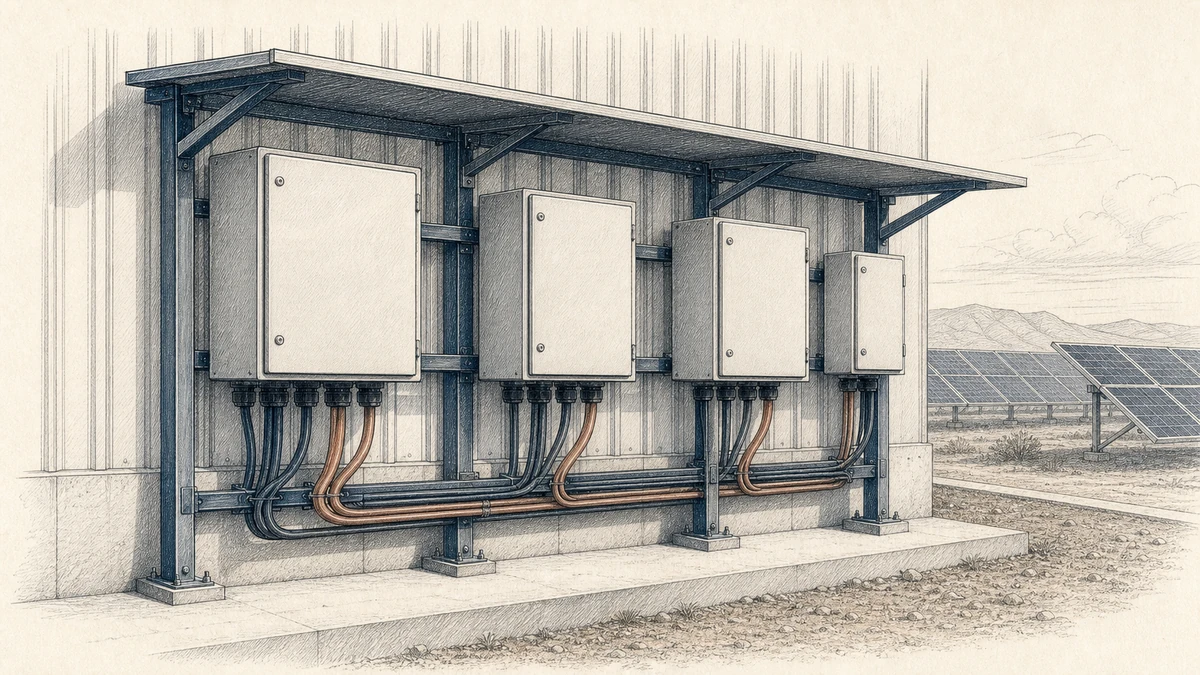
Before final assembly, identify every source of energy entering the box. This includes PV DC, AC supply, auxiliary power, stored energy, control voltage, and communication-linked equipment. Then confirm which devices isolate which zones.
A serviceable box should answer these questions at a glance:
Internal separation is only useful when it matches the way the box will be serviced. If a cover must be removed for routine inspection, the area behind it should not expose unrelated live conductors. If a terminal must be tested under controlled conditions, it should be accessible without dismantling protective segregation for other circuits.
This is where IEC 61439 thinking is valuable. The selected form of separation, guarded live parts, service access, and verification evidence should work together as one assembly design.
A distribution box is serviceable only if future technicians understand it. Documentation should include circuit identification, terminal numbering, protective device ratings, conductor sizing, isolation notes, and any live-after-isolation warnings.
For Sinobreaker Waterproof Distribution Box applications, the documentation package should match the actual delivered configuration, not a generic template. If the assembly is modified on site, the labels and drawings should be updated before energization.
A waterproof enclosure is a component of the solution, not automatic proof of IEC 61439 compliance. Verification depends on the complete assembly configuration, including devices, wiring, separation, temperature rise, short-circuit withstand capability, and protective measures.
Mixed routing may save space at first, but it usually creates service problems later. PV DC and AC circuits should be separated by function, routing, and identification. Where required, they should also be separated by barriers or guarded compartments.
The most dangerous assumption is that opening one switch de-energizes everything inside the box. PV DC and auxiliary control circuits often make this false. Live-after-isolation conditions should be designed into the layout and shown on labels.
Internal forms of separation are not marketing labels. As ABB’s IEC 61439 application guidance explains, separation is created by barriers or partitions and must match the verified assembly design. The selected form should be specified, constructed, and verified for the actual application.
When ordering or configuring a Sinobreaker Waterproof Distribution Box, provide the intended circuit arrangement before production or assembly. Include the number of PV strings, DC voltage, AC voltage, control circuit details, cable entry requirements, and service access expectations.
This allows the enclosure layout, device placement, internal separation, and labeling to be designed as one coordinated system.
For assemblies claimed under IEC 61439, ask for evidence relevant to the actual configuration. IEC 61439-1:2020 provides the general framework, while the applicable product part and project-specific design determine what must be verified.
For mixed PV DC, control, and AC circuits, generic product claims are not enough. The verification should correspond to the actual voltage levels, protective devices, enclosure arrangement, and separation concept.
A distribution box that is too crowded may pass a visual space check but fail the serviceability test. Adequate wiring space, clear access to terminals, and readable labels reduce downtime and maintenance risk.
In outdoor PV and power distribution applications, a slightly larger waterproof distribution box may be more reliable than a compact box that forces circuit groups into the same service space.
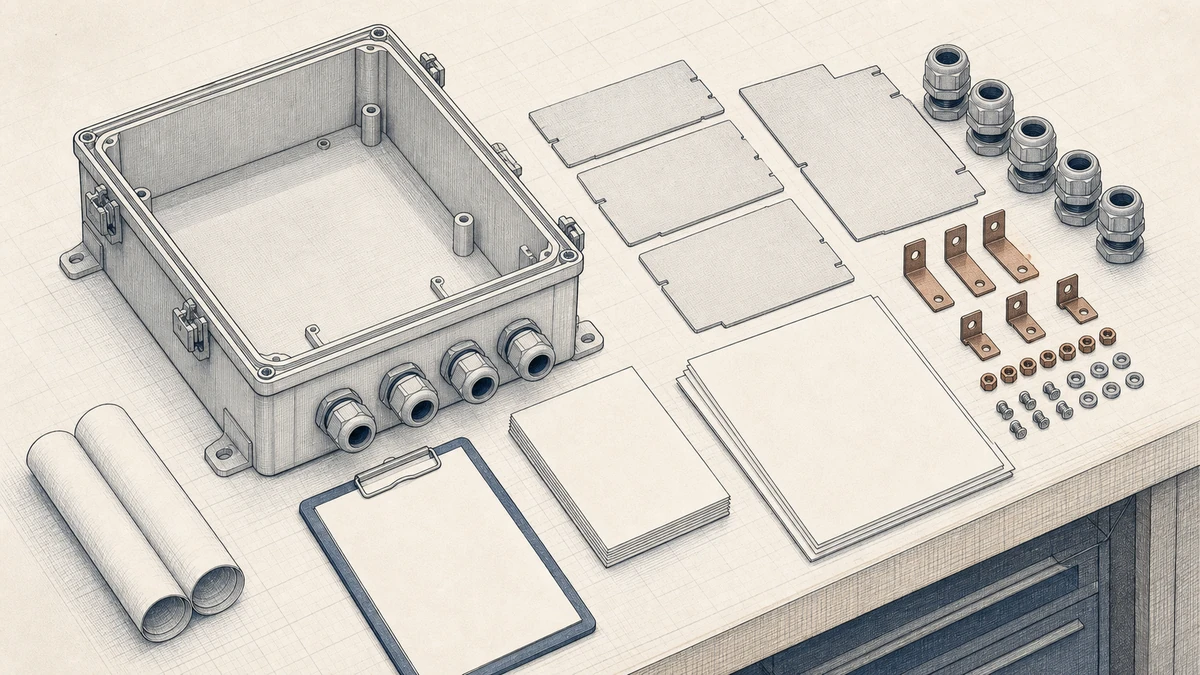
Distribution box circuit segregation means arranging circuits by function, voltage, source, and service access requirement. In a mixed PV and AC enclosure, this usually means keeping PV DC circuits, AC circuits, and control wiring clearly separated by layout, routing, labeling, and, where required, barriers or partitions.
Yes, they can be installed in the same waterproof distribution box when the assembly is properly designed, specified, and verified for that arrangement. The important point is that DC, AC, and control circuits should not be mixed casually. The final assembly must account for voltage ratings, isolation, live parts, heat, wiring space, access, and applicable IEC 61439 verification requirements.
No. A waterproof enclosure provides environmental protection, but IEC 61439 separation requirements depend on the complete low-voltage assembly. Internal barriers, partitions, guarded live parts, device arrangement, circuit ratings, and configuration-specific verification all matter. A Sinobreaker Waterproof Distribution Box should therefore be specified as part of a complete assembly design, not treated as proof of internal separation by itself.