住所
304ノース・カーディナル
セント・ドーチェスター・センター(マサチューセッツ州02124
勤務時間
月曜日~金曜日:午前7時~午後7時
週末午前10時~午後5時
住所
304ノース・カーディナル
セント・ドーチェスター・センター(マサチューセッツ州02124
勤務時間
月曜日~金曜日:午前7時~午後7時
週末午前10時~午後5時

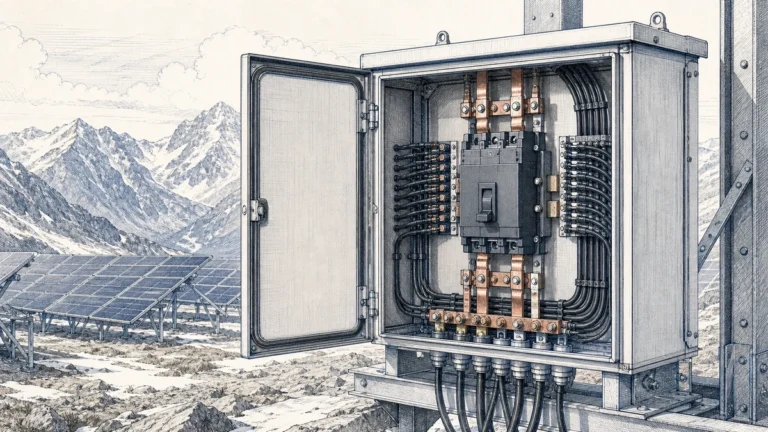
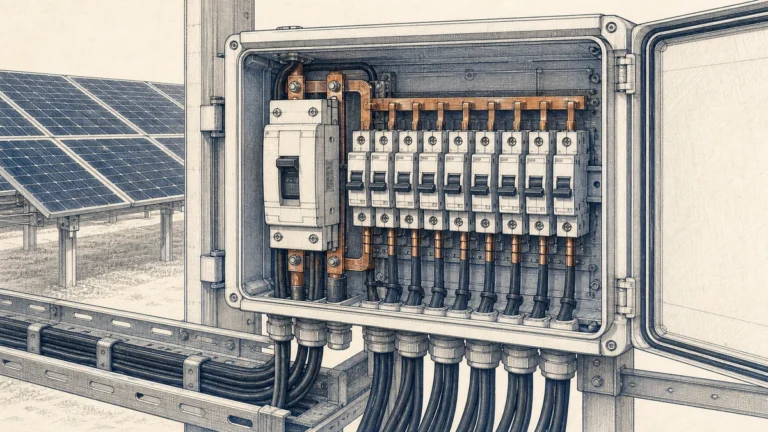
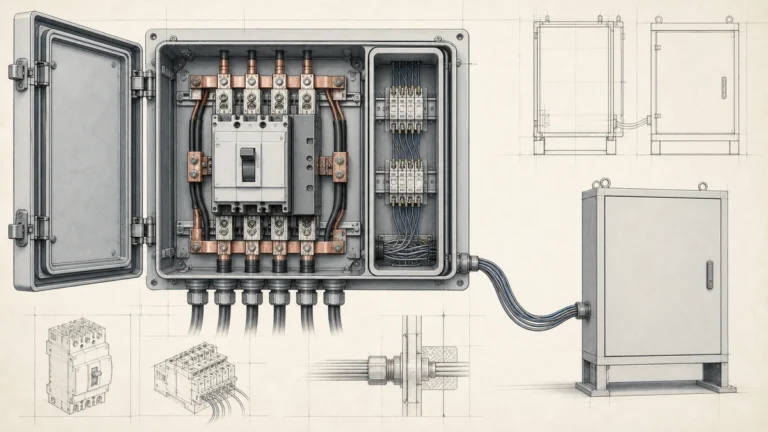
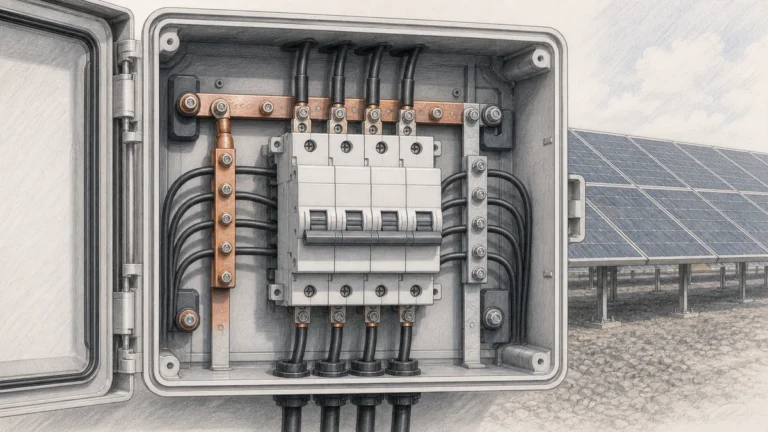
直流回路ブレーカーボックスは、個々のブレーカーを安全で整理された、法令に準拠した配電システムに変換する保護ハウジングとして機能します。エンクロージャは、単なる金属ボックスの域をはるかに超え、環境保護、熱管理、適切な部品間隔を通じて、システムの信頼性、安全性、および寿命を決定します。.
この包括的なガイドでは、エンクロージャーの選択基準を網羅しています、, NEMA/太陽光発電、船舶、産業用アプリケーションにおけるDCブレーカーボックスのIP定格の解釈、熱設計の考慮事項、専門的な設置技術。.
ブレーカーボックスは、重要な電気部品を保護します:
環境ハザード:
- 水分と湿度(結露、雨、水しぶき)
- 粉塵と微粒子(砂漠、工業地帯、建設現場)
- 腐食性雰囲気(海洋塩水噴霧、化学工場)
- 紫外線(屋外設置)
- 物理的衝撃(偶発的な接触、工具の落下)
- 害虫と昆虫(巣を作る、噛む)
作戦上の危険:
- アーク放電封じ込め(外部への延焼防止)
- 活線端子との偶発的接触(ショック保護)
- 電磁干渉(EMIシールド)
- 熱ストレス(大電流による発熱)
規制要件:
- NEC 第 312 条:キャビネットおよびカットアウトボックスの要件
- NEC第110.26条:作業上のクリアランス
- OSHA 1910.303:電気エンクロージャ規格
- UL 50:電気機器のエンクロージャー規格
- IEC 60529: IP定格システム
一般的な用途:
- 住宅用太陽光発電システム(5~15kW)
- 商業用太陽電池アレイ(50~200kW)
- 船舶配電
- RVおよびモバイル電源システム
- オフグリッド・バッテリー・ストレージ
- 通信バックアップ電源
- 産業用直流機械
全米電機工業会(NEMA)の定格システムは、さまざまな環境に対するエンクロージャの保護レベルを定義しています:
#### NEMA 1: 汎用屋内用
保護レベル:
- 軽い粉塵と偶発的な接触
- 屋内使用のみ、乾燥した場所
- 耐水性、耐腐食性なし
建設:
- 冷間圧延スチール、粉体塗装
- シンプルなドアラッチまたはスクリュークロージャー
- 典型的な通気孔
- ガスケットシールなし
代表的な用途
- 屋内住宅用ソーラー・ディスコネクト
- 空調管理された機器室
- オフィスビルの電気クロゼット
制限:
- 水分があると錆びる
- 換気による粉塵の侵入
- ガレージや湿気の多い地下室には適さない。
コスト要因: 予算層(12×16″ボックス用$50-150)
#### NEMA 3R:屋外防雨型
保護レベル:
- 雨、雪、みぞれ(落水)
- 氷の形成(外部)
- 風塵(限定)
建設:
- 亜鉛メッキまたは粉体塗装スチール
- ドア上のドリップシールド
- ドア外周のガスケットシール
- 底部の排水溝
- 換気または非換気オプション
代表的な用途
- 屋上ソーラー断路ボックス
- 屋外用DCコンバイナーボックス
- 住宅用ソーラー・インバーター・エンクロージャー
- RV車用外部電気パネル
制限:
- 防水性がない(洪水時に下から水が入る可能性がある)
- 防塵性がない(微細な粉塵が侵入する可能性がある)
- 限定的な耐食性(海洋用ではない)
コスト要因: ミッドレンジ(12×16″ボックス用$120-300)
#### NEMA 4/4X:防水および耐腐食性
保護レベル:
- あらゆる方向からの直接散水
- 水しぶきと波
- 風による雨
- ホース直結水
- 氷の形成(外部および内部)
- 耐食性(4Xのみ)
建設:
- NEMA 4: 粉体塗装スチールまたはアルミニウム
- NEMA 4X: 304または316ステンレス鋼、ガラス繊維、ポリカーボネート
- 連続ガスケットシール(独立気泡フォーム)
- コンプレッションラッチまたはカムロック
- Oリングシール付きケーブルグランド
- 換気なし(密閉設計)
代表的な用途
- 舶用ブレーカーパネル
- 水辺のソーラー設備
- 工業用洗浄エリア
- オフショアプラットフォーム
- 農業機械
制限:
- 密閉された筐体内での熱の蓄積(熱管理が必要)
- 4Xステンレス製はコスト高
- より重い重量
コスト要因: プレミアム・ティア(12×16″ボックス用$300-800、NEMA 4X)
#### NEMA 12:工業用防塵型
保護レベル:
- 粉塵や浮遊繊維の沈降
- 糸くずと飛散物
- 水やクーラントの軽い飛散や染み出し
- 屋内のみ
建設:
- 連続ガスケットシール
- 耐油性ガスケット
- 外部取り付け穴なし(内側にねじ込み式インサート)
代表的な用途
- 粉塵を伴う産業施設
- 木工所
- 繊維工場
- HVACフィルター付き屋内ソーラー設備室
コスト要因: ミッドプレミアム(12×16″ボックス用$200-400)
IP(侵入保護)等級は2桁の数字で構成される:IPエックスワイ
一桁目(X)-固体粒子保護:
| 評価 | 保護レベル | 説明 |
|---|---|---|
| 0 | 保護なし | オープンエンクロージャー |
| 1 | >50mm以上のもの | 手のひらサイズ |
| 2 | >12.5mm以上のもの | 指サイズのもの |
| 3 | >2.5mm以上のもの | 工具サイズのオブジェクト |
| 4 | >1mm以上の物体 | ワイヤーサイズ |
| 5 | 防塵 | 限定された侵入(有害な堆積物がない) |
| 6 | 防塵 | 粉塵の侵入が全くない |
2桁目(Y)-液体保護:
| 評価 | 保護レベル | 説明 |
|---|---|---|
| 0 | 保護なし | オープンエンクロージャー |
| 1 | 垂直ドリップ | 結露防止 |
| 2 | 15°ドリップ | 最大15°まで傾斜 |
| 3 | 散水 | 垂直から60 |
| 4 | 水しぶき | どの方向でも |
| 5 | ウォータージェット | 6.3mmノズル |
| 6 | パワフルなジェット | 12.5mmノズル |
| 7 | 一時的な浸漬 | 水深1m、30分 |
| 8 | 連続浸漬 | >水深1m以上、連続 |
共通の同等品:
- NEMA 1 ≈ IP20 (屋内、基本保護)
- NEMA 3R ≈ IP54 (屋外、雨天保護)
- NEMA 4 ≈ IP65 (防水、防塵)
- NEMA 4X ≈ IP66(防水、防塵、耐腐食性)
- マリーングレード≒IP67(耐水没性能)
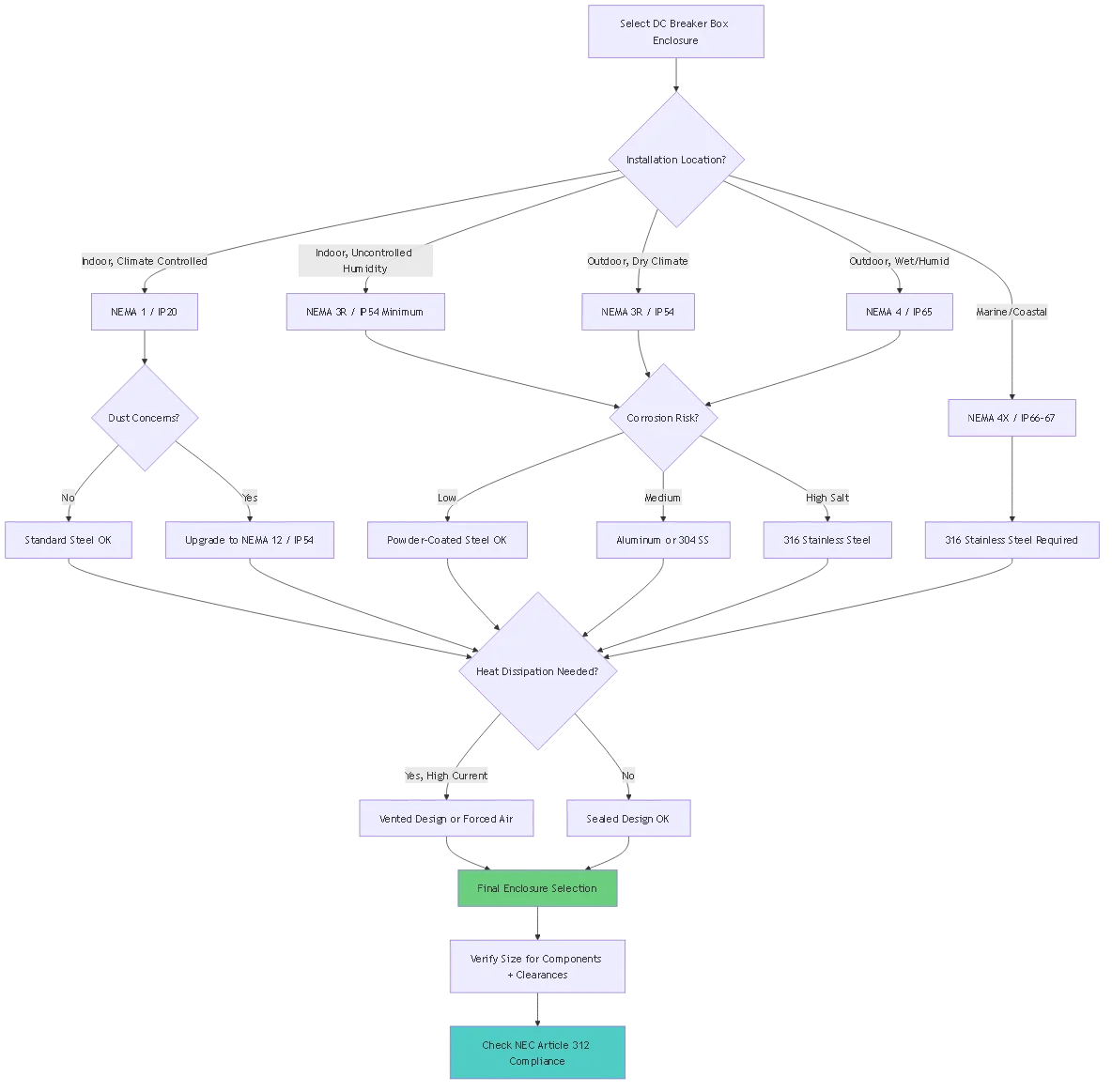
ステップ1:構成部品の目録
エンクロージャー内に取り付けるすべてのコンポーネントのリストを作成する:
ソーラーシステム DC ブレーカボックスの例
- メインディスコネクトブレーカ:200A(4 "W×6 "H×3 "D)
- インバータブレーカ100A(3インチW×4インチH×3インチD)
- チャージコントローラーブレーカー:60A(3 "W×4 "H×3 "D)
- 4×負荷遮断器:各20A(各2 "W×3 "H×2 "D)
- プラス・バスバー:12 "L×2 "W×1 "H
- 負母線: 12 "L × 2 "W × 1 "H
- アース母線:12インチ長×1インチ幅×0.5インチ高
- サージプロテクタ(オプション):4インチ幅×6インチ高さ×3インチ奥行き
ステップ2:コンポーネントのフットプリントを計算する
全幅の要件
- 1列に並んだブレーカー4" + 3" + 3" + (4 × 2") = 18"
- コンポーネント間に2インチ間隔を確保+ 10" = 28"
バスバー+ブレーカー+ワイヤー曲げスペース: - バスバー:3″(スタンドオフを含む高さ) - ブレーカー:ブレーカー:6″(最も高いブレーカー) - ワイヤー曲げスペース(NEC 312.6):最小6″ - 合計:3″ + 6″ + 6″ = 15
奥行き要件: - コンポーネントの奥行き:3(ブレーカー最深部) - コンポーネント背後の配線スペース:2″-ドアクリアランス(閉時):1″-合計:3″+2″+1″=6
ステップ3:NECのクリアランス要件を適用する (第312条第6項)
NEC 312.6(A) - ワイヤ曲げスペース:
エンクロージャに出入りする導線用:
| ワイヤーサイズ | 最小スペース(1ワイヤ) | 最小スペース(2本以上) |
|---|---|---|
| 14-10 AWG | 特になし | 1.5インチ |
| 8-6 AWG | 1.5インチ | 2.0インチ |
| 4-3 AWG | 2.0インチ | 2.5インチ |
| 2-1 AWG | 2.5インチ | 3.5インチ |
| 1/0~2/0 AWG | 3.0インチ | 4.5インチ |
| 3/0-4/0 AWG | 3.5インチ | 5.0インチ |
| 250-350 kcmil | 4.5インチ | 6.0インチ |
例 2/0AWGの主導線(主ブレーカに2線)を持つエンクロージャ:
- 必要な曲げスペース:最小4.5インチ
- 実用的なスペース:6インチを推奨
ステップ4:標準エンクロージャーサイズの選択
一般的なエンクロージャの寸法:
- 小:10″W×12″H×4″D(基本的な切断ボックス)
- 中:16″W × 20″H × 6″D(住宅用ソーラー、ブレーカー6~8個)
- 大:20″W×24″H×8″D(業務用ソーラー、10~15ブレーカー)
- 特大:24″W×36″H×10″D(産業用、ブレーカー20個以上)
計算例では(28″W×15″H×6″Dが必要):
- 選択してください:30″W × 20″H × 8″Dエンクロージャー
- 幅2インチ、高さ5インチ、奥行き2インチの余白を確保
- 将来の拡張が可能
縦割り組織戦略:
トップセクション(最もクールなエリア):
バスバー(プラス、マイナス、アース)
├── 主遮断ブレーカー(最も電流が大きい=最も熱を持つ)
中段: ├── 大電流分岐ブレーカー(インバーター、充電器) ├── 中電流ブレーカー(負荷30〜60A)
下部セクション(対流により最も高温になる部分):低電流ブレーカ(照明、制御、10~20A) ├── ケーブルエントリグランド └── 排水穴(屋外エンクロージャの場合)
水平組織戦略:
左サイド                    右側
ソース接続 ├── 負荷接続
バッテリー入力 ├── インバーター出力
ソーラーアレイ入力 ├── 分岐回路
チャージコントローラー入力 ├── アクセサリー回路
メリット
- ソースと負荷の明確な視覚的分離
- トラブルシューティングが容易(「左側が死んでいる=ソースに問題がある)
- 配線の交差と乱雑さを低減
熱管理レイアウト:
重要な原則:熱は上昇する。自然対流が熱を上方に運び、通気孔から排出できるように、電流の最も高い(最も熱い)部品をエンクロージャの上部に配置する。.
誤ったレイアウト:
❌ 間違い:
TOP:低電流ブレーカー(20A)
中:中電流ブレーカー(60A)
下:メインブレーカー(200A) ← 下に熱がこもり、筐体全体が過熱する
正しいレイアウト
正解
TOP:主幹ブレーカー(200A) ← 熱は自然に上へ逃げる
中:中電流ブレーカー(60A)
下:小電流ブレーカー(20A) ← 下から冷気が入る

大電流直流システムは、筐体内で大きな熱を発生します。適切な熱設計がそれを防ぎます:
- ブレーカーの迷惑トリップ(温度ディレーティング)
- 絶縁劣化(ワイヤー寿命の低下)
- 部品の故障(電子機器、コンデンサー)
- 火災の危険性(接続部の過熱)
直流ブレーカーボックス内の熱源:
1. ブレーカーの内部損失:
“`
損失電力 = I² × R_breaker
例:全負荷時100Aブレーカー
内部抵抗:~0.0005Ω(代表値
熱 = (100A)² × 0.0005Ω = 5W/ ブレーカー
“`
2. バスバーの損失:
“`
バスバー抵抗:~1/4″×2″銅の場合、1フィートあたり~0.0001Ω
例:12″バスバー経由200A
抵抗:0.0001Ω×1フィート=0.0001Ω
熱 = (200A)² × 0.0001Ω = 4W
“`
3. 接続損失:
“`
良好な接続:~50マイクロオーム(0.00005Ω)
接続不良:~500マイクロオーム(0.0005Ω)
200Aで:
良:(200A)²×0.00005Ω=2W(許容範囲内)
不良:(200A)²×0.0005Ω=20W(オーバーヒート!)
“`
総熱負荷の例:
ソーラーシステム、48V、200Aメインブレーカーボックス:
- メインブレーカー(200A):20W
- インバーターブレーカー(100A):5W
- チャージコントローラーブレーカー(60A):2W
- 4×分岐ブレーカー(各20A):0.4W × 4 = 1.6W
- バスバー損失4W
- 接続損失(8接続):2W × 8 = 16W
合計:全負荷時の発熱量48.6W
自然対流(パッシブ・クーリング):
適度な気候で熱負荷が50W未満の場合:
設計要件:
- 上部の通気口最小25~50平方インチ
- ボトムベント最小25~50平方インチ
- 垂直方向の間隔:>通風孔間12インチ以上
- ベントルーバー耐候性、防虫スクリーン付き
配置だ:
トップベント:
- エンクロージャーの最も高い位置に取り付ける
- ルーバーの角度を下向きにする(雨の侵入を防ぐ)
- ラビリンスデザインを使用する(間接的な経路で水やほこりを防ぐ)
底部換気口:-最も低い位置に取り付けるが、浸水する可能性のある高さより上に取り付ける - 下向きに取り付ける(水しぶきの侵入を防ぐ) - 粗いスクリーンを使用する(ネズミの侵入を防ぐ)
温度上昇の計算:
ΔT=熱量(ワット)÷(風量(CFM)×1.76)例50Wの熱、自然対流~5CFM(推定) ΔT = 50 ÷ (5 × 1.76) = 5.7℃上昇
周囲温度40℃+5.7℃上昇=室内温度45.7℃(許容範囲内)
強制空冷(アクティブ冷却):
熱負荷が50Wを超える場合、または暑い気候の場合:
ファンのサイズ
必要CFM=熱量(ワット)÷(ΔT目標値(℃)×1.76)例:100Wの熱、目標10℃上昇 CFM = 100 ÷ (10 × 1.76) = 5.7 CFM 最小値を選択:安全マージンのため10~15CFMファン
ファンの種類
- DC12V軸流ファン:標準10~20CFM、消費電力1~3W
- ソーラー扇風機:オフグリッド設備
- サーモスタット制御:50℃で作動、40℃でオフ
インストール:
ファンの位置
- エンクロージャーの上部に取り付ける(熱風を排出)。
- またはサイドトップに取り付ける(クロスフロー換気)
- 底面には取り付けない(冷気を送り込むが、効率が悪い)
配線: - 最も優先順位の低い12V回路に接続 - 保護のために1Aヒューズを使用 - ファンが故障した場合はバイパスダイオードを考慮(バックフィードを防ぐ)
密閉筐体(NEMA 4/4X)の考慮事項:
密閉型エンクロージャーはパッシブ換気を使用できません。オプション
1. 特大の囲い:
- 必要量の2~3倍
- 熱を吸収するサーマルマスを提供する
- 温度上昇が遅い
2. 外部ヒートシンク:
- アルミニウム製フィンをエンクロージャーの外側に取り付ける
- エンクロージャーの壁を通して熱を伝える
- 自然対流でフィンを冷却
3. 熱電冷却:
- ペルチェ冷却モジュール(容量50~100W)
- DC12V駆動
- 高価($150-300)だが効果的
4. エアコン:
- 小型筐体ACユニット(容量100~300W)
- 繊細な電子機器に必要
- 電気通信業界では一般的
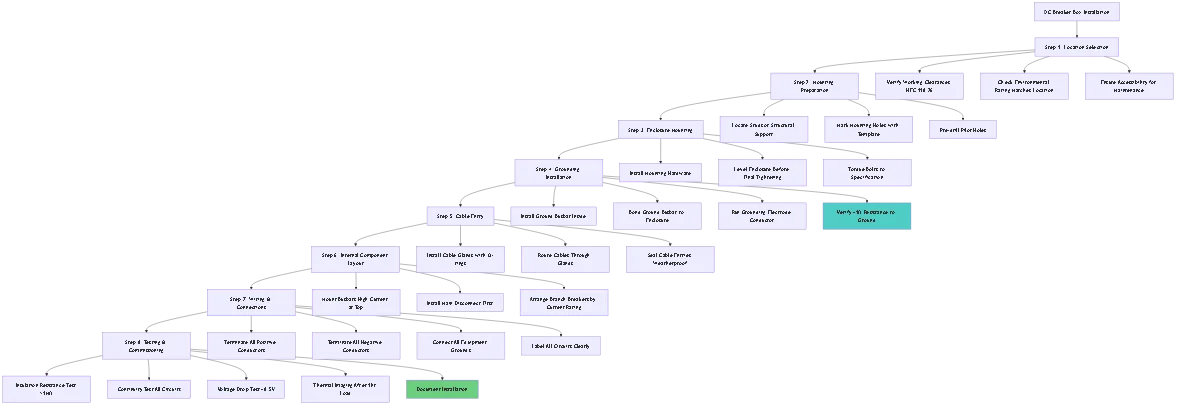
壁掛け(最も一般的):
必要条件
- 構造的サポート最低100ポンド(大型エンクロージャー+ワイヤー重量)
- 取り付け高さ:エンクロージャーの中心まで4~6フィート(NEC 110.26)
- 水平取り付け:エンクロージャのドアは障害物なしで≥90°開くこと
- 垂直取り付け:エンクロージャの上部は、床から最低6.5フィート上
取り付け金具:
ウッドスタッド:
- 1/4インチ×3インチのラグボルトを使用
- 幅16インチ以上の筐体には最低4本のボルトを使用
- あらかじめ下穴を開けておく(1/4インチボルトの場合は3/16インチ)
- ワッシャを使用して荷重を分散させる。
1/4″×3″のコンクリートアンカー(ウェッジまたはスリーブタイプ)を使用 - ハンマードリルで穴を開ける - 最低4本のアンカー - 最終締め付けの前に、エンクロージャーの水平を確認する。
金属スタッド: - トグルボルトまたは構造用バッキングプレートを使用する - 金属スタッドだけでは大型のエンクロージャーには不十分 - 複数のスタッドにまたがる合板バッカーボードを考慮する
台座取り付け(屋外/産業用):
メリット
- 筐体を洪水レベルより高くする
- 地下水からの飛沫を防ぐ
- 下からのケーブルエントリーが容易
- より良い換気(四方の空気循環)
建設:
コンクリート台座:
1.コンクリートパッド:24インチ最低24インチ×24インチ×6インチ
2.湿ったコンクリートにJボルトを埋め込む (直径1/2インチのボルト4本)
3.7日間養生する。
4.筐体ベースをJボルトにボルト止めする。
5.高さ:標準18~36インチ
鋼管ペデスタル: 1. スケジュール40の鋼管4本を使用 2.コンクリートフーチングに3フィートの深さに埋める 3.筐体をUボルトでパイプに取り付ける 4.錆止め塗料を塗布する。
ノックアウト穴(NEMA 1、屋内):
標準エンクロージャには、あらかじめノックアウト位置がパンチされています:
- 1/2″から2″までの電線管サイズ
- ノックアウト・パンチ・ツールまたはハンマー/ドライバーを使用する。
- ねじ式電線管コネクターを取り付ける
- ロックナットを筐体内部に取り付ける
ケーブルグランド(NEMA 3R/4/4X、屋外/海洋):
耐候性のケーブル・エントリーには適切なグランドが必要:
圧縮ケーブルグランド:
コンポーネント
- 本体(エンクロージャーの壁にねじ込む)
- コンプレッション・リング(ケーブルの周りを絞る)
- Oリングシール(水の浸入を防ぐ)
- ロックナット(内側から固定)
インストール1.グランド径に合った穴を開ける 2.穴の縁のバリ取り 3.グランド本体を外側から穴に通す 4.Oリングをグランドのネジ山に取り付ける 5.内側からロックナットを締める(150-200 in-lbs トルク) 6. グランドにケーブルを通す 7.ケーブルが潰れない程度にコンプレッション・リングを締める 8. シリコンシーラントをケーブルの周りに塗布する。
ケーブル・グランドのサイジング:
| ケーブルサイズ(AWG) | ケーブル外径(インチ) | 必要なグランドサイズ |
|---|---|---|
| 10 AWG | 0.25″ | PG13.5(13ミリ) |
| 6 AWG | 0.35″ | PG16 (16mm) |
| 2 AWG | 0.50″ | PG21 (21mm) |
| 1/0 AWG | 0.65″ | PG29 (29mm) |
| 4/0 AWG | 0.90″ | PG36 (36mm) |
液密フレキシブル電線管(船舶/振動):
振動のある船舶やRV車用:
- 液密フレキシブル金属電線管(LFMC)を使用する。
- エンクロージャーから機器まで連続
- 振動による接続部の緩みを防止
- 両端防水コネクター
機器の接地要件(NEC 250.110):
感電防止のため、金属製の筐体はすべて接地すること:
接地方法:
1. 内部グランド・バスバー:
“`
- 筐体内部に銅アース・バスバーを取り付ける
- 最小 6 AWG の導線を使用
- ボンディングスクリューでバスバーを筐体に接続する
- 筐体をメイン・システム・グラウンドにボンディングする
- すべての機器のグランドはこのバスバーに接続されています。
“`
2. エンクロージャーのボンディング:
“`
- エンクロージャーにねじ込む緑色のボンディングスクリュー
- 接地バスバーを筐体金属に接続
- エンクロージャを接地電位にする
- すべての金属製エンクロージャに必要(NEC 250.8)
“`
3. 接地電極導体:
“`
- 筐体アースを接地電極に接続
- NEC表250.66によるサイズ
- 代表値: 6 AWG(100A未満のシステム用) - 代表値: 4 AWG(100~200Aシステム用) - 連続運転(スプライスなし) “`-.
接地の検証:
試験手順
1.マルチメーターを抵抗モードで使用する。
2.筐体からアースまでを測定する:1Ω未満であること
3.筐体からニュートラル(接地システムの場合)を測定する:1Ω未満であること。
4.1Ω以上の場合:ボンディングスクリューの締まり具合をチェックし、接触面を清掃する。
冷間圧延鋼(粉体塗装):
メリット
- 低コスト(NEMA 1用$50-150)
- 高い強度と剛性
- 良好な電磁シールド(EMI/RFI)
- 製造が容易(標準金型)
デメリット
- コーティングが損傷すると錆びる
- 重量が重い(20×24のエンクロージャーで40~60ポンド)
- 海洋環境には適さない
最適: 屋内空調設備、住宅用ソーラー設備室
亜鉛メッキスチール:
メリット
- 粉体塗装よりも優れた耐食性
- 亜鉛コーティングによる犠牲保護(自己修復性)
- 中程度のコスト(NEMA 3R用$100-250)
- 優れた機械的強度
デメリット
- 海洋環境では寿命が限られる(5~10年)
- 亜鉛コーティングは経年劣化する可能性がある
- ステンレス製金具を使用すること(混合金属の場合はガルバニック腐食)
最適: 乾燥した中程度の気候での屋外ソーラー設置、RV車用外装パネル
アルミニウムだ:
メリット
- 軽量(鋼材重量50%)
- 自然な耐食性(酸化皮膜)
- 非磁性(渦電流損失なし)
- 加工と修正が容易
デメリット
- スチールより強度が低い(厚い壁が必要)
- コストが高い(NEMA 4の場合は$200-400)
- 銅/真鍮継手によるガルバニック腐食のリスク
- 柔らかい(へこみやすい)
最適: 海洋淡水環境、ポータブル用途、重量が重要な設備
304ステンレス鋼:
メリット
- 優れた耐食性(一般環境)
- 高い強度と耐久性
- プロフェッショナルな外観(明るい仕上げ)
- 屋外で20~30年の寿命
デメリット
- 高コスト(NEMA 4X用$400-700)
- 海水中での孔食(塩化物腐食)
- 全体的にステンレス製の金具が必要
最適: 沿岸環境(塩水が直接かからない)、工業施設、高級設備
316ステンレス鋼:
メリット
- 優れた耐食性(モリブデン含有)
- 耐塩水性(2-3%モリブデンが孔食を防ぐ)
- 海洋環境で30~40年の寿命
- 過酷な環境に最適な素材
デメリット
- 非常に高いコスト(NEMA 4Xで$600-1000以上)
- アルミニウムより重い
- 全体に316ステンレス製金具が必要
最適: 直接海水にさらされる(ボート、オフショアプラットフォーム)、化学工場、熱帯海洋
ポリカーボネート/グラスファイバー(非金属):
メリット
- 腐食に強い
- 軽量
- 透明カバーあり(開けずに部品が見える)
- 耐UV処方
- 電気非導電性(アース不要)
デメリット
- 強度が低い(内部補強が必要)
- 紫外線による経年劣化(黄変)
- EMIシールドなし
- コストが高い(NEMA 4X用$300-500)
- 現場での修正が難しい
最適: 腐食性化学環境、重量が重要な用途、危険な場所
マッチング・マテリアルが重要
ガルバニック腐食は、電解液(水)の存在下で異種金属が接触することで発生する:
ガルバニックシリーズ(最も高貴→最も活発):
プラチナ(最も高貴 - 最も腐食性が低い)
ゴールド
316ステンレス鋼
304ステンレス鋼
真鍮
銅
アルミニウム
亜鉛メッキ鋼
炭素鋼(最も腐食性が高い)
亜鉛
ルール エンクロージャと同じ材質、またはより高貴な材質のファスナーを使用してください。.
正しい組み合わせ:
- 316 SSエンクロージャー + 316 SSハードウェア
- アルミニウム製エンクロージャー+316SS製ハードウェア
- スチール製エンクロージャー+スチール製ハードウェア
間違った組み合わせ(腐食する):
- 316 SSエンクロージャー + スチール製ハードウェア ✗ (スチールは腐食する)
- アルミ製エンクロージャー+スチール製金具 ✗(アルミは腐食する)
- アルミ筐体 + 銅バスバー ✗ (アルミは絶縁しないと腐食する)
分離方法:
- 異種金属間にはナイロンワッシャーを使用する。
- 誘電体グリースを塗る(電解液をブロックする)
- 全体にステンレスを使用(最も適合性が高い)
四半期ごと(海上/RV)または半年ごと(固定):
- 錆、腐食、損傷の目視検査
- ドアシールのガスケットの状態を点検する(割れている場合は交換する)
- すべてのブレーカーが正しく表示されていることを確認する
- 水の浸入をチェックする(シミを探す)
- 換気スクリーンの清掃(ホコリや虫の除去)
毎年:
- すべての接続をトルクチェックする(熱サイクルにより緩む)
- 接地導通<1Ωの確認 - 負荷をかけた状態での赤外線スキャン - 内部配線に擦り切れや損傷がないか点検 - ドアラッチ/ロック機構のテスト - 防錆処理(海洋環境)の再施工
問題1:NEMA 3R/4エンクロージャへの水の浸入
症状
- 内部部品のさび
- 雨上がりにブレーカーが落ちる
- 底に水が溜まる
原因がある:
- ドアガスケットの損傷
- ケーブルグランドが締まっていない
- 取り付け角度により水が溜まる
- 排水孔が詰まっている
解決策
1.ドアガスケット(クローズドセルフォーム、厚さ1/4インチ)を交換する。
2.すべてのケーブルグランドを締め直す (仕様のトルク)
3.筐体が水平に取り付けられていることを確認する(水平器を使用する)。
4.底の角に1/4インチの排水穴を開ける(屋外エンクロージャのみ)
5.バックアップとして、ケーブル挿入口周辺にシリコーンシーラントを塗布する。
問題2:内装のオーバーヒート
症状
- 70°C
- ワイヤーまたは部品の変色
- 焦げ臭い
原因がある:
- 換気不足
- 過剰な熱を発生させる大型ブレーカー
- 接続不良(高抵抗)
- 直射日光への暴露
解決策
1.換気の追加(定格で許可されている場合、上部+下部の換気口)
2.DC12V換気扇(10~15CFM)を設置する。
3.日陰に移動するか、日除けを追加する。
4.サーモグラフィですべての接続をチェックする(ホットスポットを増し締めする)
5.より大きな筐体(より多くの熱質量)へのアップグレードを検討する。
問題3:適切な定格にもかかわらず腐食
症状
- ヒンジ、ラッチ、取り付け金具のさび
- バスバー腐食(白色または緑色の粉末)
- 腐食による接続の緩み
原因がある:
- 異種金属(ガルバニック腐食)
- 密閉されたエンクロージャー内に閉じ込められた湿気
- 定格を超える塩水噴霧
- 湿気を通すコーティングの損傷
解決策
1.すべてのハードウェアを316ステンレススチールに交換する。
2.内部に乾燥剤パックを取り付ける(四半期ごとに交換)。
3.保護コーティングを施す:
   - ヒンジ/ラッチにBoeshield T-9
   - 電気接続部にDeoxIT
   - バスバーにCorrosion-X
4.より高い定格のエンクロージャにアップグレードする (IP67 vs IP65)
5.排水の改善(密閉されたエンクロージャは結露しやすい)
リタールAEコンパクトエンクロージャ - ステンレス鋼
- 価格: $600-1200
- 特徴:304/316 SS、IP66、モジュラー内部マウント
- サイズ:12×16″〜36×48
- 最適:工業、海洋、化学プラント
- 保証:5年
Hoffman Aシリーズ - NEMA 4Xステンレス製
- 価格: $500-1000
- 特徴:304 SS標準、316 SSあり、クランプカバーデザイン
- サイズ:ワイドレンジ、12×12″〜48×60
- 最適:オフショア、海水海洋、食品加工
- 保証:3年
イートン クロースハインズ EB シリーズ - NEMA 3R
- 価格: $150-400
- 特徴:粉体塗装スチール、防雨型、ノックアウト
- サイズ:12×16″〜24×36
- 最適:屋外ソーラー、屋上設置
- 保証:1年
ハモンド1418シリーズ - NEMA 4
- 価格: $200-500
- 特徴:粉体塗装スチール、連続ヒンジ、フォームガスケット
- サイズ:10×12″〜30×36
- 最適:産業機器、アウトドア機器
- 保証2年
BUD Industries NEMAボックス
- 価格: $50-150
- 特徴:基本NEMA 1/3R、スチールまたはアルミニウム
- サイズ8×10″から20×24″まで
- 最適:屋内住宅、ガレージ
- 保証90日
Fibox ARCAシリーズ - ポリカーボネート
- 価格: $80-250
- 特徴:非金属、耐紫外線、IP67
- サイズ8×12″から20×28″まで
- 最適:腐食性環境、軽量アプリケーション
- 保証:1年
1.サーキットブレーカーボックスとコンバイナーボックスの違いは何ですか?
サーキットブレーカーボックスは、各回路に個別の過電流保護(ブレーカー)を備えた複数の負荷回路に電力を分配します。コンバイナーボックスは、複数のソーラーアレイストリングを1つの出力に統合するもので、通常は負荷に分配せずにヒューズ(ブレーカーではない)のみを使用する。ブレーカーボックスは負荷分配用で、コンバイナーボックスはソース統合用です。ソーラーシステムには、アレイにコンバイナー、家庭配電にブレーカーボックスの両方が使われることが多い。.
2.直流ブレーカーボックスを屋外に設置する場合、天候に左右されずに設置できますか?
定格NEMA 3R(防雨型)以上、またはIP54+(国際型)の場合のみ。屋内定格のエンクロージャ(NEMA 1)は、水分の浸入、紫外線劣化、腐食により、屋外では数カ月以内に故障します。NEMA 3Rのエンクロージャでも、屋根のひさしやサンシェードなどの追加保護が有効です。海洋環境では、塩水噴霧腐食のため、ステンレス鋼構造のNEMA 4X(IP66/67)が必要です。.
3.ブレーカーに適したサイズのエンクロージャを計算するにはどうすればよいですか?
すべてのコンポーネント(ブレーカ、バスバー、サージプロテクタ)を測定し、NECのワイヤ曲げスペース要件(表312.6 - 通常、大きな導線の場合は4〜6インチ)を追加し、コンポーネント間のクリアランスを2〜3インチ追加し、次の標準サイズを選択します。例:ブレーカの18インチ+6インチの曲げスペース+2インチのクリアランス=最小26インチ;幅30インチのエンクロージャを選択します。将来の拡張と放熱のために、常に20-30%をオーバーサイズしてください。.
4.直流ブレーカーボックスに換気は必要ですか?
熱負荷と環境定格による。NEMA 1(屋内)エンクロージャは、総電流が連続100Aを超える場合は換気する必要があります。NEMA 3R(屋外)は、適切に設計されていれば換気できる(ラビリンスベントは雨を防ぐ)。NEMA 4/4X(密閉防水)は換気できません。代わりに、大型エンクロージャ、外部ヒートシンク、またはアクティブ冷却を使用してください。熱負荷を計算してください:>50Wを超える場合は、より強化された冷却が必要です。.
5.DC ブレーカを AC ブレーカと同じエンクロージャに取り付けることはできますか?
推奨されず、多くの場合法令で禁止されている。偶発的な相互接続は、機器の損傷や感電の危険を引き起こす可能性があります。NEC 690.4(D)は、明確な分離とラベリングを要求しています。どうしても必要な場合は、物理的なバリア(内部仕切り)を使用し、明確にラベルを貼ってください:「警告:交流回路と直流回路を混在させないでください。組み合わせる前に、必ず地域の電気規定を確認してください。.
6.船舶用エンクロージャーはスチール製とアルミ製、どちらが良いですか?
淡水マリン用:アルミ製が最もお買い得(軽量、自然な耐食性)。海水マリン用:コストは高いが、316ステンレススチールの方が優れている。どのような海洋環境でも、プレーンスチールは避けること(急速に錆びる)。異種金属間のガルバニック腐食を防ぐため、エンクロージャーの材質に関係なく、316SSのハードウェアを全体的に使用してください。.
7.密閉型DCブレーカーボックス内の結露を防ぐには?
結露は、暖かく湿った空気が冷える(夜間、気温が下がる)と発生する。予防方法:(1)内部に乾燥剤パックを設置し、四半期ごとに交換する;(2)サーモスタット制御のヒーターストリップ(5~10W)を使用して内部を露点以上に保つ;(3)バスバー/接続部にコンフォーマルコーティングを施す;(4)乾燥剤入りのブリーザーベントを使用する(湿気を含まずに圧力を均一化できる);(5)筐体を温度の安定した場所に設置する(直射日光を避ける)。湿度の高い地域では、結露がないか毎月確認してください。.
直流回路ブレーカボックスのエンクロージャは、安全で耐久性のある配電の基礎です。環境条件に基づいた適切な選択、コンポーネントと熱管理に対する適切なサイジング、および専門的な設置技術により、数十年にわたる信頼性の高いサービスが保証されます。.
選考チェックリスト:
- 環境定格は場所(NEMA/IP)と一致します。
- 腐食暴露に適した材質
- コンポーネント+NECクリアランス+30%拡張に対応するサイズ
- 熱負荷に対して適切な熱管理
- 取り付け位置は、法令で要求される作業クリアランスを確保する。
- 適合するハードウェア材料(電解腐食を防ぐ
インストールのチェックリスト:
- 重量に見合った構造的な取り付け(通常100ポンド以上
- エンクロージャーの水平と垂直
- すべてのケーブルエントランスは耐候性を確保 - [ ] 放熱のために最適化されたコンポーネントレイアウト - [ ] すべての回路に明確なラベル付け - [ ] ドア内側のドキュメント(一行図 メンテナンス・チェックリスト
- 四半期ごと:目視点検、通気口の清掃、シールのチェック
- 毎年トルクチェック、サーマルイメージング、グランドテスト
- 船舶用:毎年防錆剤を再塗布する
- 3-5 年ごとにガスケットを交換する。
- エンクロージャーの交換を計画してください:15~20年(スチール製)、25~30年(ステンレス製)
投資の視点
$10,000~50,000の電気インフラを保護するエンクロージャは、品質の高いものを選択する必要があります。格安($100)と高級($500)エンクロージャのコスト差は、交換コストや早期故障によるダウンタイムに比べればごくわずかです。.
海上ライフセーフティシステム、オフグリッド住宅、商業用ソーラーなど、重要な用途には、316ステンレススチール製NEMA 4Xエンクロージャに投資してください。中程度の気候の標準的な住宅用太陽光発電には、NEMA 3Rアルミニウムが優れた価値を提供します。屋内の気候制御環境では、標準的な粉体塗装のスチール製で十分です。.
ブレーカーボックスは、設置品質の目に見える証拠です。適切に設計され、適切に設置されたエンクロージャは、専門的なエンジニアリングを実証し、長期的な信頼性を保証します。.
サーキットブレーカーボックスは、各回路に個別の過電流保護(ブレーカー)を備えた複数の負荷回路に電力を分配します。コンバイナーボックスは、負荷に配電することなく、ヒューズを使用して複数のソーラーアレイストリングを1つの出力に統合します。ソーラーシステムには、アレイにコンバイナー、家庭に配電するブレーカーボックスの両方が使われることが多い。.
定格NEMA 3R(防雨型)以上、またはIP54+(国際型)の場合のみ。屋内定格のエンクロージャ(NEMA 1)は、湿気の侵入、紫外線劣化、腐食のため、屋外では数ヶ月で故障します。海洋環境では、ステンレススチール製のNEMA 4X(IP66/67) が必要です。.
すべてのコンポーネント(ブレーカ、バスバー、サージプロテクタ)を測定し、NECワイヤ曲げスペース要件(表312.6 - 通常4~6インチ)を追加し、2~3インチのクリアランスを追加して、次の標準サイズを選択します。将来の拡張と放熱のために、常に20-30%をオーバーサイズしてください。.
熱負荷と定格による。NEMA 1エンクロージャは、電流が連続100Aを超える場合は換気する必要があります。NEMA 3Rは、ラビリンスベントで換気できる。熱負荷が50Wを超える場合は、大型エンクロージャまたはアクティブ冷却を使用する。.
推奨されず、多くの場合規約で禁止されている。ACシステムとDCシステムは、安全のために別々のエンクロージャが必要である。NEC 690.4(D)は、明確な分離とラベリングを要求している。必要であれば、物理的バリアと明確な警告ラベルを使用する。必ず地域の電気 規約を確認してください。.
淡水用:アルミ製が最もお買い得(軽量、耐食性に優れている)。海水用:コストは高いが、316ステンレススチールが優れている。海洋環境ではプレーンスチールは避ける。ガルバニック腐食を防ぐため、全体に316SSの金具を使用する。.
予防方法乾燥剤パックの設置(四半期ごとに交換)、サーモスタット制御ヒーターストリップの使用(5~10W)、接続部のコンフォーマルコーティング、乾燥剤入りブリーザーベントの使用、温度の安定した場所への設置。湿度の高い地域では毎月点検する。.