Indirizzo
304 Nord Cardinale
St. Dorchester Center, MA 02124
Orario di lavoro
Da lunedì a venerdì: dalle 7.00 alle 19.00
Fine settimana: 10.00 - 17.00
Indirizzo
304 Nord Cardinale
St. Dorchester Center, MA 02124
Orario di lavoro
Da lunedì a venerdì: dalle 7.00 alle 19.00
Fine settimana: 10.00 - 17.00

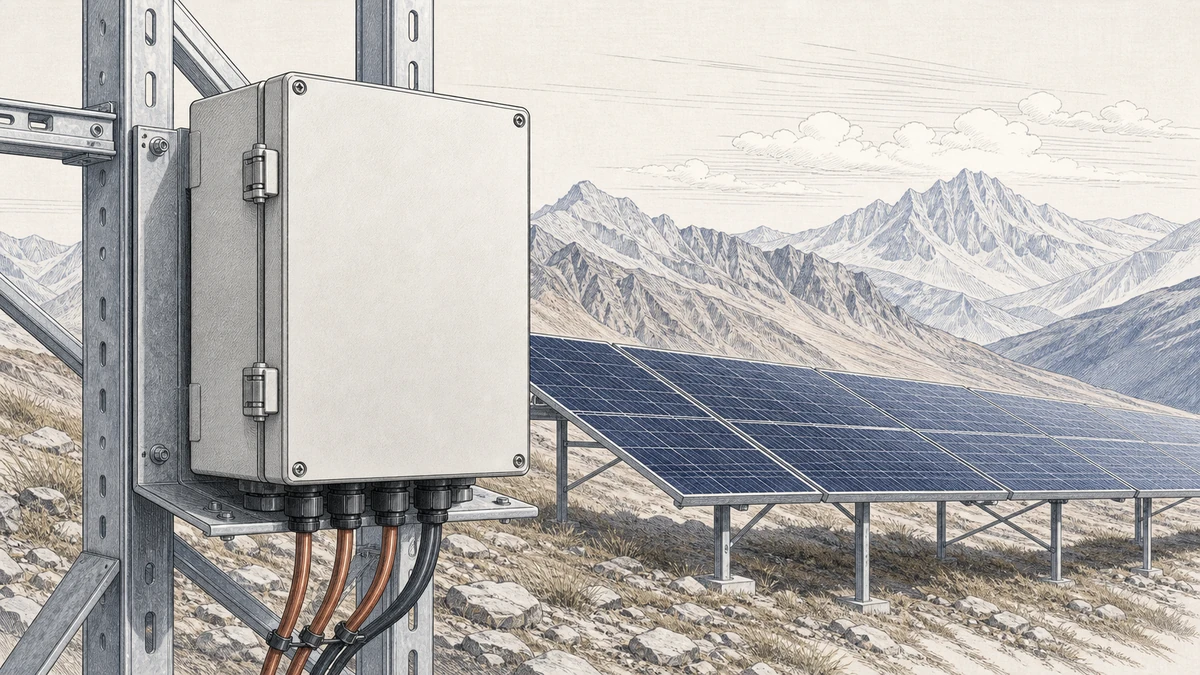
High-elevation PV sites can look straightforward on a single-line diagram: the array voltage is within the DC switch disconnector rating, the current is below the thermal limit, and the enclosure is suitable for outdoor service. The hidden issue is altitude. As elevation increases, air pressure falls. That reduces the dielectric strength of air and also weakens natural cooling. For a DC Switch Disconnector, this can affect insulation coordination, operational voltage, impulse withstand capability, and current-carrying performance.
For engineers, EPCs, and procurement teams, dc disconnect altitude derating should be treated as a selection requirement, not a late-stage documentation note. A DC disconnect selected for 1,500 V DC operation at sea level may not automatically remain suitable at 3,000 m, 4,000 m, or higher unless the manufacturer’s altitude data confirms it.
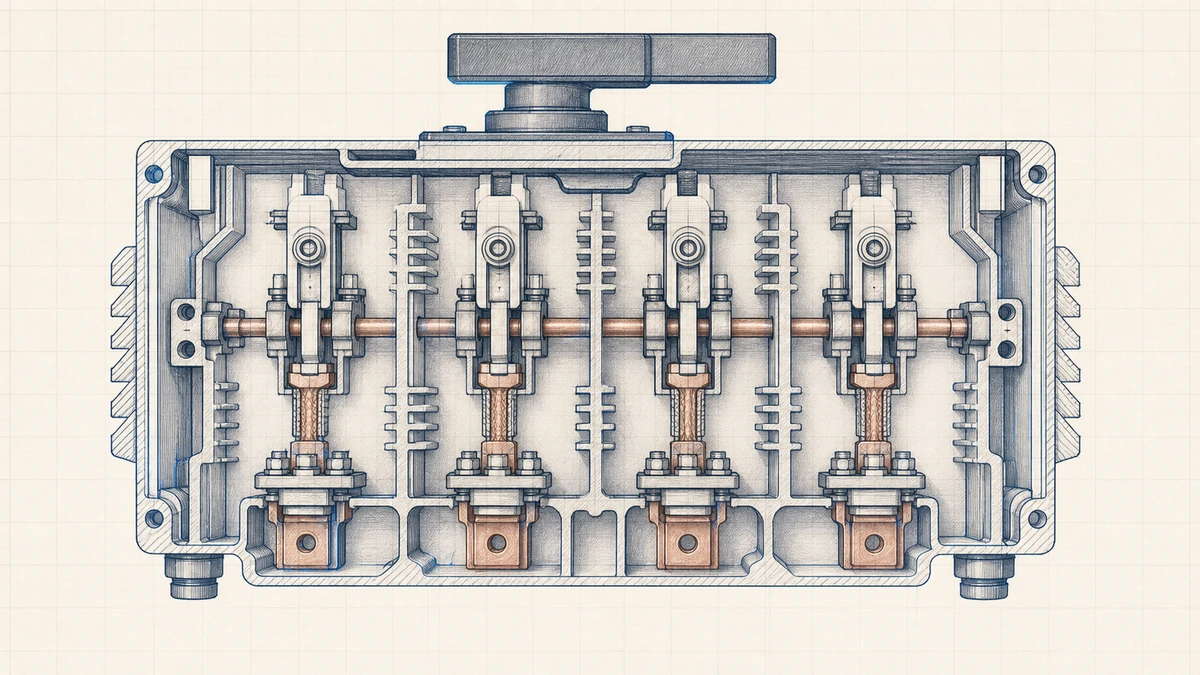
A DC Switch Disconnector depends on insulation distances, arc control, terminal spacing, internal materials, and heat dissipation to operate safely. At higher altitude, two conditions become more challenging:
IEC 60664-1:2020 provides insulation-coordination principles for equipment up to 1,500 V DC. It covers use up to 2,000 m and gives guidance for higher altitudes, including updated altitude correction for distances. The practical meaning is simple: low-altitude clearance assumptions should not be carried into high-elevation PV designs without review.
Many low-voltage product standards and manufacturer catalogues use 2,000 m as a key reference altitude. Above this level, manufacturers commonly require re-evaluation of ratings. ABB’s high-altitude application guidance, for example, notes that IEC 60947 series product standards generally cover values up to 2,000 m, and that above 2,000 m the rated insulation voltage Ui, impulse withstand voltage Uimp, and rated current Ie need re-evaluation.
For PV disconnect selection, this does not mean every device fails above 2,000 m. It means the original nameplate values may not be valid without applying the correct altitude derating rules.
Rated insulation voltage, Ui, is linked to the insulation system of the device. At higher elevations, reduced air pressure can lower the voltage withstand capability of air gaps. If the DC Switch Disconnector is installed above the manufacturer’s standard altitude range, Ui must be checked against the actual PV system voltage and the applicable insulation-coordination requirements.
For high-voltage PV strings, this is especially important because system voltage can approach the maximum open-circuit voltage during cold conditions.
Rated impulse withstand voltage, Uimp, relates to the ability of equipment insulation to withstand transient overvoltages. High-altitude conditions can reduce the withstand strength of clearances. If a project relies on a particular overvoltage category or impulse rating, the altitude-adjusted Uimp value must still satisfy the system requirement.
This is one reason dc disconnect altitude derating is not only a current issue. Voltage withstand and transient performance can be the limiting factors.
Rated operational current, Ie, may also require derating because thinner air removes heat less effectively. A switch disconnector carrying continuous PV current can experience higher internal temperatures at altitude than it would at lower elevation.
The derated current must be checked against the maximum continuous current of the PV circuit, including the project’s applicable sizing factors.
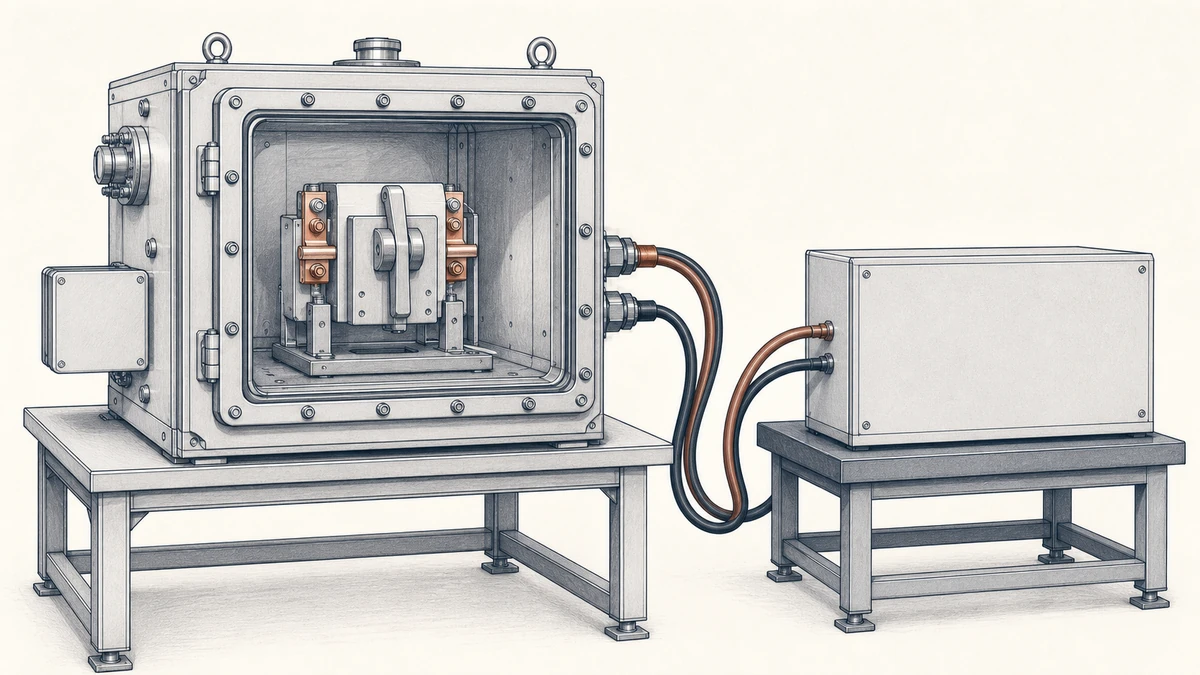
A common mistake is to look for a single altitude factor and apply it to every rating. That can lead to incorrect selection. Device-family-specific data may show that operational voltage and current do not reduce by the same percentage.
ABB’s Tmax PV catalogue, for example, includes altitude derating data for a specific switch-disconnector family and shows that current and operational-voltage reductions are not necessarily identical. The key lesson for specification work is not to copy that table into another product family. A catalogue factor belongs only to the exact device series, construction, and rating conditions for which the manufacturer published it.
For Sinobreaker DC Switch Disconnector selection, always use the corresponding Sinobreaker altitude data or project-specific confirmation for the exact model, pole configuration, voltage class, current rating, and installation arrangement.
Altitude performance depends on physical design details, including:
Two DC disconnectors with the same nominal voltage and current rating may have different altitude behavior. Even products from the same manufacturer can require different derating curves if they belong to different series.
The safest approach is to treat altitude derating as part of electrical design verification. The process should begin before procurement because altitude can change the required frame size, pole arrangement, enclosure design, or upstream/downstream coordination.
Record the installation altitude above sea level for the actual equipment location, not only the project office, substation, or nearest town. Mountain PV plants can have meaningful elevation differences across the site.
For containerized or rooftop systems, also consider the local installation environment. A disconnect mounted inside a hot enclosure at high altitude may face both reduced cooling and elevated ambient temperature.
Use the maximum PV array open-circuit voltage under the lowest expected cell temperature. The selected DC Switch Disconnector must remain suitable for this voltage after altitude derating.
The check should include:
Compare the required system voltage and impulse withstand requirements with the altitude-corrected capability of the exact disconnect model. If the manufacturer provides a table, curve, or written confirmation, use that data directly.
Do not assume that a 1,500 V DC device remains a 1,500 V DC device at every altitude. Above the standard reference altitude, the allowable operational voltage may need to be reduced unless the device has been tested, designed, or declared suitable for that elevation.
Calculate the maximum operating current for the PV circuit and compare it with the derated current rating of the DC Switch Disconnector.
Current verification should include:
If the derated current is too low, the solution may be a higher current rating, a different enclosure arrangement, improved thermal design, or a different disconnect model.
The switch body is only one part of the installed disconnect. Schneider Electric guidance similarly notes that above 2,000 m, lower dielectric strength and reduced cooling capacity require derating consideration. The final selection should use the exact manufacturer’s altitude data for the switch, enclosure, conductors, and associated protection devices.
For a Sinobreaker DC Switch Disconnector installation, confirm the whole assembly:
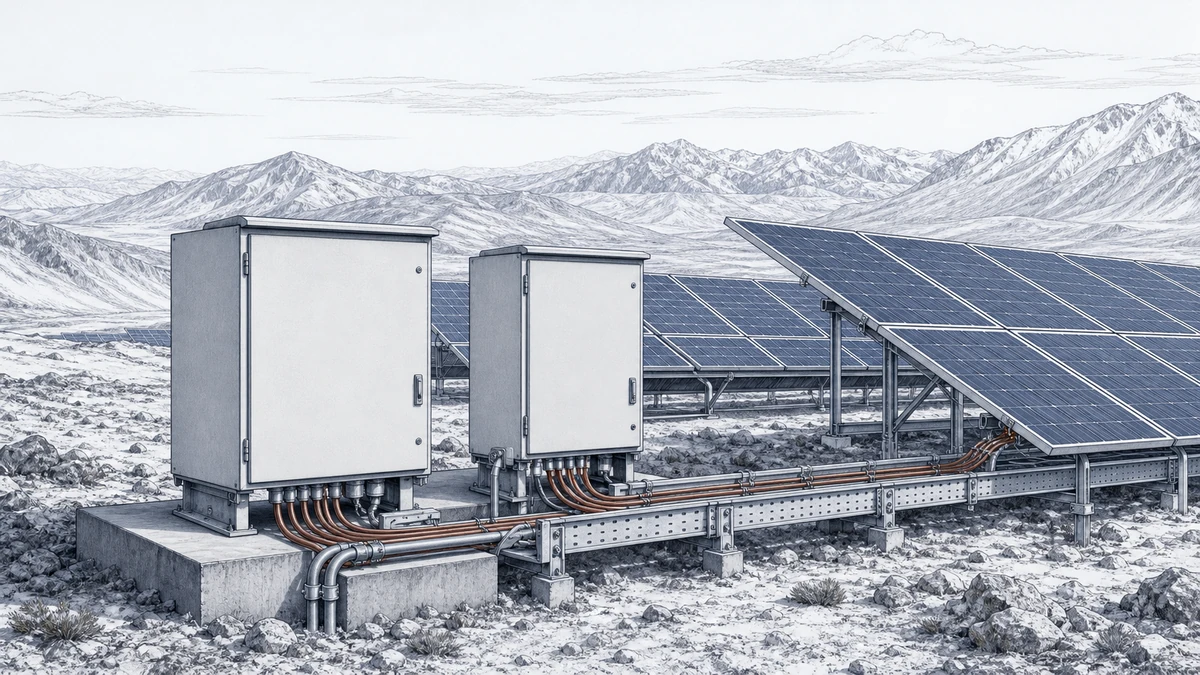
Consider a high-elevation PV site where the DC disconnect is to be installed at 3,500 m. The PV array has a maximum calculated cold-weather open-circuit voltage close to the system design limit, and the circuit current is also near the disconnect’s nominal current rating.
At low altitude, the selected DC Switch Disconnector might appear acceptable. At 3,500 m, the selection must be rechecked:
1. Does the device retain the required operational voltage at 3,500 m?
2. Does its insulation system still satisfy the required Ui and Uimp conditions?
3. Does the derated current remain above the maximum continuous PV current?
4. Does the enclosure allow sufficient cooling at altitude?
5. Are the terminals, conductors, and protection devices also suitable?
If any answer is uncertain, the selection is not complete. The correct action is to obtain the exact altitude derating data for the selected Sinobreaker model or request manufacturer confirmation for the project conditions.
Upsizing the current rating can help if the limiting issue is temperature rise. However, it may not solve voltage withstand or impulse withstand limitations. A larger ampere rating does not automatically mean higher altitude voltage capability.
For high-elevation PV, engineers should separate the checks:
This prevents a thermal solution from being mistaken for an insulation solution.
If the altitude-adjusted operational voltage is lower than the PV array’s maximum DC voltage, one design option is to reduce the number of modules in series. This lowers the maximum string voltage and may allow the disconnect to remain within its altitude-adjusted capability.
Other options may include selecting a different disconnect model, changing the pole connection scheme if approved by the manufacturer, or using equipment specifically rated for the target altitude.
A high-elevation PV specification should make altitude requirements visible. Instead of listing only rated voltage and rated current, include the installation altitude and require proof of suitability.
For the exact Sinobreaker DC Switch Disconnector model, request or verify:
A project specification can use wording such as:
> The DC Switch Disconnector shall be suitable for operation at the project installation altitude. Where the altitude exceeds 2,000 m above sea level, the supplier shall provide manufacturer data or written confirmation showing the altitude-corrected operational voltage, insulation withstand capability, impulse withstand capability, and operational current for the exact model and installation configuration.
This makes dc disconnect altitude derating a compliance item instead of an informal assumption.
Avoid these high-elevation PV disconnect errors:
Altitude derating should be documented in the technical file so that procurement, installation, and inspection teams can verify the same assumptions. The documentation should connect the site conditions to the selected product.
Useful records include:
This documentation helps prevent substitution errors. If a contractor proposes an alternative DC disconnect, it must be checked against the same altitude, voltage, current, and installation requirements.
High-altitude PV sites require more than a standard voltage-and-current check. Reduced air pressure affects insulation coordination and cooling, which can change the usable ratings of a DC Switch Disconnector above the standard altitude range. IEC 60664-1:2020 and low-voltage equipment guidance both point to the need for review above 2,000 m, while manufacturer catalogues show that voltage and current derating may differ by device family.
For Sinobreaker DC Switch Disconnector selection, the practical rule is clear: use the exact model’s altitude data, verify voltage and current separately, and confirm the complete installed assembly. Proper dc disconnect altitude derating protects the PV system from unsafe assumptions and supports reliable operation in high-elevation environments.
Not every device will require the same reduction, but every selection should be reviewed. Many low-voltage standards and manufacturer ratings are based on conditions up to 2,000 m. Above that elevation, the manufacturer’s data should confirm whether voltage, insulation, impulse withstand, or current ratings must be reduced.
Only if the exact device is confirmed suitable for the required PV voltage at 3,000 m. A 1,500 V DC nameplate rating at standard altitude does not automatically prove 1,500 V DC suitability at higher elevation. Check the manufacturer’s altitude-corrected voltage, Ui, Uimp, and current data.
No. Current derating addresses thermal performance, but high altitude also affects dielectric strength and insulation coordination. A complete selection must verify operational voltage, insulation voltage, impulse withstand voltage, current rating, enclosure conditions, conductors, and any associated protection devices.