Address
304 North Cardinal
St. Dorchester Center, MA 02124
Work Hours
Monday to Friday: 7AM - 7PM
Weekend: 10AM - 5PM
Address
304 North Cardinal
St. Dorchester Center, MA 02124
Work Hours
Monday to Friday: 7AM - 7PM
Weekend: 10AM - 5PM


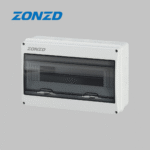
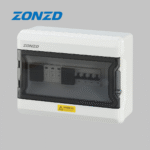
An outdoor electrical distribution box serves as the critical junction point where incoming power lines are split into multiple branch circuits for outdoor installations, parking lots, building exteriors, and industrial facilities. Unlike standard junction boxes, these distribution systems must meet stringent NEC Article 312 requirements while withstanding environmental challenges ranging from extreme temperatures to direct water exposure.
Selecting the wrong specifications can lead to code violations, premature equipment failure, and safety hazards. A 200-amp outdoor distribution panel installed with inadequate NEMA ratings in coastal environments typically fails within 2-3 years due to corrosion, compared to properly specified units lasting 20+ years.
This specification guide provides system designers, electrical engineers, and procurement professionals with the technical criteria needed to select compliant outdoor electrical distribution boxes. We’ll decode NEC Article 312 requirements, compare NEMA vs IP ratings, analyze busbar sizing calculations, and provide specification decision matrices for different applications.
💡 Specification Insight: NEC 312.2 requires outdoor distribution boxes to have rain-tight enclosures when installed in wet locations, but many installers mistakenly specify NEMA 3 (weather-resistant) instead of NEMA 3R or 4 (rain-tight), leading to inspection failures and costly retrofits.
An outdoor electrical distribution box (also called an outdoor distribution panel, load center, or panelboard enclosure) is a UL-listed assembly consisting of:
1. Weatherproof Enclosure – NEMA/IP-rated housing protecting internal components
2. Bus Bars – Copper or aluminum conductors distributing power to branch circuits
3. Overcurrent Protection Devices – Circuit breakers or fuses for each branch
4. Main Disconnect – Required by NEC 312.8 for systems over 100A
5. Grounding System – Separate ground and neutral bars per NEC 312.6
Key Distinguishing Factor: Unlike indoor distribution panels, outdoor units must meet weatherproofing requirements per NEC Article 312 and environmental ratings per UL 50/50E standards.
| Standard | Application | Key Requirements |
|---|---|---|
| NEC Article 312 | Cabinets, Cutout Boxes, and Meter Socket Enclosures | Weatherproof integrity, mounting requirements, working space |
| NEC Article 408 | Switchboards and Panelboards | Overcurrent protection, bus bar sizing, short-circuit ratings |
| UL 50 | Enclosures for Electrical Equipment, Non-Environmental Considerations | Rain-tight construction testing |
| UL 50E | Enclosures for Electrical Equipment, Environmental Considerations | NEMA rating verification |
| NEMA 250 | Enclosures for Electrical Equipment (1000 Volts Maximum) | NEMA type definitions and testing |
| IEC 60529 | Degrees of Protection Provided by Enclosures (IP Code) | International IP rating system |

Critical Specification Difference: Distribution boxes have field-installable circuit breakers with bolted connections (per UL 67 panelboards), while load centers use plug-in breakers (per UL 67 loadcenters) – this distinction affects short-circuit ratings and application suitability.
Direct Code Language: “In damp or wet locations, surface-type cabinets, cutout boxes, and meter socket enclosures shall be placed or equipped so as to prevent moisture or water from entering and accumulating within the cabinet, cutout box, or meter socket enclosure.”
Specification Translation:
| Location Type | NEC Definition | Minimum NEMA Rating | IP Equivalent |
|---|---|---|---|
| Wet Location | Exposed to rain, snow, or water wash-down | NEMA 3R (rain-tight) | IP55 minimum |
| Wet Location (Corrosive) | Coastal, chemical exposure | NEMA 4X (corrosion-resistant) | IP66 minimum |
| Damp Location | Covered outdoor areas, partial weather protection | NEMA 3 (weather-resistant) | IP54 minimum |
⚠️ Common Specification Error: Specifying “weatherproof” boxes without defining NEMA type. NEC requires “rain-tight” (NEMA 3R/4) for wet locations, but many generic “weatherproof” enclosures only meet NEMA 3 (weather-resistant, not rain-tight).
For outdoor distribution boxes mounted on building exteriors:
NEC 312.3 Requirement: “Cabinets and cutout boxes shall be installed so that the front edge of the cabinet or cutout box is set back not more than 6 mm (1⁄4 in.) from the finished surface.”
Outdoor Surface Mount Exception: Outdoor boxes are typically surface-mounted (not recessed) due to weatherproofing requirements. Specification must include:
– Surface mounting brackets rated for enclosure weight + internal components
– Standoff distance: 1/4″ – 1″ to allow water drainage behind enclosure
– Rear conduit hubs positioned to prevent water pooling
Critical Specification Requirement:
“Enclosures for switches or overcurrent devices shall not be used as junction boxes, auxiliary gutters, or raceways for conductors feeding through or tapping off to other switches or overcurrent devices, unless designs to provide adequate space for this purpose.”
Specification Implication: If the outdoor distribution box will serve as a raceway junction point (common in industrial applications), specify:
– Wireway enclosures per NEC Article 376 instead of standard distribution boxes
– Combination distribution/junction boxes with separate compartments
– Adequate gutter space: NEC 312.9 requires ≥ 1.5″ minimum for conductors ≤ 1 AWG
For outdoor distribution boxes with significant wire bending:
| Conductor Size | Minimum Bending Space (inches) |
|---|---|
| 14-10 AWG | Not specified |
| 8-6 AWG | 1.5″ |
| 4-3 AWG | 2″ |
| 2-1 AWG | 2.5″ |
| 1/0-2/0 AWG | 3″ |
| 3/0-4/0 AWG | 4″ |
| 250 kcmil | 5″ |
| 300-350 kcmil | 6″ |
| 400-500 kcmil | 8″ |
Specification Application: Calculate required enclosure depth by:
1. Identifying largest conductor terminating in the box
2. Adding NEC 312.9 bending space to breaker/bus depth
3. Adding 1″ clearance for door closure
Example Calculation:
– 400A service with 500 kcmil conductors
– Breaker lug depth: 4″
– NEC 312.9 bending space for 500 kcmil: 8″
– Door clearance: 1″
– Minimum enclosure depth: 13″
| NEMA Type | Protection Against | Outdoor Application | Material Options | Cost Multiplier |
|---|---|---|---|---|
| NEMA 3 | Rain, sleet, snow, windblown dust | Covered outdoor areas only | Steel, aluminum | 1.0x |
| NEMA 3R | Rain, sleet, snow, ice formation | Exposed outdoor general | Steel, aluminum | 1.2x |
| NEMA 3X | Rain, snow, corrosion | Covered outdoor – corrosive | Stainless steel, fiberglass | 2.5x |
| NEMA 3RX | Rain, snow, ice, corrosion | Exposed outdoor – coastal | Stainless steel, fiberglass | 3.0x |
| NEMA 4 | Rain, hose-directed water, splashing | Wash-down areas | Steel, aluminum | 1.8x |
| NEMA 4X | Rain, hose-water, corrosion | Wash-down – corrosive | Stainless steel, fiberglass | 3.5x |
💡 Specification Tip: NEMA 3R is the minimum for exposed outdoor distribution boxes in most applications. Upgrade to 4X for:
– Coastal installations (within 10 miles of saltwater)
– Chemical processing facilities
– Agricultural applications with fertilizer exposure
– Areas with frequent pressure washing
For international projects or European-manufactured equipment:
| NEMA Type | Equivalent IP Rating | Dust Protection | Water Protection |
|---|---|---|---|
| NEMA 3R | IP54 | Dust-protected | Splashing water |
| NEMA 4 | IP65 | Dust-tight | Water jets |
| NEMA 4X | IP66 | Dust-tight | Powerful water jets |
Critical Specification Note: IP ratings are NOT exact equivalents to NEMA. IP66 provides better water protection than NEMA 4X (powerful jets vs hose-directed), but NEMA 4X includes corrosion resistance not addressed by IP ratings.

Specification Decision Criteria:
1. Carbon Steel (Powder Coated): <10 miles from coast, non-industrial 2. Aluminum 5052: General outdoor, moderate corrosion, weight concerns
3. Stainless 304: Within 5-10 miles of coast, chemical exposure
4. Stainless 316: Direct saltwater exposure, aggressive chemicals
5. Fiberglass (GRP): RF interference concerns, maximum corrosion + UV
Per NEC 408.5, bus bars in outdoor distribution boxes must be sized for continuous current plus 125% of non-continuous loads:
Sizing Formula:
Bus Bar Ampacity = (Continuous Loads × 1.0) + (Non-Continuous Loads × 1.25)
Standard Bus Bar Ampacity Ratings:
| Bus Bar Size | Copper Ampacity | Aluminum Ampacity | Typical Application |
|---|---|---|---|
| 1/4″ × 1″ | 200A | 150A | Residential service |
| 1/4″ × 2″ | 400A | 300A | Small commercial |
| 1/4″ × 3″ | 600A | 450A | Medium commercial |
| 1/4″ × 4″ | 800A | 600A | Large commercial |
| 3/8″ × 4″ | 1200A | 900A | Industrial distribution |
| 1/2″ × 4″ | 1600A | 1200A | Industrial main |
Temperature Derating: Outdoor distribution boxes in direct sunlight experience 30-50°F temperature rise above ambient. Apply NEC 310.15(B)(3)(c) correction factors:
| Ambient Temperature | Copper Correction Factor | Aluminum Correction Factor |
|---|---|---|
| 86-95°F | 0.96 | 0.96 |
| 96-105°F | 0.91 | 0.91 |
| 106-115°F | 0.87 | 0.87 |
| 116-125°F | 0.82 | 0.82 |
⚠️ Critical Specification Error: Many designers size bus bars for nameplate ampacity without considering outdoor temperature rise. A 400A aluminum bus bar in 105°F ambient drops to 364A capacity (0.91 factor) – undersizing the system by 9%.
Per NEC 408.6, outdoor distribution boxes must have SCCR ≥ available fault current at the installation point.
SCCR Calculation Method:
1. Determine Available Fault Current:
– Utility company data (typical: 10-65 kA)
– Or calculate: `I_fault = V / (√3 × Z_total)`
2. Verify Bus Bar SCCR:
– UL-listed panelboards: SCCR marked on nameplate
– Field-assembled systems: calculate per IEEE 605
Standard SCCR Levels:
| Application | Typical SCCR | Breaker Rating Required |
|---|---|---|
| Residential Service | 10 kA | 10 kA AIC minimum |
| Light Commercial | 22 kA | 22 kA AIC |
| Commercial/Industrial | 42 kA | 42 kA AIC |
| Heavy Industrial | 65 kA | 65 kA AIC |
| Utility-Adjacent | 100 kA | 100 kA AIC |
Specification Requirement: Always specify SCCR on outdoor distribution box procurement documents. Generic spec: “Distribution box shall have short-circuit current rating ≥ [XX] kA as determined by utility available fault current data.”
| Factor | Circuit Breakers | Fused Switches |
|---|---|---|
| Initial Cost | Higher ($50-200 per pole) | Lower ($20-80 per pole) |
| Replacement Cost | None (reset) | Fuse replacement ($5-30 each) |
| Interrupting Capacity | 10-100 kA (dependent on model) | 200 kA standard (Class J, Class T) |
| Selective Coordination | Difficult (requires curve analysis) | Easier (fuse selectivity ratios) |
| Arc Flash Energy | Higher (5-8 cycles clearing) | Lower (0.25-0.5 cycles clearing) |
| GFCI/AFCI Integration | Available | Not available |
| Best Application | Commercial, frequent switching | Industrial, high fault current |
NEC 408.54 Circuit Identification: Outdoor distribution boxes must have durable circuit directory identifying loads. Specification requirements:
– UV-resistant labels (outdoor exposure)
– Permanent marker (engraved or embossed)
– Electronic circuit directory acceptable
– Update required within 30 days of modifications
| Load Type | Continuous Rating | Branch Circuit Breaker Size | Minimum Wire Size (Cu) |
|---|---|---|---|
| Outdoor Lighting (LED) | 15A continuous | 20A (125% × 15A = 18.75A) | 12 AWG |
| Outdoor Lighting (HID) | 20A continuous | 25A (125% × 20A = 25A) | 10 AWG |
| HVAC Condensers | 30A continuous | 40A (125% × 30A = 37.5A) | 8 AWG |
| Parking Lot Lights | 50A continuous | 60A (125% × 50A = 62.5A) | 6 AWG |
| Building Subpanel Feed | 100A continuous | 125A (125% × 100A = 125A) | 1 AWG |
Outdoor Application Note: All outdoor circuits are considered continuous loads per NEC 210.19(A)(1), requiring 125% sizing.

Sample Specification for 400A Outdoor Commercial Distribution Box:
OUTDOOR ELECTRICAL DISTRIBUTION BOX SPECIFICATION1. GENERAL REQUIREMENTS – Comply with NEC Article 312 and Article 408 – UL 67 Listed Panelboard – NEMA 250 Type 3R minimum (4X if coastal)
2. ENCLOSURE – Material: [Aluminum 5052-H32 / Stainless 304 / Stainless 316] – NEMA Rating: [3R / 4 / 4X] per application environment – Gasket: Closed-cell neoprene, UV-resistant – Finish: Powder coat RAL 7035 (light gray) for painted enclosures – Mounting: Surface mount with stainless fasteners – Minimum Depth: [Calculate per NEC 312.9 + conductor size]
3. BUS BARS – Material: Copper [or Aluminum if specified] – Ampacity: 400A continuous at 40°C ambient – Temperature Rise: <65°C above ambient at rated current – Short-Circuit Rating: [22 kA / 42 kA / 65 kA] minimum – Main Bus: [3-phase 4-wire / 3-phase 3-wire / single-phase] – Ground Bus: Separate, copper, full ampacity – Neutral Bus: [Isolated / Bonded] per application
4. MAIN DISCONNECT – Type: [Circuit breaker / Fused switch] per NEC 408.16 – Rating: 400A, [2-pole / 3-pole] – Interrupting Capacity: ≥ [22 kA / 42 kA] to match SCCR – Trip Type: Thermal-magnetic [or electronic if specified]
5. BRANCH CIRCUITS – Quantity: [Specify number] branch positions – Breaker Type: Bolt-on [or plug-in for load centers] – Breaker Ratings: [List individual branch ratings] – Spare Positions: [Specify] for future expansion
6. ACCESSORIES – Circuit Directory: Laminated, UV-resistant – Viewing Window: Polycarbonate, UV-stabilized – Padlocking Provisions: 3-point latch with hasp – Conduit Hubs: [Number and sizes] with rain-tight fittings
7. TESTING AND CERTIFICATION – Hi-Pot Test: 2000V + (2 × rated voltage) for 1 minute – Continuity Test: All buses and ground connections – NEMA Rain Test: Per NEMA 250, 4 hours minimum – Test Reports: Provide certified test results
Mistake: Specifying bus bar ampacity without outdoor temperature derating.
Example:
– Specified: 400A aluminum bus bar
– Ambient conditions: 110°F direct sunlight
– Actual capacity: 400A × 0.87 (correction factor) = 348A
– Result: 13% undersizing, breaker nuisance tripping
Correct Specification:
– Calculate maximum ambient: Base ambient + 40°F sun effect
– Apply NEC 310.15(B)(3)(c) correction factors
– Upsize bus bar to maintain required ampacity after derating
Mistake: Specifying NEMA 3 (weather-resistant) instead of NEMA 3R (rain-tight) for exposed outdoor locations.
NEC Violation: NEC 312.2 requires rain-tight enclosures in wet locations. NEMA 3 is NOT rain-tight.
Correct Specification:
– Wet locations (exposed to rain): NEMA 3R minimum
– Damp locations (covered areas): NEMA 3 acceptable
– Corrosive environments: NEMA 4X required
Mistake: Failing to specify required working clearances per NEC 110.26.
NEC Requirements for Outdoor Distribution Boxes:
| Voltage to Ground | Condition 1 | Condition 2 | Condition 3 |
|---|---|---|---|
| 0-150V | 3 ft | 3 ft | 3 ft |
| 151-600V | 3 ft | 3.5 ft | 4 ft |
*Condition 1: Exposed live parts on one side, no live parts on other side
**Condition 2: Exposed live parts on both sides
*Condition 3: Exposed live parts on one side, grounded parts on other
Correct Specification: Include site plan showing:
– 3 ft minimum clearance in front of outdoor distribution box
– 30″ minimum working width
– 6.5 ft minimum working height clearance
Mistake: Specifying standard 10 kA SCCR distribution box without verifying utility fault current.
Scenario:
– Specified: 10 kA SCCR panelboard
– Actual utility fault current: 18 kA
– Result: Code violation, equipment damage risk, inspection failure
Correct Specification Process:
1. Request available fault current data from utility
2. Add 25% safety margin to account for grid expansion
3. Specify SCCR ≥ calculated fault current
4. Verify all breakers have AIC rating ≥ SCCR
NEC 110.26 Working Space Requirements:
– Maximum height to operating handle: 6 ft 7 in (2.0 m)
– Minimum ground clearance: 12 in for corrosion protection
– Typical mounting height: 4-5 ft to center (eye-level access)
Outdoor-Specific Requirements:
– Minimum 3 in above grade for flood protection
– Avoid mounting directly on ground (concrete pad minimum)
– Provide drainage path behind enclosure (1/4″ standoff)
NEC 312.5 Conduit Entry Requirements:
| Conduit Type | Entry Method | Outdoor Requirement |
|---|---|---|
| Rigid Metal (RMC) | Threaded hub | 5 full threads minimum |
| Intermediate Metal (IMC) | Threaded hub | 5 full threads minimum |
| Rigid PVC | Compression fitting | Rain-tight with O-ring seal |
| Liquid-tight Flex | Compression connector | Strain relief required |
Rain-Tight Conduit Sealing:
– NEC 300.5(G): Seal conduits entering from underground to prevent water migration
– Use drainage fittings at low points in conduit runs
– Install sealing compound or putty at all conduit entries
Specification Language:
All conduit entries shall be rain-tight per NEC 312.2. Provide threaded
hubs for rigid metal conduit with minimum 5 threads engagement. PVC conduit
entries shall use compression fittings with O-ring seals. Install sealing
putty at all conduit penetrations. Unused conduit knockouts shall be closed
with rain-tight plugs.
| Manufacturer | NEMA Ratings Available | Standard SCCR Levels | Material Options | Typical Lead Time | Relative Cost |
|---|---|---|---|---|---|
| Eaton (Cutler-Hammer) | 3R, 4, 4X | 10-65 kA | Steel, stainless, aluminum | 2-4 weeks | Moderate |
| Siemens | 3R, 4, 4X, 12 | 10-100 kA | Steel, stainless | 3-6 weeks | Moderate-High |
| Square D (Schneider) | 3R, 4, 4X | 10-65 kA | Steel, stainless | 2-4 weeks | Moderate |
| GE Industrial Solutions | 3R, 4, 4X | 10-42 kA | Steel, aluminum | 3-5 weeks | Moderate |
| Hoffman (nVent) | 3R, 4, 4X, 12 | Custom | Steel, stainless, fiberglass | 4-8 weeks | High |
| Austin Electrical | 3R, 4, 4X | 10-22 kA | Aluminum, fiberglass | 2-3 weeks | Low-Moderate |
Specification Recommendation: Specify minimum 2 approved manufacturers to ensure competitive pricing. Include performance specifications (SCCR, NEMA rating, bus ampacity) rather than sole-sourcing.
NEC 110.26(A) Working Space Requirements:
– Doors must open minimum 90° without encroaching on required working space
– Outdoor applications: Specify removable or 180° swing doors for maintenance access
Specification Requirements:
| Feature | Standard Spec | Premium Spec |
|---|---|---|
| Door Hinge | Continuous piano hinge (stainless) | Continuous piano hinge with oil-impregnated bushings |
| Latch Type | 3-point compression latch | 4-point with quarter-turn operation |
| Gasket | Closed-cell neoprene | Closed-cell silicone (higher UV resistance) |
| Lock Provision | Padlock hasp | Integrated cylinder lock + padlock hasp |
| Viewing Window | Optional 6″×8″ polycarbonate | Standard 12″×16″ UV-stabilized polycarbonate |
NEC 110.16 Arc Flash Warning:
“Electrical equipment, such as switchboards, switchgear, panelboards, industrial control panels, meter socket enclosures, and motor control centers, that are in other than dwelling units and are likely to require examination, adjustment, servicing, or maintenance while energized shall be field or factory marked…”
Required Arc Flash Label Information:
1. Nominal system voltage
2. Arc flash boundary distance
3. Available incident energy (cal/cm²) or required PPE category
4. Working distance used in calculation
5. Date of arc flash study
Specification Language:
Provide factory-installed arc flash warning label per NEC 110.16 with
nominal system voltage marked. Field arc flash hazard analysis shall be
performed per IEEE 1584 with incident energy and PPE category marked on
label within 30 days of energization.
NEMA 3R (Rain-Tight): Provides protection against rain, sleet, snow, and ice formation on external surfaces. Water can enter during hose-directed spray. Suitable for general exposed outdoor installations where occasional water infiltration is acceptable.
NEMA 4 (Watertight): Provides protection against hose-directed water and splashing. Must be tested to withstand 65 GPM hose spray for 5 minutes with no water entry. Required for wash-down areas, car washes, and food processing outdoor areas.
Selection Criteria: Use NEMA 3R for standard outdoor distribution boxes (parking lots, building exteriors, pole-mounted). Upgrade to NEMA 4 only when hose wash-down or splashing water is expected.
Cost Impact: NEMA 4 enclosures cost 50-80% more than NEMA 3R due to enhanced gasket systems and door latching mechanisms.
Yes, with conditions. NEC 312.2 allows indoor-rated equipment in weatherproof enclosures if:
1. Adequate Space: Enclosure provides minimum 1″ clearance around equipment per NEC 312.8
2. Heat Dissipation: Ventilation adequate for equipment temperature rise
3. Condensation Protection: Heaters or drain holes prevent moisture accumulation
4. Listing Compatibility: Enclosure manufacturer approves the combination
Common Practice: Many outdoor installations use Type 1 (indoor) panelboards inside Type 3R enclosures for cost savings. The enclosure provides weather protection while the internal panelboard provides circuit distribution.
Alternative: Purchase factory-assembled outdoor distribution boxes where the panelboard is UL-listed as part of the weatherproof assembly (typically NEMA 3R or 4X integrated designs).
There is no universal minimum – SCCR must equal or exceed the available fault current at the installation location per NEC 408.6.
Determination Process:
1. Request Utility Data: Contact electric utility for available fault current at service point
2. Calculate if Needed: Use formula `I_fault = V / (√3 × Z_total)` if utility data unavailable
3. Add Safety Margin: Increase by 25% to account for future grid expansion
4. Match SCCR: Specify distribution box SCCR ≥ calculated value
Typical Ranges:
– Residential: 10-18 kA (10 kA SCCR standard)
– Light Commercial: 15-25 kA (22 kA SCCR common)
– Industrial: 25-50 kA (42 kA SCCR typical)
– Near Substation: 50-100 kA (65-100 kA SCCR required)
Verification: Always request certified SCCR test report from manufacturer showing UL 67 testing compliance.
Depends on Application per NEC 408.16:
Main Breaker Required (Service Entrance):
– Outdoor distribution box serves as service disconnecting means
– First disconnect on load side of utility meter
– NEC 230.70 requires service disconnect at readily accessible location
MLO Acceptable (Feeder Panels):
– Fed from upstream main breaker (in building or other location)
– Used as sub-distribution from main service panel
– Upstream breaker provides overcurrent protection and disconnect
Best Practice for Outdoor: Specify main breaker even for feeder panels to provide local disconnect capability during maintenance. Cost increase is $150-300 for most residential/commercial sizes.
Exception: Large industrial facilities may use MLO outdoor distribution boxes when served from indoor switchboards with main breakers located within sight and 50 ft per NEC 430.102(B).
Conductor Sizing (per NEC 310.16 for 75°C terminals):
For 400A continuous load:
– Required ampacity: 400A × 1.25 = 500A
– Copper: 750 kcmil (475A) × 1.25 = need parallel runs or next size up
– Parallel Copper: Two 500 kcmil (380A each) = 760A total ✓
– Aluminum: 1000 kcmil (545A) single run ✓
Conduit Sizing (per NEC Chapter 9, Table 4):
For two 500 kcmil copper conductors + ground:
– 2× 500 kcmil copper area: 2 × 0.7073 in² = 1.4146 in²
– 1× 250 kcmil ground area: 0.3970 in²
– Total conductor area: 1.8116 in²
– 40% fill for 3+ conductors
– Required conduit: 3″ RMC (40% fill = 3.169 in²) ✓
Outdoor Application Temperature Derating:
– Assume 50°F temperature rise in direct sunlight
– Apply NEC 310.15(B)(3)(c) correction factors
– May require upsizing to 600 kcmil per conductor in hot climates
Complete 400A Service Specification:
– Phase conductors: 2 sets of 500 kcmil copper (per phase) in parallel
– Neutral: 2× 500 kcmil copper (sized to match phases)
– Ground: 250 kcmil copper per NEC 250.66
– Conduit: Two 3″ rigid metal conduit (RMC) runs
– Total conductors: 8 phase + 2 neutral + 1 ground per conduit = 11 wires
Standoffs Required for proper installation and weatherproofing:
NEC 312.2 Compliance: Enclosure back must allow water drainage to prevent moisture accumulation behind the box.
Minimum Standoff Requirements:
– 1/4″ minimum: Standard mounting for NEMA 3R enclosures
– 1/2″ recommended: Improves drainage, prevents surface rust
– 1″ for NEMA 4/4X: Enhanced drainage for high-pressure wash-down areas
Mounting Method Options:
| Method | Standoff Distance | Cost | Application |
|---|---|---|---|
| Direct Mount with Spacers | 1/4″ | Low | Light-duty, protected areas |
| Unistrut Channel System | 1/2″ | Moderate | Commercial, easy alignment |
| Welded Steel Standoffs | 1/2″-1″ | Moderate | Permanent industrial |
| Fiberglass G10 Insulators | 1″ | High | Corrosive environments |
Additional Benefits of Standoffs:
1. Prevents galvanic corrosion between dissimilar metals (aluminum box on steel structure)
2. Allows air circulation for cooling
3. Provides space for wall irregularities
4. Prevents water wicking from masonry into enclosure
Specification Language:
Mount outdoor distribution box with minimum 1/2" standoffs using stainless
steel fasteners and spacers. Seal mounting surface penetrations with
silicone sealant. Provide weep holes at lowest point of enclosure for
drainage.
Coastal Environment Classification:
| Distance from Ocean | Corrosion Severity | Minimum NEMA Rating | Recommended Material |
|---|---|---|---|
| <500 ft | Extreme (C5-M) | NEMA 4X | Stainless 316 or fiberglass |
| 500 ft – 1 mile | Very High (C5) | NEMA 4X | Stainless 304 or aluminum |
| 1-5 miles | High (C4) | NEMA 3RX | Aluminum 5052 or stainless 304 |
| 5-10 miles | Moderate (C3) | NEMA 3R | Powder-coated aluminum |
| >10 miles | Low (C2) | NEMA 3R | Standard steel |
Complete Coastal Specification:
OUTDOOR DISTRIBUTION BOX - COASTAL APPLICATION1. ENCLOSURE – Material: Type 316 stainless steel (for <500 ft from ocean) OR fiberglass reinforced polyester (GRP) – NEMA Rating: Type 4X (corrosion-resistant, watertight) – Gasket: Closed-cell silicone (not neoprene – degrades in salt) – Fasteners: All 316 stainless steel hardware – Finish: Natural stainless (no paint) OR gel-coat polyester
2. INTERNAL COMPONENTS – Bus Bars: Tin-plated copper (not bare copper) – Circuit Breakers: Conformal-coated electronics – Hardware: All 316 stainless (no zinc-plated or brass) – Insulation: Glass-filled nylon (not standard nylon)
3. DOOR AND SEALS – Hinge: Continuous 316 stainless piano hinge – Latch: 316 stainless compression latch, 3-point minimum – Gasket: Closed-cell silicone, continuous around entire door – Viewing Window: Polycarbonate with UV-stabilizer
4. MOUNTING – Standoffs: 1″ fiberglass G10 insulators (electrically non-conductive) – Fasteners: 316 stainless steel, through-bolted – Sealant: Marine-grade silicone at all penetrations
5. MAINTENANCE PROTECTION – Internal Coating: Acrylic conformal coating on all internal surfaces – Breather Vents: Gore-Tex membrane breathers to equalize pressure – Sacrificial Anodes: Zinc anodes attached to bus bars (optional) – Anti-Corrosion Spray: Boeshield T-9 or equivalent on hinges/latches
Cost Impact: Coastal-rated outdoor distribution boxes cost 2.5-4× standard carbon steel NEMA 3R enclosures, but provide 5-10× longer service life (20+ years vs 3-5 years).
Before specifying an outdoor distribution box, gather:
– [ ] Available Fault Current: From utility company (kA)
– [ ] Continuous Load Calculation: Sum of all branch circuits (Amps)
– [ ] Non-Continuous Load Calculation: Temporary loads (Amps)
– [ ] Largest Conductor Size: Determines bending space per NEC 312.9
– [ ] Environmental Conditions:
– [ ] Temperature range (ambient + solar gain)
– [ ] Corrosion exposure (coastal, chemical, standard)
– [ ] Water exposure (rain only, wash-down, submersion risk)
– [ ] Mounting Surface: Concrete, metal, masonry, pole-mounted
– [ ] Working Space Available: Minimum 3 ft clearance per NEC 110.26
1. Enclosure:
– NEMA Rating: [3R / 4 / 4X] based on environment
– Material: [Steel / Aluminum / Stainless 304 / Stainless 316 / Fiberglass]
– Dimensions: Calculate depth per NEC 312.9 + largest conductor
2. Electrical:
– Bus Bar Ampacity: [Calculated continuous + 125% non-continuous]
– SCCR: [≥ utility fault current + 25% margin] kA
– Main Disconnect: [Breaker / Fused switch] at [Amperage]
– Branch Circuits: [Number] positions, [Type] breakers
3. Compliance:
– NEC Article 312 (weatherproof enclosures)
– NEC Article 408 (switchboards and panelboards)
– UL 67 (panelboards) or UL 50 (enclosures)
– NEMA 250 (enclosure types)
4. Installation:
– Mounting height: 4-5 ft to center
– Standoff distance: 1/2″ minimum
– Conduit entries: [Number and sizes] with rain-tight fittings
– Working clearance: 3 ft minimum per NEC 110.26
Before finalizing specification, verify:
1. Is SCCR ≥ available fault current? → Prevents equipment damage
2. Is NEMA rating appropriate for environment? → Prevents premature failure
3. Is bus bar sized for temperature-derated ampacity? → Prevents overheating
4. Are all materials corrosion-compatible? → Prevents galvanic corrosion
5. Is NEC 312.9 bending space adequate? → Allows proper conductor termination
6. Are working clearances per NEC 110.26 maintained? → Code compliance, safety
7. Is arc flash labeling specified per NEC 110.16? → Worker safety
Outdoor electrical distribution boxes are mission-critical components requiring careful specification to ensure 20+ year service life in challenging environments. Proper specification per NEC Article 312, appropriate NEMA rating selection, and adequate temperature derating will ensure code compliance, safety, and long-term reliability.
For complex outdoor distribution projects (>600A, high fault current, severe environments), engage a professional electrical engineer to perform load calculations, arc flash analysis, and detailed specification development.
Related Resources:
– DC Circuit Breaker Selection Guide
– DC Fuse vs Circuit Breaker Comparison
– Outdoor Electrical Box Surge Protection with DC SPD
– NEC Article 312 Full Text
– NEMA 250 Enclosure Types Reference
– UL 67 Panelboard Standard
Specification Tools:
– Eaton Panelboard Configurator: www.eaton.com/configurator
– Square D Panel Schedule Generator: www.se.com/design-tools
– Siemens Load Center Selector: www.siemens.com/selection-tools