Address
304 North Cardinal
St. Dorchester Center, MA 02124
Work Hours
Monday to Friday: 7AM - 7PM
Weekend: 10AM - 5PM
Address
304 North Cardinal
St. Dorchester Center, MA 02124
Work Hours
Monday to Friday: 7AM - 7PM
Weekend: 10AM - 5PM

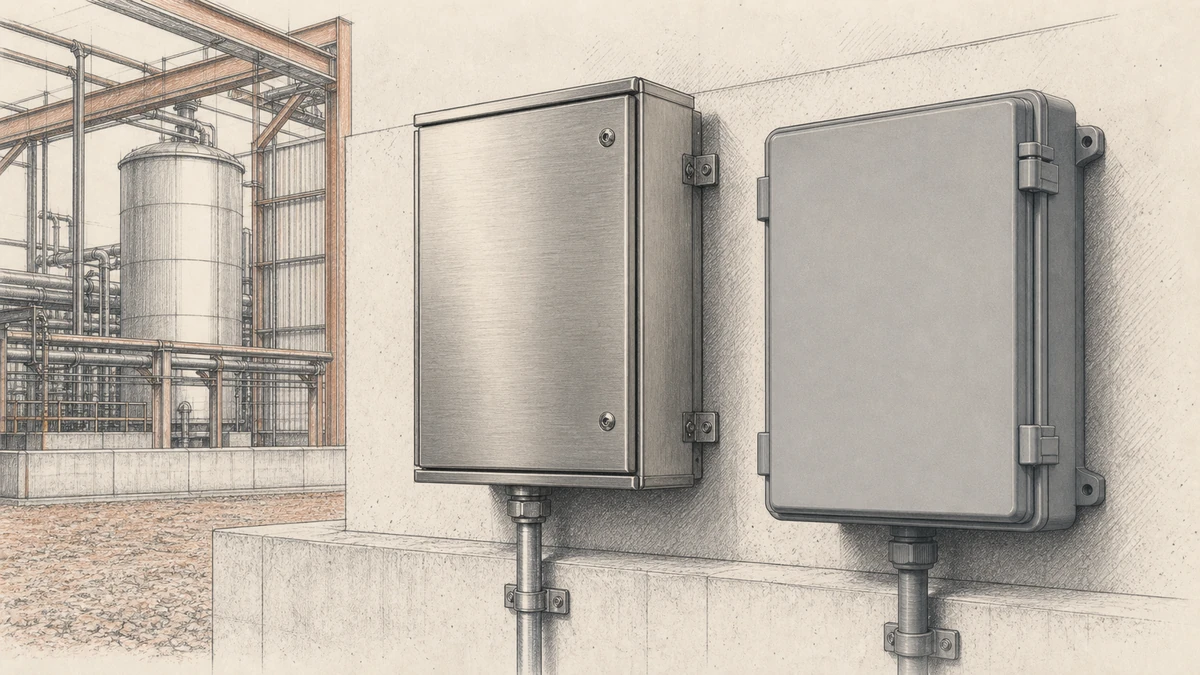
Outdoor power distribution is rarely a simple enclosure choice. Rain, UV exposure, washdown, corrosion, impact, condensation, cable entry quality, and maintenance access all affect long-term reliability. For buyers comparing a **stainless steel vs polycarbonate distribution box**, the right decision depends on the actual installation environment, not only on whether the enclosure is “metal” or “plastic.”
For Sinobreaker Waterproof Distribution Box applications, both stainless steel and polycarbonate can be suitable when the enclosure design, sealing system, accessories, and installation method match the site conditions. The key is to evaluate the full enclosure assembly and the operating environment before selecting the material.
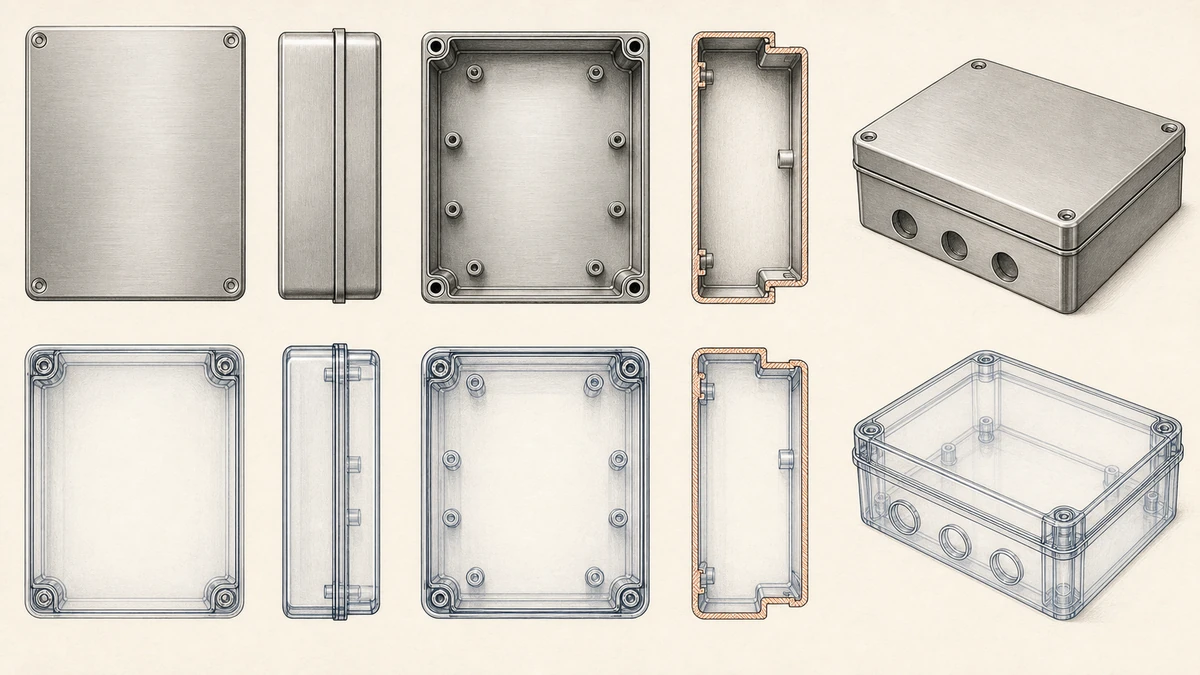
A Waterproof Distribution Box protects electrical components from water, dust, mechanical contact, and environmental degradation. In outdoor industrial projects, the enclosure is part of the safety and reliability system, not just a container.
IEC 62208:2023 applies to empty enclosures before the incorporation of switching and control components, including enclosures for indoor or outdoor low-voltage assemblies. This means selection should support the characteristics and tests of the complete enclosure, not simply rely on the shell material name.
In practical terms, stainless steel and polycarbonate should be compared across:
A well-designed polycarbonate enclosure may outperform a poorly specified stainless enclosure in some locations. Likewise, stainless steel may be the safer long-term choice in harsh corrosive or high-impact industrial environments.
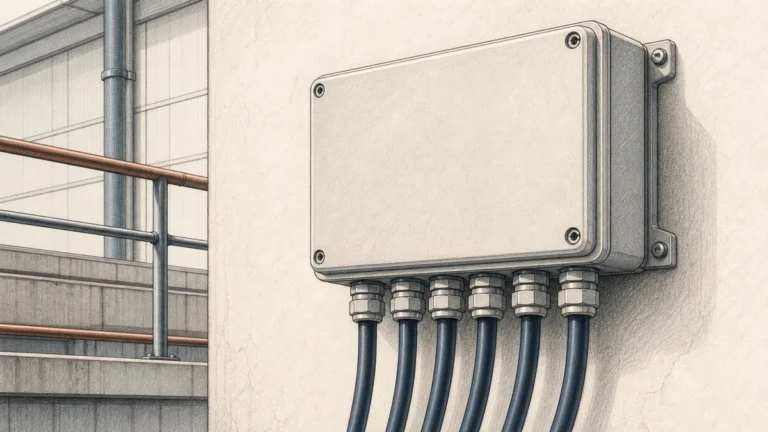
Stainless steel distribution boxes are widely used in demanding outdoor and industrial applications because they provide high mechanical strength, corrosion resistance, and long service life when correctly specified.
Stainless steel performs well where the enclosure may face physical impact, aggressive cleaning, industrial pollution, or long-term outdoor exposure. It is commonly selected for factories, utilities, transport infrastructure, coastal facilities, wastewater plants, and heavy equipment areas.
Key advantages include:
ABB’s stainless-steel enclosure catalogue identifies outdoor protection against hose-directed water and corrosion for applicable enclosure constructions. However, stainless performance still depends on the grade, surface finish, sealing design, accessories, and environmental exposure.
Stainless steel is not automatically corrosion-proof. In coastal, chemical, fertilizer, marine, food-processing, or wastewater environments, the wrong grade or finish may still suffer staining, pitting, or crevice corrosion.
Important limitations include:
Schneider Electric publishes a dedicated selection guide for stainless-steel enclosures intended for aggressive environments, reinforcing that stainless selection must be linked to the actual corrosive exposure and maintenance conditions rather than a general preference for metal.
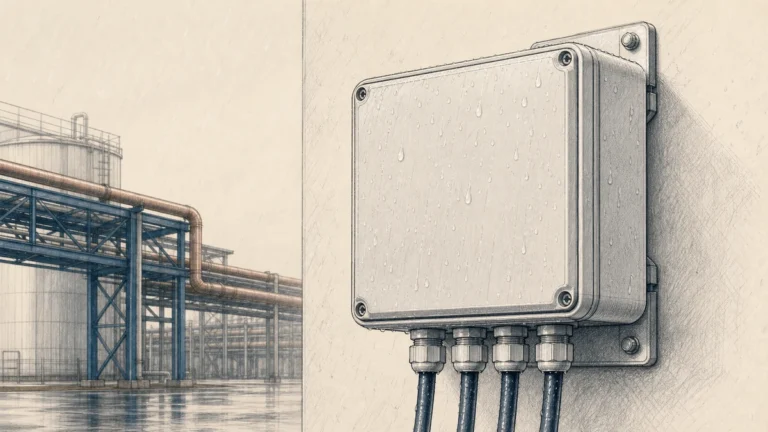
Polycarbonate distribution boxes are popular for outdoor electrical distribution because they are lightweight, corrosion-resistant, non-conductive, and easy to install. For many outdoor commercial and light industrial applications, a quality polycarbonate Waterproof Distribution Box provides a practical balance of protection and cost.
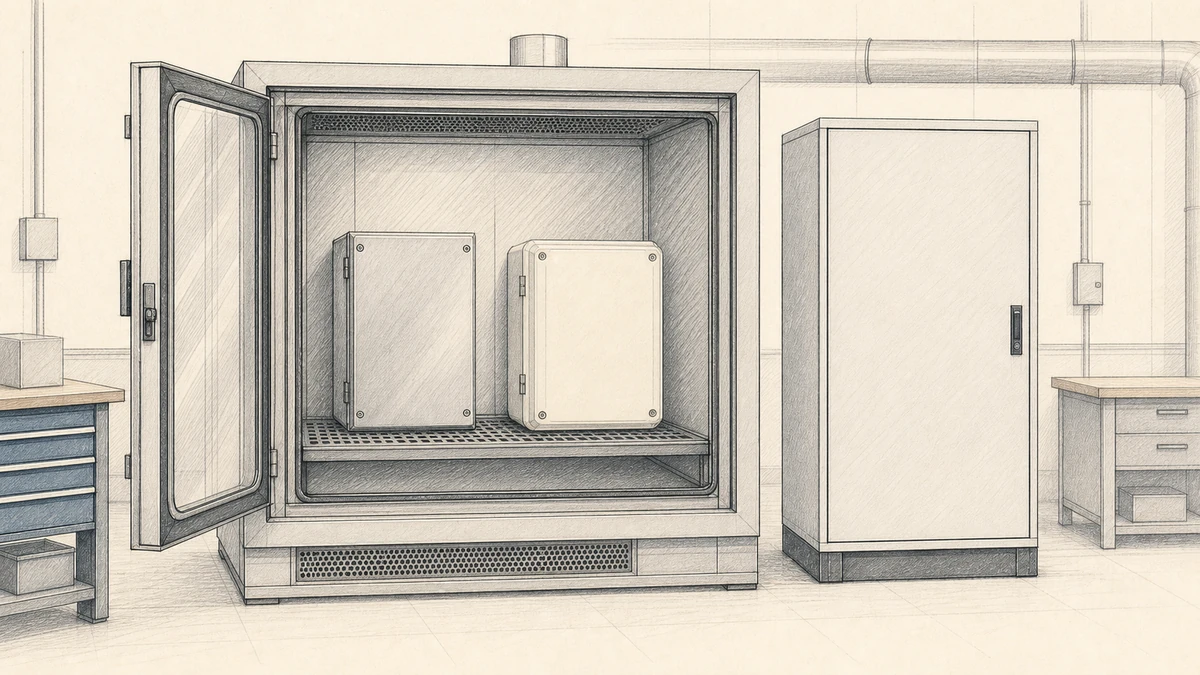
Polycarbonate is valued for its impact resistance and electrical insulation properties. It does not rust, which makes it attractive for humid outdoor sites, light industrial facilities, control stations, farms, telecom installations, and building services.
Key advantages include:
Eaton describes a reinforced-polycarbonate Type 4X enclosure as lightweight, non-conductive, and impact-resistant, with stated outdoor UV and water-exposure credentials. These are product-specific documented properties, not automatic guarantees for every polycarbonate enclosure.
Polycarbonate quality varies significantly. Outdoor performance depends on resin formulation, UV stabilization, wall thickness, gasket design, hinge design, latch quality, and certification claims.
Potential limitations include:
For outdoor industrial selection, buyers should verify that the polycarbonate distribution box is intended for outdoor service and has documented performance against water, UV, impact, and temperature requirements.
The best way to compare a **stainless steel vs polycarbonate distribution box** is to match each material to the real installation environment. Below are the most important engineering and purchasing factors.
Waterproof performance depends on the enclosure design, gasket system, door compression, cable glands, drainage approach, and installation workmanship.
For outdoor Waterproof Distribution Box use, consider:
Stainless steel can be excellent for hose-directed water environments when the enclosure construction is designed for that duty. Polycarbonate can also perform well outdoors when the box has a reliable gasket, secure cover, and suitable cable entry protection.
Corrosion is one of the main reasons to choose stainless steel carefully or select polycarbonate instead.
Stainless steel is often preferred where physical strength and corrosion resistance are both required. However, the stainless grade matters. For example, many outdoor industrial buyers compare 304 and 316 stainless steel depending on chloride exposure, marine atmosphere, and chemical contact.
Polycarbonate does not rust, but it can be affected by certain solvents, oils, cleaners, and chemicals. If the enclosure will be exposed to fuel, strong alkalis, acids, or industrial cleaning agents, chemical compatibility should be checked before selection.
Outdoor enclosures face ultraviolet radiation, temperature cycling, rain, dust, and wind. Stainless steel is generally stable under UV exposure, but it may absorb heat in direct sun depending on finish and color.
Polycarbonate must be UV-stabilized for long-term outdoor service. A low-quality indoor plastic box used outdoors may become brittle, yellowed, or cracked over time. For outdoor projects, choose a polycarbonate Waterproof Distribution Box with documented outdoor suitability.
In high-traffic industrial zones, mechanical strength may be decisive. Forklift movement, tool impact, vibration, unauthorized access, and accidental knocks can shorten enclosure life.
Stainless steel is usually preferred for:
Polycarbonate is suitable where impact exposure is moderate and the enclosure is properly mounted. Reinforced polycarbonate designs can offer strong impact performance, but the exact rating should be verified by product documentation.
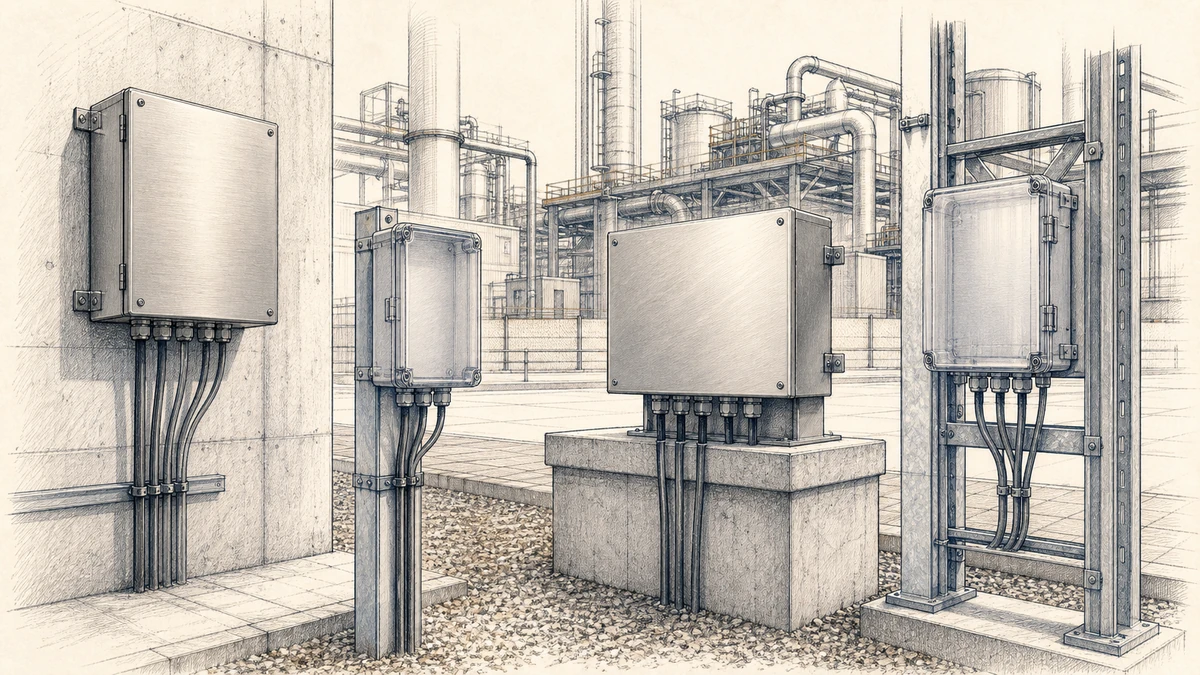
Polycarbonate is non-conductive, which can simplify certain installations and reduce the risk of the enclosure body becoming energized. This is one reason polycarbonate boxes are widely used for control, communications, and light distribution applications.
Stainless steel is conductive. When used for electrical distribution, it must be properly bonded and grounded according to the project’s electrical code and installation requirements. This is not a disadvantage when correctly installed, but it must be included in the design and inspection process.
Polycarbonate distribution boxes are easier to carry, position, drill, and mount. This can reduce installation time, especially for pole-mounted, wall-mounted, or elevated outdoor applications.
Stainless steel boxes are heavier and may need stronger brackets, more robust wall anchors, and additional handling during installation. However, they may offer longer service life in harsh environments, reducing replacement frequency.
Maintenance also differs:
Material selection becomes clearer when the project environment is defined. The following scenarios show how Sinobreaker Waterproof Distribution Box buyers can approach the decision.
Stainless steel is usually the stronger choice when the site has aggressive environmental or mechanical demands.
Typical applications include:
For these applications, specify the stainless grade, finish, gasket material, cable glands, mounting hardware, and cleaning requirements. Do not select stainless steel only because it sounds stronger; select it because the complete enclosure specification matches the environment.
Polycarbonate is often the practical choice where corrosion from rust is a concern, weight matters, and mechanical abuse is moderate.
Typical applications include:
For these applications, verify outdoor UV resistance, waterproof rating, impact performance, operating temperature, and compatibility with nearby chemicals.
Before ordering, define the environment and performance expectations clearly. A material-only comparison is not enough.
Confirm the following before choosing stainless steel or polycarbonate:
For a complete Waterproof Distribution Box specification, review:
IEC 62208:2023 reinforces the idea that enclosure suitability is based on defined characteristics and tests of the empty enclosure before components are installed. Therefore, procurement should focus on documented enclosure performance, not only on generic material labels.
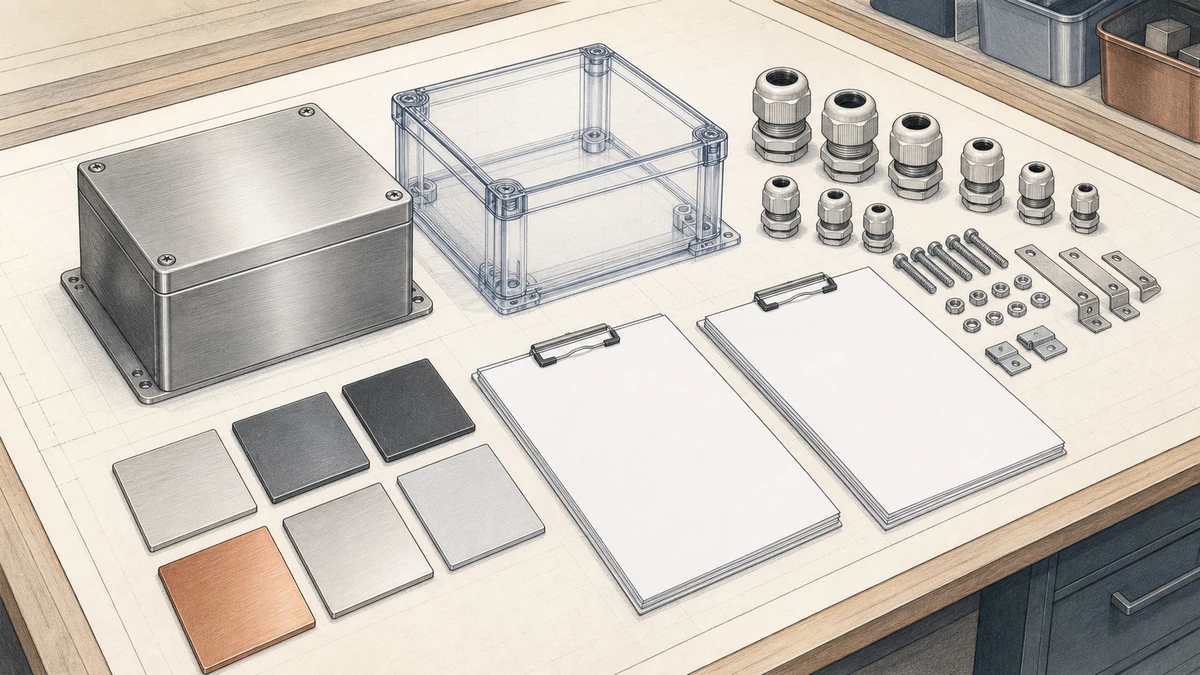
Initial price is only one part of the decision. A lower-cost enclosure can become expensive if it cracks, leaks, corrodes, or requires replacement during production.
Polycarbonate may offer lower installed cost because it is lightweight, easy to mount, and corrosion-free in many normal outdoor settings. Stainless steel may justify its higher cost where long-term durability, impact protection, corrosion resistance, and washdown performance are critical.
When comparing lifecycle value, include:
For many outdoor industrial projects, the best choice is not the cheapest enclosure. It is the enclosure that protects the internal electrical system for the expected service life with acceptable maintenance.
For Sinobreaker Waterproof Distribution Box selection, stainless steel and polycarbonate both have valid roles.
Choose stainless steel when the installation faces aggressive corrosion, washdown, impact, public access, or heavy industrial conditions. Choose polycarbonate when lightweight handling, electrical insulation, rust-free performance, and cost efficiency are priorities in moderate outdoor environments.
The most reliable decision comes from matching the enclosure material, sealing system, accessories, and documentation to the actual site conditions. In a **stainless steel vs polycarbonate distribution box** comparison, the winning option is the one that fits the environment, standard requirements, and maintenance plan—not simply the one with the stronger-sounding material name.
No. Stainless steel is stronger in many harsh industrial environments, but polycarbonate can be the better choice for lightweight, non-conductive, rust-free outdoor installations. The correct option depends on UV exposure, corrosion risk, impact risk, water exposure, and maintenance conditions.
Yes, if it is designed and documented for outdoor use. Buyers should confirm UV resistance, water ingress protection, impact performance, gasket quality, and operating temperature range. Not every polycarbonate enclosure is suitable for long-term outdoor service.
Choose stainless steel for aggressive environments such as coastal sites, chemical plants, washdown areas, heavy industrial zones, public infrastructure, and locations with high impact or vandalism risk. The stainless grade, finish, sealing system, and maintenance plan should match the specific exposure conditions.