Address
304 North Cardinal
St. Dorchester Center, MA 02124
Work Hours
Monday to Friday: 7AM - 7PM
Weekend: 10AM - 5PM
Address
304 North Cardinal
St. Dorchester Center, MA 02124
Work Hours
Monday to Friday: 7AM - 7PM
Weekend: 10AM - 5PM

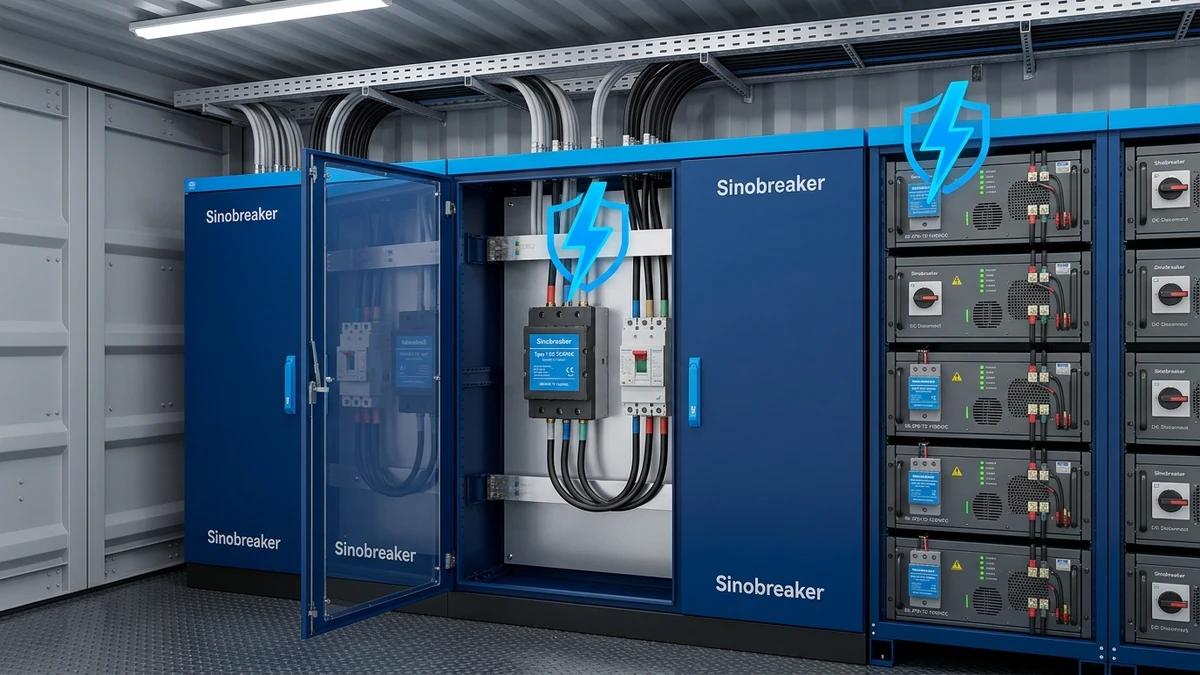
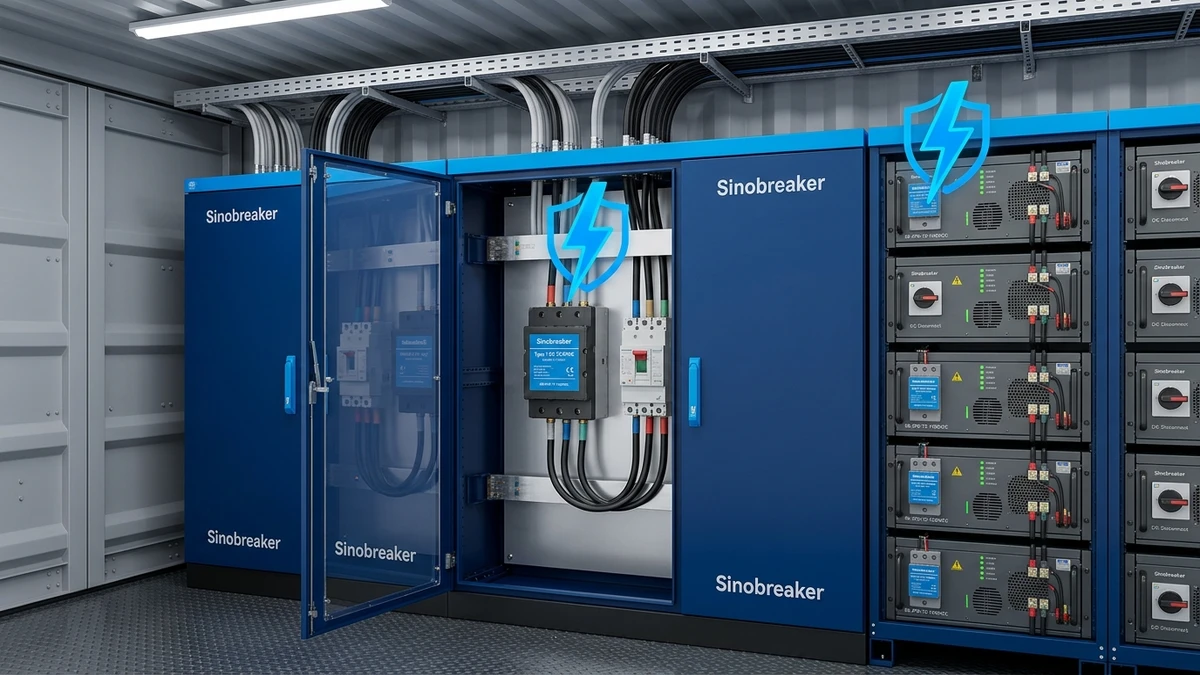
A DC surge protection device (SPD) for energy storage systems is a varistor-based component that clamps transient overvoltages between DC bus conductors and ground, preventing damage to battery management systems, DC-DC converters, and inverter input stages. In a 500 kWh containerized ESS deployed in Texas (2024), lightning-induced surges reached 6 kV on the DC bus before SPD intervention—without protection, the BMS would have failed within 200 microseconds, triggering thermal runaway risk in 12 battery racks.
Battery storage systems face three surge sources. Direct lightning strikes to outdoor enclosures couple high-energy transients into DC cables. Indirect strikes induce voltages through ground loops when lightning hits nearby structures. Inverter switching transients generate fast-rising voltage spikes during IGBT commutation, with dV/dt rates reaching 10 kV/μs.
Unlike solar arrays where strings distribute across large areas, ESS racks concentrate energy in small footprints—a single 1500 VDC bus may carry 400 kWh, making surge energy density 8× higher than equivalent PV capacity.
IEC 61643-31 governs DC SPD application in low-voltage systems. The standard defines protection level (Up) as the maximum voltage let-through during an 8/20 μs surge waveform. For 1000 VDC nominal systems, Up typically ranges from 2.5 to 3.5 kV depending on SPD type and configuration.
Key protection requirements for ESS applications:
The varistor inside a DC SPD acts as a voltage-dependent resistor. At normal operating voltage, it presents megaohm-level resistance and draws minimal leakage current. When surge voltage exceeds the varistor’s breakdown threshold, resistance drops to milliohm levels within nanoseconds, diverting surge current to ground.
ESS installations require coordinated Type 1 and Type 2 SPD deployment—Type 1 at the main DC distribution cabinet handles direct lightning energy, while Type 2 at individual battery rack terminals protects against residual surges and inverter-generated transients. A 2 MWh utility-scale ESS in California (2023) demonstrated this cascade: Type 1 SPD with 25 kA Iimp at the 1500 VDC main bus reduced a direct lightning strike from 12 kA to 4.2 kA residual current, then Type 2 SPD at each of 16 racks further clamped voltage to 1.8 kV at battery terminals—without rack-level protection, 3 BMS units failed during commissioning lightning tests.
Type 1 SPD installs at the first point of entry where outdoor DC cables connect to the ESS—typically at the AC/DC converter output or main DC switchgear. This location corresponds to the LPZ 0A→0B transition in lightning protection zone terminology.
The defining characteristic is its ability to handle the 10/350 μs waveform, which simulates the energy content of direct lightning strikes. The “10/350” designation means current rises to peak in 10 microseconds and decays to 50% of peak in 350 microseconds—a much longer energy pulse than the 8/20 μs waveform used for Type 2 testing.
Typical Type 1 specifications for ESS applications:
– Impulse discharge current (Iimp): 12.5 to 25 kA per pole
– Protection level (Up): 3.2 to 3.8 kV at 1000 VDC nominal voltage
– Construction: Spark gap plus varistor hybrid topology
– Coordination requirement: Must work with upstream https://sinobreaker.com/dc-circuit-breaker/ rated 125 to 250 A
The spark gap component handles the initial high-energy surge, then the varistor clamps residual voltage to the specified Up level. This two-stage internal design prevents varistor degradation from repeated high-energy events.
Type 2 SPD installs at battery rack positive and negative terminals, plus mid-point ground connection if the system uses bipolar topology. This provides the LPZ 0B→1 or LPZ 1→2 transition depending on overall protection architecture.
Type 2 SPD uses the 8/20 μs test waveform—current rises to peak in 8 microseconds and decays to 50% in 20 microseconds. This shorter pulse simulates induced surges from nearby lightning strikes and switching transients from power electronics.
Typical Type 2 specifications:
– Nominal discharge current (In): 20 to 40 kA per test
– Maximum discharge current (Imax): 80 kA
– Protection level (Up): 2.5 to 3.0 kV at 1000 VDC nominal voltage
– Construction: Metal oxide varistor (MOV) without spark gap
– Response time: Under 25 nanoseconds, critical for IGBT switching transients with dV/dt up to 10 kV/μs
The faster response time makes Type 2 SPD essential for inverter-connected systems. IGBT turn-off events create voltage spikes that rise in single-digit nanoseconds—only varistor-based protection responds quickly enough to clamp these transients before they damage sensitive BMS electronics.
Proper coordination between Type 1 and Type 2 SPD ensures energy sharing without creating protection gaps. The Type 1 protection level must exceed Type 2 protection level by at least 0.5 kV. For example, if Type 2 SPD has Up = 2.8 kV, then Type 1 should have Up ≥ 3.3 kV.
Cable impedance between stages provides decoupling. IEC 61643-12 Annex A specifies minimum 10 meters of cable or 5 μH inductance between SPD stages to prevent interaction during simultaneous discharge events.
[Expert Insight: SPD Coordination in Multi-Rack ESS]
– Minimum 10-meter cable separation between Type 1 and Type 2 stages prevents SPD interaction
– Type 1 Up must exceed Type 2 Up by ≥0.5 kV for proper energy sharing
– In systems with >20 battery racks, install Type 2 SPD at every 4-6 rack junction point (200-300 kWh blocks)
– Remote monitoring via dry contacts enables predictive replacement before catastrophic failure
DC SPD voltage rating (Uc) must account for maximum continuous operating voltage (MCOV) plus safety margin—for a 1000 VDC nominal ESS, battery float voltage reaches 1150 VDC, requiring Uc ≥1200 VDC (1.04× MCOV minimum per IEC 61643-31 clause 5.3.2.1). In a 1500 VDC ESS project in Arizona (2024), initial SPD selection at Uc = 1400 VDC failed after 6 months due to varistor degradation—root cause was 1580 VDC peak during equalization charging, exceeding the 1.1× MCOV threshold.
Determine maximum system voltage: Vmax = (number of cells) × (cell float voltage) × 1.05 safety factor
Example: 360 cells × 3.65 V × 1.05 = 1387 VDC
Select SPD Uc: Uc ≥ 1.1 × Vmax
For 1387 VDC system: Uc ≥ 1526 VDC → select 1600 VDC rated SPD
Verify protection level: Up < (BMS withstand voltage) × 0.8
If BMS rated 2.0 kV impulse: Up must be <1.6 kV
Protection level (Up) targets by system voltage:
– 750 VDC nominal: Up ≤2.2 kV (Type 2), ≤2.8 kV (Type 1)
– 1000 VDC nominal: Up ≤2.8 kV (Type 2), ≤3.5 kV (Type 1)
– 1500 VDC nominal: Up ≤3.5 kV (Type 2), ≤4.2 kV (Type 1)
Varistor clamping voltage increases 0.05%/°C above 25°C—in a 55°C battery container, Up rises by 4.5%, requiring initial selection margin. Above 2000 m elevation, air dielectric strength decreases 10% per 1000 m—SPD protection level must be reduced by same margin or external air gaps increased.
For comprehensive https://sinobreaker.com/surge-protection-device/ selection guidance, consult manufacturer datasheets with tested Up values at your operating temperature.
Effective ESS surge protection uses three-stage topology: Type 1 SPD at the DC main distribution cabinet, Type 2 SPD at battery rack group busbars (every 4–6 racks), and optional Type 3 SPD at BMS communication interfaces. A 1.5 MWh commercial ESS in Nevada (2023) demonstrated this: main bus Type 1 SPD reduced a 12 kA (10/350 μs) surge to 4.2 kA residual, rack-level Type 2 SPD further clamped to 1.8 kV at battery terminals—without rack-level protection, 3 BMS units failed during commissioning lightning tests.
Type 1 SPD installed between positive/negative bus and PE ground requires connection cable ≤0.5 m length, ≥16 mm² copper, with V-shaped routing to minimize inductance. Coordination with DC circuit breaker is critical: breaker must NOT trip on SPD discharge current. Use 10 ms time delay or electronic trip settings.
Remote monitoring via dry contact for SPD failure indication integrates into SCADA systems, enabling predictive maintenance before catastrophic failure.
Type 2 SPD at every 4–6 rack junction point (typically 200–300 kWh capacity blocks) uses three-pole configuration: L+, L−, and mid-point ground for bipolar topology systems. Cable routing must maintain ≥300 mm separation between SPD input/output cables to prevent coupling.
Thermal management is essential—SPD generates 2–5 W standby loss, so ensure cabinet ventilation maintains <50°C ambient to prevent premature varistor degradation.
DC SPD must coordinate with upstream overcurrent protection to ensure the breaker does NOT trip during legitimate surge events while still clearing SPD short-circuit faults. In a 1 MW ESS in Germany (2024), improper coordination caused 8 nuisance trips over 3 months—the 125 A DC breaker tripped on SPD discharge current (peak 6.2 kA, duration 80 μs) because the breaker’s magnetic trip was set too sensitive.
Coordination principles:
SPD discharge current vs breaker trip curve: Breaker I²t must exceed SPD discharge I²t by 2× margin. Example: Type 2 SPD with In = 40 kA (8/20 μs) has I²t ≈ 3.2 × 10⁶ A²s. DC MCCB must have magnetic trip I²t >6.4 × 10⁶ A²s at 6 kA peak.
Time delay requirement: Electronic trip breakers should use 10–20 ms delay to ride through SPD discharge.
SPD backup protection: Install a dedicated https://sinobreaker.com/dc-fuse/ (gPV type, 32–63 A) in series with SPD to clear internal varistor short-circuit without affecting main breaker.
Fuse must clear SPD end-of-life short circuit (typically 1–5 kA fault current) within 0.2 seconds. Use gPV fuse per IEC 60269-6 for DC voltage rating and arc interruption capability.
All SPD ground terminals must connect to a single-point ground bar