Address
304 North Cardinal
St. Dorchester Center, MA 02124
Work Hours
Monday to Friday: 7AM - 7PM
Weekend: 10AM - 5PM
Address
304 North Cardinal
St. Dorchester Center, MA 02124
Work Hours
Monday to Friday: 7AM - 7PM
Weekend: 10AM - 5PM

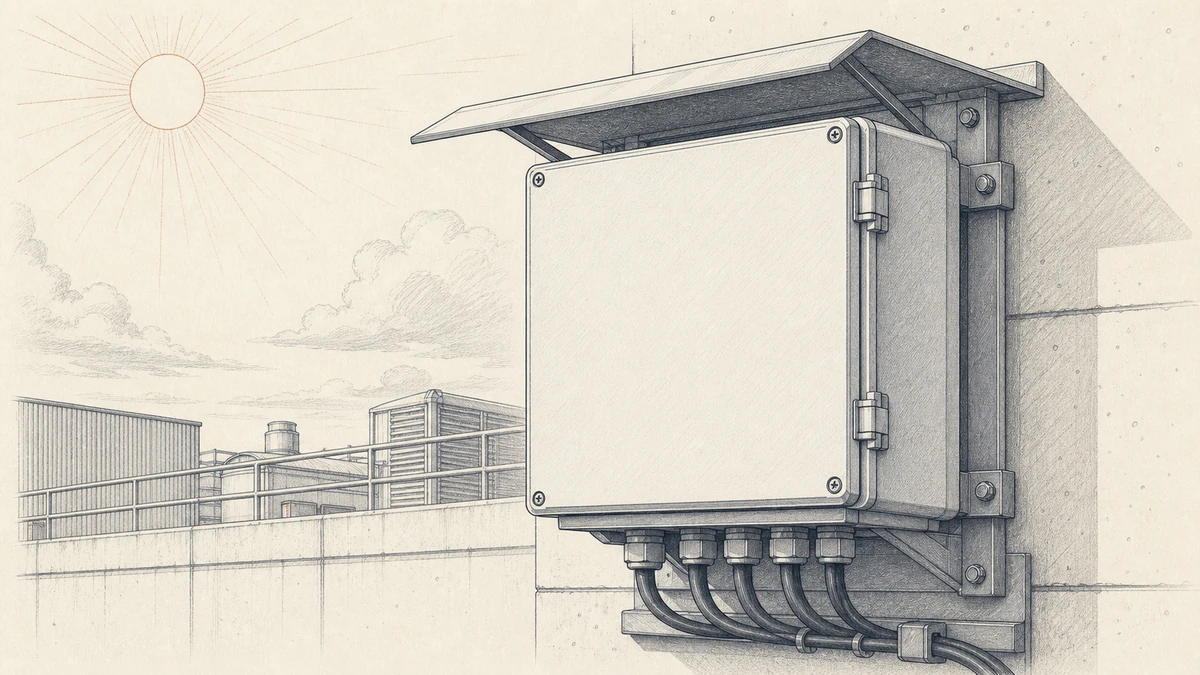
Outdoor distribution box thermal management is not just a matter of choosing a larger enclosure or adding a few vents. In outdoor electrical installations, heat is shaped by solar radiation, ambient temperature, internal component losses, enclosure color, mounting position, wind exposure, humidity, and the sealing level required for weather protection.
For a Waterproof Distribution Box, the challenge is even more specific: the enclosure must protect electrical components from rain, dust, splashing water, and outdoor contaminants while still keeping the internal temperature and moisture conditions within safe operating limits.
Sinobreaker designs Waterproof Distribution Box solutions for outdoor low-voltage distribution applications where electrical safety, environmental protection, and thermal reliability must be considered together.
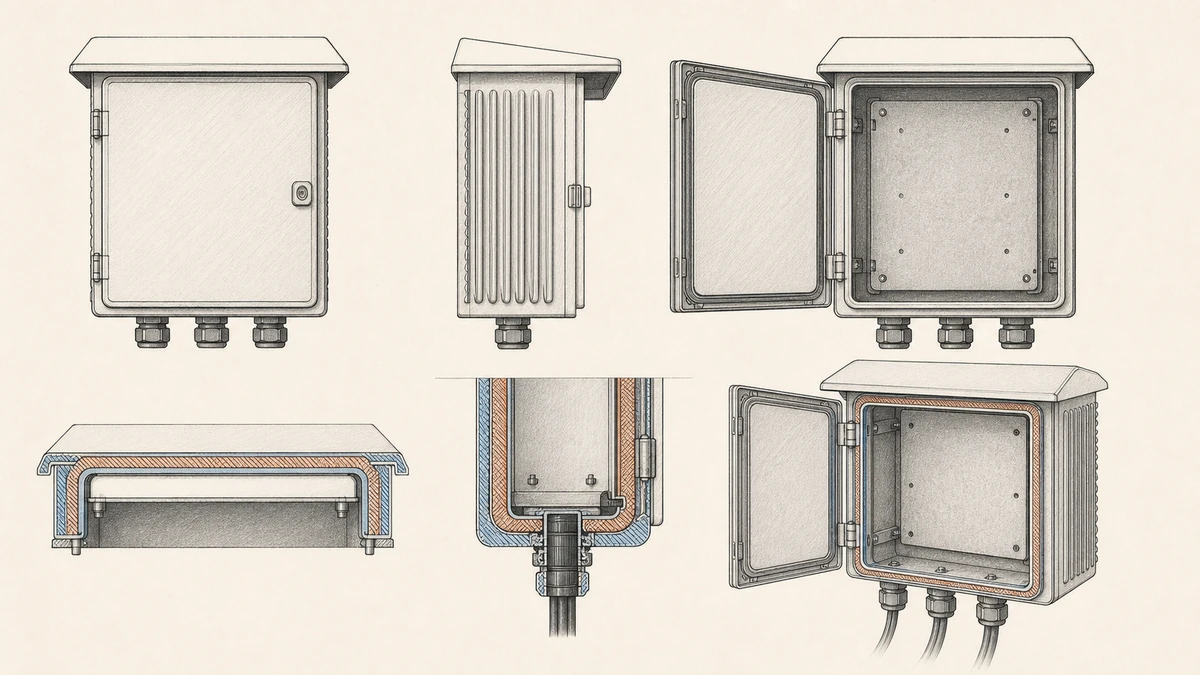
Outdoor enclosures face a wider and less predictable temperature profile than indoor panels. A box mounted on a wall, pole, rooftop, or outdoor equipment frame can experience strong sunlight during the day, rapid cooling at night, rain impact, high humidity, and seasonal temperature swings.
Poor outdoor distribution box thermal management can lead to:
IEC 61439-1:2020 emphasizes that low-voltage assemblies must meet defined service, construction, technical, and verification requirements. For temperature rise, suitability should be verified for the configured assembly rather than assumed from enclosure volume alone. This is important for outdoor Waterproof Distribution Box applications because the same enclosure size can perform very differently depending on component layout, heat loss, cable density, installation direction, and solar exposure.
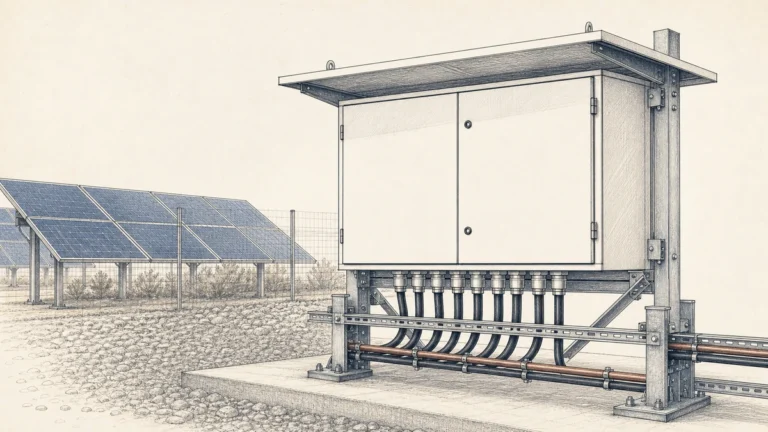
Solar load is the heat absorbed by an outdoor enclosure from direct sunlight. It can be significant, especially for boxes installed on rooftops, exterior walls, open fields, charging infrastructure, telecom sites, pump stations, and renewable energy systems.
A Waterproof Distribution Box exposed to prolonged direct sun can become much hotter than the surrounding air. The enclosure surface absorbs radiation, transfers heat through the wall, and raises the internal air temperature. Even if the internal electrical load is modest, solar gain may push sensitive components beyond their rated operating temperature.
Polycase identifies prolonged direct solar exposure as a solar-loading risk for outdoor electronics and notes that solar load may require temperature-control measures depending on the enclosure and installed equipment. This aligns with practical field experience: two boxes with identical internal components can have different thermal outcomes if one is shaded and the other faces direct afternoon sun.
Solar load depends on several site and enclosure variables:
A light-colored enclosure generally absorbs less solar energy than a dark enclosure. However, color alone does not solve thermal risk. Internal heat loss, sealing level, cable entry density, and ventilation restrictions still need to be reviewed.
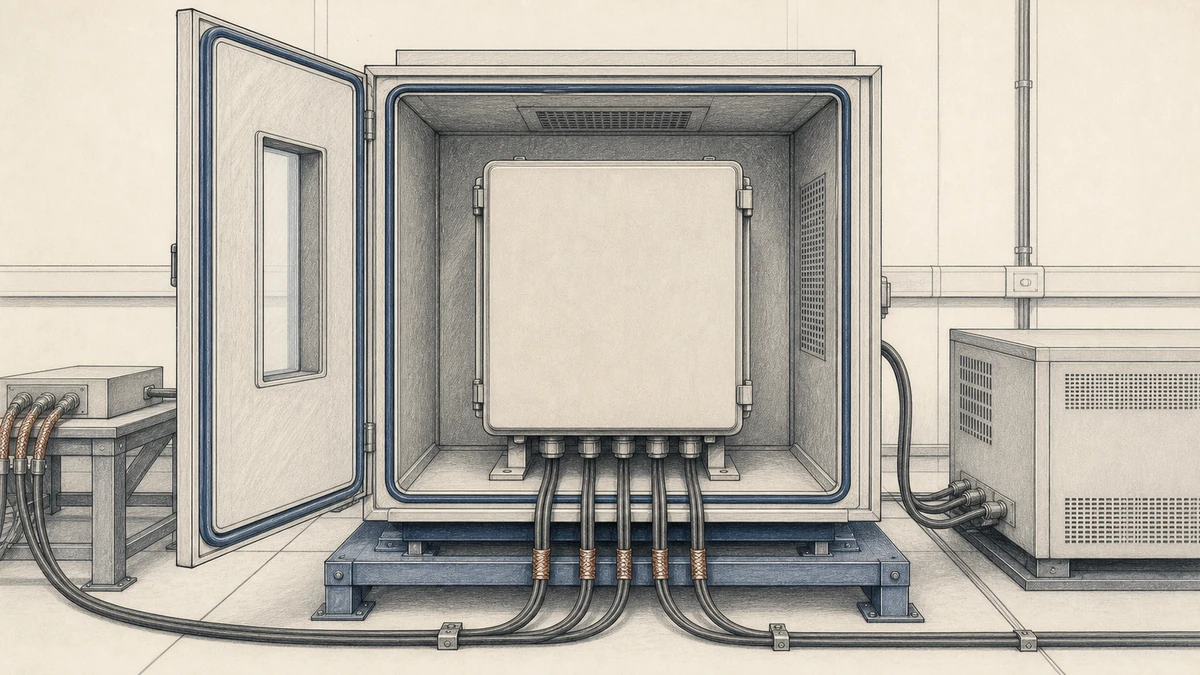
Ventilation can reduce internal temperature by allowing heat exchange with the outside air. However, outdoor ventilation must be applied carefully because every air path can also become a path for moisture, dust, insects, salt mist, or wind-driven rain.
For a Waterproof Distribution Box, the goal is not simply to maximize airflow. The goal is to balance temperature control with environmental protection.
Natural ventilation uses temperature difference and air buoyancy to move warm air out and bring cooler air in. It may include protected vents, louvered openings, rain shields, or breathable membrane elements.
Natural ventilation can help when:
However, natural ventilation is limited when the outside air is already very hot, when solar radiation is intense, or when the enclosure must remain highly sealed.
Forced ventilation uses fans or blowers to increase air exchange. It can remove heat more effectively than passive airflow, but it also adds moving parts, maintenance requirements, filter management, and potential ingress risks.
Forced ventilation may be considered when:
In many outdoor distribution boxes, forced ventilation must be evaluated with caution. A fan that pulls humid air into a sealed electrical box can reduce temperature while increasing condensation risk.
Outdoor Waterproof Distribution Boxes often experience pressure changes caused by temperature swings. When air inside the enclosure heats up, pressure rises; when it cools down, pressure drops and may draw moisture through seals or cable glands.
Pressure compensation elements or breathable membrane vents can reduce pressure stress while limiting water ingress. They are not a substitute for full thermal design, but they can support moisture control and enclosure reliability.
Outdoor distribution box thermal management must address both heat and moisture. A box that is hot during the day can cool rapidly after sunset or rain. If internal air contains moisture, the temperature drop can lead to condensation on the enclosure wall, terminals, DIN rails, or devices.
Rittal notes that variations in ambient temperature and solar radiation can lead to condensation in outdoor installations and identifies cooling units, heaters, and robust enclosure solutions as possible responses. This reinforces an important design principle: solving heat without considering humidity can create a different failure mode.
Condensation risk increases when:
Moisture control may require a combination of sealing, drainage strategy, breathable vents, anti-condensation heaters, desiccants, conformal protection for sensitive electronics, and correct cable gland selection.
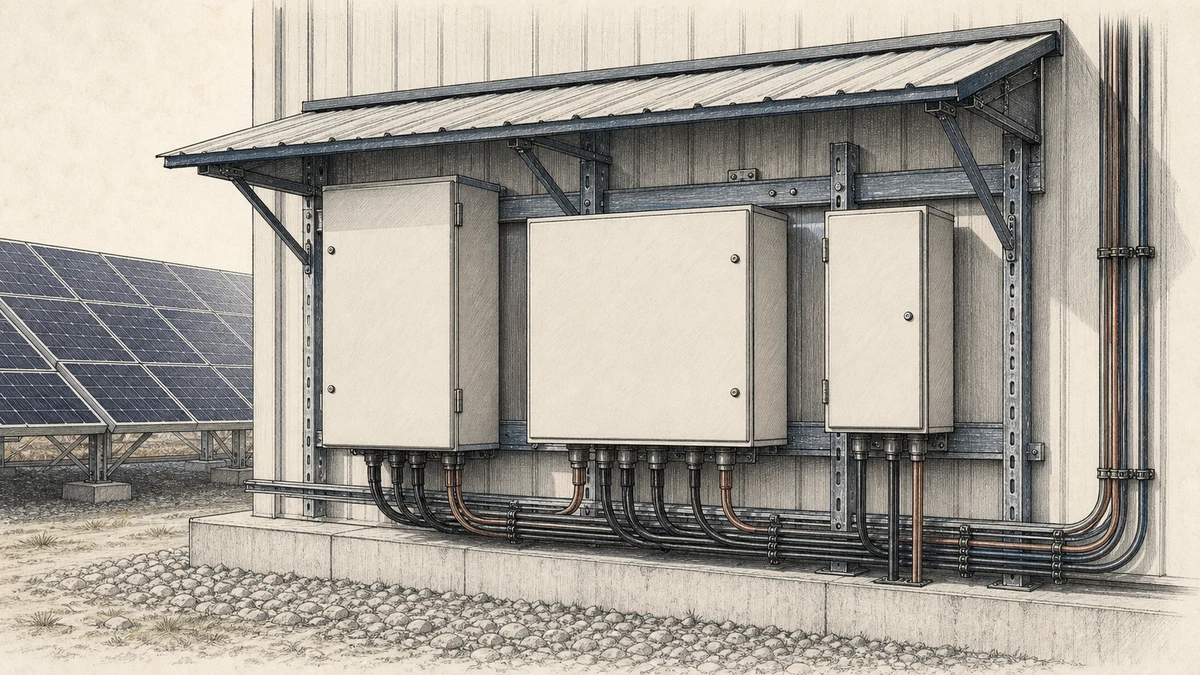
Derating means operating electrical components below their nominal rating to account for temperature, installation conditions, grouping, enclosure effects, and other stress factors. In outdoor boxes, derating is often necessary because the actual internal temperature may exceed the standard reference temperature used for component ratings.
For example, a circuit breaker rated at a certain current under specified conditions may not carry the same continuous load safely inside a sun-exposed Waterproof Distribution Box. Conductors, terminals, power supplies, contactors, and surge protective devices can also have temperature-related limits.
A single generic derating factor can be misleading. Schneider Electric’s outdoor heavy-duty enclosure documentation identifies temperature, humidity, and radiation as variables in outdoor thermal calculation workflows. It also supports using measured site conditions and component data rather than relying on a universal ventilation or derating assumption.
A practical derating review should consider:
Each installed device should be checked against its manufacturer’s technical data. This includes operating temperature range, heat dissipation, current rating at elevated temperature, installation spacing, and required clearance.
For low-voltage distribution assemblies, this approach supports the IEC 61439-1 principle that the configured assembly must be verified, not assumed safe based only on enclosure dimensions.
A reliable outdoor Waterproof Distribution Box should be designed from the site conditions inward. The enclosure, internal components, wiring, sealing system, and mounting method should work as one assembly.
Collect realistic site data before finalizing the box design:
If measured site data is available, use it. If not, apply conservative local climate data and account for worst-case sun exposure.
List every component that generates heat, including:
Even small heat sources can matter in a sealed outdoor enclosure, especially when several devices operate continuously.
The enclosure gains heat from internal components and solar radiation. It loses heat through conduction, convection, and radiation from its external surfaces. Ventilation or active cooling can increase heat removal, but may affect waterproof performance.
Design checks should include:
Depending on the application, Sinobreaker Waterproof Distribution Box projects may use one or more of the following approaches:
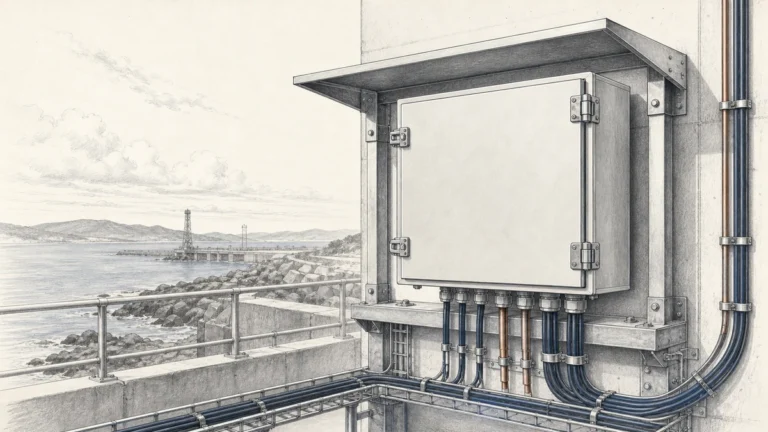
The best solution is application-specific. A highly sealed box in a humid coastal site may need a different strategy from a shaded industrial wall-mounted box or a solar-exposed agricultural pump control box.
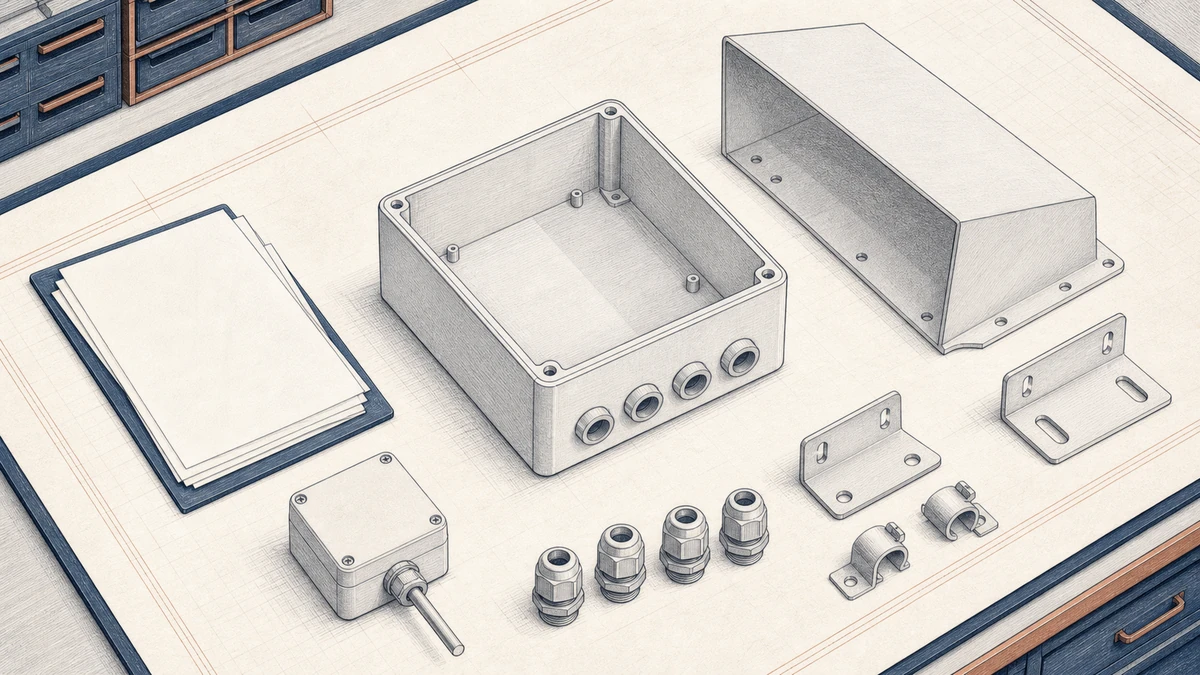
Internal layout has a major influence on temperature rise. Even with the right enclosure size, poor device arrangement can create localized hot zones.
For outdoor distribution box thermal management, consider these layout principles:
Good layout improves both thermal performance and maintainability.
A Waterproof Distribution Box must maintain its environmental protection while managing internal temperature. Cutting unprotected holes or installing unsuitable vents can reduce waterproof reliability and create future maintenance problems.
Thermal accessories should be selected with the required protection level in mind. Cable glands, seals, vents, drains, fans, filters, and heaters must be compatible with the outdoor exposure and electrical safety requirements of the installation.
The final design should answer three questions:
If the answer to any of these is uncertain, the design should be reviewed before installation.
Outdoor thermal performance can change over time. Dust, blocked vents, aged seals, added circuits, changed loads, or new shading conditions can alter the original design assumptions.
Routine inspection should include:
For critical applications, thermal imaging during peak load and hot weather can help identify overloaded terminals, undersized conductors, or poor internal airflow.
Outdoor distribution box thermal management is the process of controlling heat, solar gain, ventilation, component derating, and moisture inside an outdoor electrical enclosure. For a Waterproof Distribution Box, it must protect equipment from rain and dust while keeping internal temperatures within safe operating limits.
Not always. Some outdoor boxes can rely on passive heat dissipation through the enclosure wall, especially when the internal heat load is low and the box is shaded. Ventilation may be needed when heat load or solar exposure is high, but it must be designed so the required waterproof protection is not compromised.
Solar heat can be reduced by using shade, sun shields, light-colored enclosure materials, suitable mounting orientation, larger enclosure surface area, internal spacing, ventilation where appropriate, and component derating. The correct solution depends on the actual site temperature, solar exposure, humidity, installed components, and required protection level.
Outdoor distribution box thermal management requires a complete view of the enclosure as a working electrical assembly. Solar load, ambient temperature, internal heat loss, ventilation, condensation, waterproofing, and derating all interact.
For Sinobreaker Waterproof Distribution Box applications, the safest approach is to start with real site conditions, verify component temperature limits, consider solar radiation and humidity, and select an enclosure and thermal strategy that preserve both electrical performance and environmental protection.